BKT has long established itself as one of the world’s leading manufacturers of Off-Highway Tyres (OHT), serving demanding sectors such as agriculture, mining, construction and industrial applications. Having built deep engineering expertise and a strong global reputation in these segments, the company has now embarked on its next strategic growth journey; the Indian commercial vehicle tyre market. Rather than entering the segment as another volume-driven player, BKT is positioning itself with a differentiated strategy centred on application engineering, customer education, sustainable tyre usage and long-term fleet profitability.
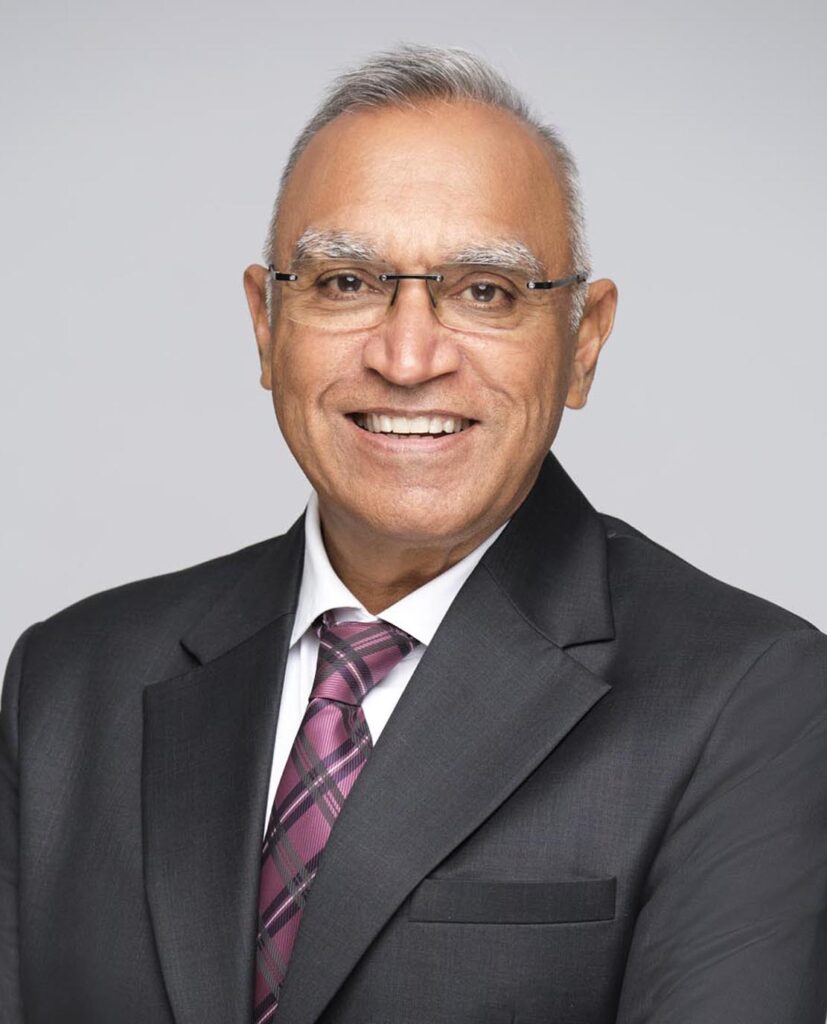
According to Mr. Satish Sharma, Senior President and Director, Business Development and Strategy, BKT, India’s commercial vehicle industry presents a compelling opportunity. As the country’s economy continues to expand, freight movement, infrastructure development and logistics activities are expected to generate sustained demand for commercial vehicles, naturally creating a larger market for reliable, high-performance tyres.
“The economy runs on wheels. As commercial vehicle demand grows, the requirement for dependable tyres also increases. We believe there is enough room for a strong fifth player with a differentiated approach rather than simply competing on volumes,” says Mr. Sharma.
Unlike many new entrants, BKT is not entering an unfamiliar territory. Its decades of expertise in designing highly engineered tyres for severe operating environments provide a solid technological foundation for its on-highway ambitions. While off-highway tyres operate under different speed conditions, the company’s accumulated knowledge in rubber compounds, durability, structural engineering and performance optimisation provides valuable advantages for commercial vehicle tyre development.
Engineering-Led Product Strategy
Instead of viewing the commercial vehicle tyre market as one uniform segment, BKT believes India consists of multiple operating conditions, terrains and customer requirements. Consequently, the company intends to design solutions around specific applications rather than offering a one-size-fits-all product portfolio.
One of BKT’s most significant strategic decisions is its emphasis on the 11.00 R20 tyre size. While the Indian market today is largely dominated by 10.00 R20 and 295/90 R20 tyres, the company believes the 11.00 R20 represents a more technically appropriate progression.
“Our engineering understanding suggests that the 11.00 R20 is the right evolution for the market. It offers better air volume, improved load carrying capability and overall performance while remaining on the same 20-inch wheel platform,” he explains.
He points out that India historically moved from the 9.00 R20 to the 10.00 R20 tyre size. In his view, the natural evolution should have been towards the 11.00 R20 rather than the 295/90 R20 size, making this an opportunity where BKT believes it can establish an early leadership position.
Naturally, introducing a new product philosophy requires customer education. While progressive fleet operators have already begun adopting this size, others remain cautious. BKT therefore sees change management as an integral part of its market development strategy.
Educating Fleets Instead of Chasing Volumes
A key differentiator in BKT’s strategy is that it is not attempting to address every customer in the market. Instead, the company is deliberately selecting customer segments that align with its product philosophy and long-term sustainability objectives.
One example is its clear position on overloading. While acknowledging that overloading remains common across India’s freight transport sector, BKT has consciously decided not to target operators engaged in excessive overloading.
“We are comfortable supporting customers operating up to around 140% of rated load because that still represents nearly 70% of the market. Extreme overloading damages the casing, reduces tyre life and ultimately hurts both safety and fleet economics,” says Mr. Sharma.
The company believes that disciplined fleet operators eventually enjoy lower operating costs through longer tyre life, improved fuel efficiency and higher vehicle uptime. Rather than simply selling tyres, BKT intends to advise customers on better operating practices that maximise tyre performance throughout their lifecycle. This consultative approach is expected to become one of the company’s biggest differentiators as Indian fleet operators increasingly shift their focus from purchase price to Total Cost of Ownership (TCO).
Retreading; The Untapped Opportunity
Among the strongest messages delivered by Mr. Sharma during the discussion was the enormous opportunity that exists in tyre retreading. He believes India is currently underutilising one of the industry’s biggest sustainability and profitability opportunities.
Today, only around 20-30% of commercial vehicle tyres in India undergo retreading, a figure that BKT considers far below its potential. The company believes this can eventually increase to nearly 70% through better tyre usage, improved maintenance practices and stronger customer awareness.
“The first step towards sustainability is extracting another life from every tyre. Retreading benefits the fleet operator, the economy and the environment. We should all be talking more about casing preservation,” he emphasises.
To support this objective, BKT has developed a comprehensive ‘Save the Casing’ programme. The initiative focuses on educating fleet operators about correct tyre usage, timely repairs, preventive maintenance and operational best practices that preserve casing integrity for successful retreading. Rather than establishing standalone retreading operations immediately, BKT intends to build an ecosystem by collaborating with specialist retread partners, repair centres and service providers.
Mr. Sharma also highlights global benchmarks. In mature markets such as the United States, commercial truck tyres are commonly retreaded multiple times under disciplined operating conditions. “If global fleets can achieve multiple retread cycles, India should at least aim to consistently obtain one additional life from every tyre. With improving roads and vehicle technology, this is the right time to move in that direction,” he says.
Bus Fleets; A High-Potential Technology Demonstrator
Beyond cargo transportation, BKT has identified another strategic growth opportunity; premium bus fleets. Mr. Sharma believes the luxury coach segment represents a significant white space, as premium buses in India continue to rely heavily on imported global tyre brands. He sees this as an opportunity for BKT to demonstrate Indian engineering capabilities in a technologically demanding segment.
“The luxury bus segment demands extremely high reliability, high-speed performance and maximum uptime. We want to offer a strong Indian alternative backed by technology and engineering,” he notes. Unlike many cargo applications, bus operations generally involve fixed routes, predictable loads and disciplined fleet management. These operating conditions provide an ideal environment to showcase tyre performance, durability and reliability.
Bus operators also place enormous emphasis on passenger safety and vehicle uptime, making them ideal customers for BKT’s technology-focused approach. Success in this segment could further strengthen the company’s credibility across the broader commercial vehicle market.
Manufacturing Strength, Distribution and Long-Term Growth
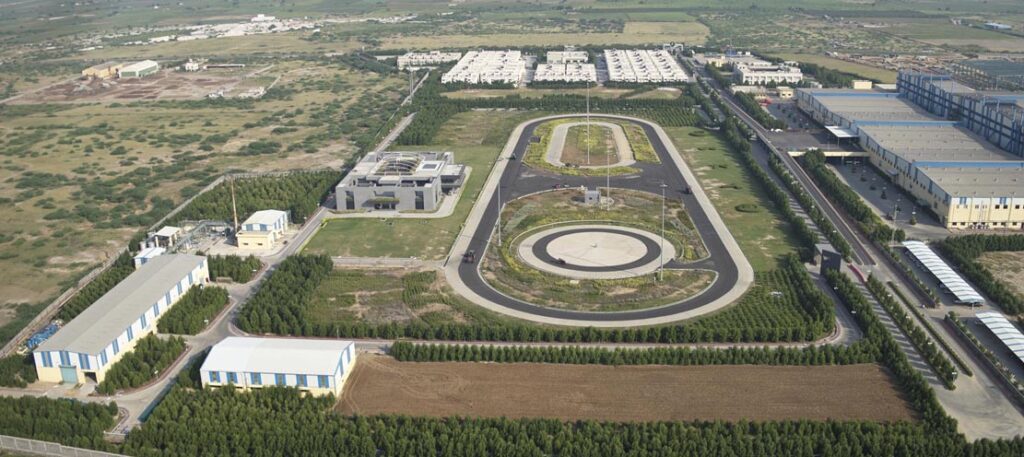
Supporting BKT’s commercial vehicle ambitions is its advanced manufacturing infrastructure at Bhuj, Gujarat. The company has established a dedicated production line within its existing integrated manufacturing complex, equipped with modern automation, Industry 4.0 technologies and captive carbon black production and power generation. These integrated capabilities provide meaningful cost efficiencies while enabling consistent product quality.
On the distribution front, BKT has adopted a distinctive market approach. Instead of relying solely on conventional tyre dealers, the company has appointed 43 commercial vehicle distributors across carefully defined geographies. Many of these distributors already have strong relationships with fleet operators through the automotive spare parts business, giving BKT immediate access to established customer networks.
“Our distributors are established automotive entrepreneurs with strong fleet relationships. They will further appoint dealers, creating a strong and efficient distribution chain,” explains Mr. Sharma. Initially, BKT’s focus will remain firmly on the aftermarket, allowing the company to build brand acceptance directly with fleet operators before expanding into Original Equipment Manufacturer (OEM) partnerships.
The company is also exploring future digital solutions, including enhanced Tyre Pressure Monitoring Systems (TPMS). However, Satish believes the immediate priorities remain customer selection, casing preservation and product performance before expanding into advanced service-based business models such as tyre subscriptions or pay-per-kilometre offerings.
Looking ahead, BKT has publicly announced an ambitious ₹5,000 crore revenue target from its on-highway tyre business by 2030, covering commercial vehicles, passenger vehicles and two-wheelers. While the company will eventually introduce a comprehensive product portfolio, Mr. Sharma reiterates that BKT’s immediate priority is not market share at any cost but creating long-term customer value.
“We are not in a numbers game. Our objective is to demonstrate better thinking, superior customer economics, higher uptime and sustainable tyre usage. If we consistently deliver that value, market share will naturally follow,” he concludes.