New Pune facility strengthens the company’s manufacturing and engineering capabilities, with India emerging as both a growth market and a global supply base
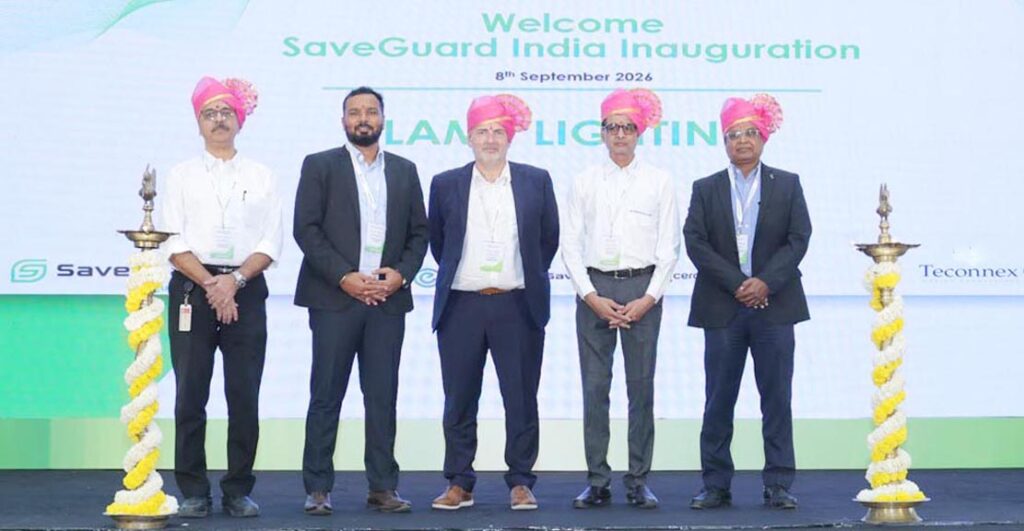
Teconnex has taken another significant step in its Indian growth journey with the inauguration of its new SaveGuard manufacturing facility in Pune. The development marks an expansion beyond the company’s established strength in engineered clamping, jointing and sealing solutions, adding advanced thermal and acoustic insulation technologies to its portfolio.
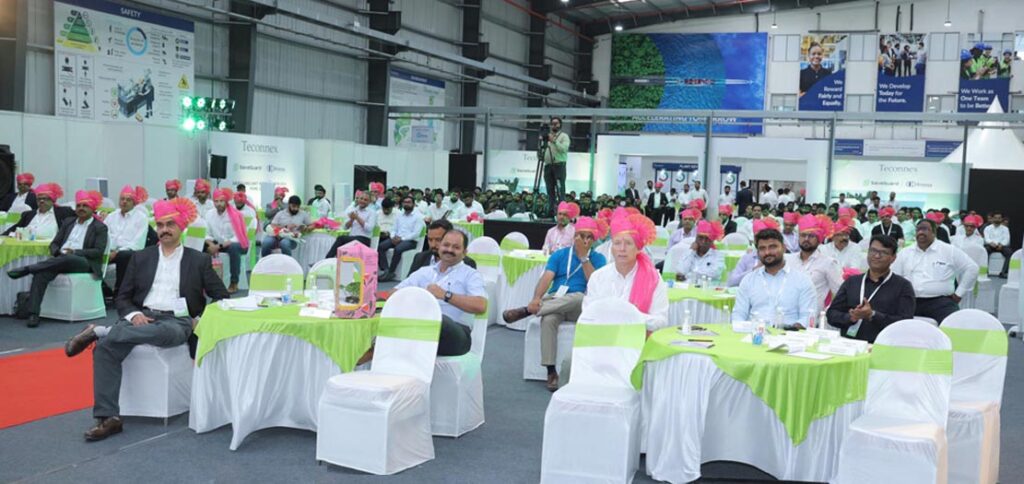
On the sidelines of the inauguration on September 8, which brought together automotive OEMs, Tier-1 suppliers, engineering and purchasing leaders, as well as representatives from the British High Commission and trade teams, Motorindia’s conversations with the leadership team revealed that the facility is part of a much broader strategy to build India into a manufacturing and engineering hub for the Hexadex Group.
SaveGuard is part of Eminox, another Hexadex Group company. Eminox, which has nearly five decades of experience in exhaust after-treatment systems, acquired SaveGuard in 2024 after working with the business for more than two decades on thermal and acoustic technologies. The new Indian facility brings this global expertise closer to local customers.
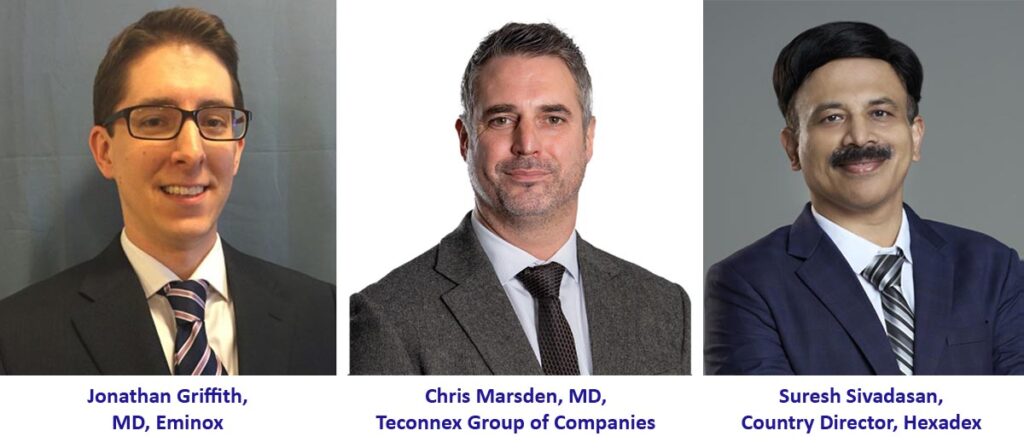
“The SaveGuard positioning in India is another clear sign of our trust and commitment to the country and its continued development,” says Mr. Jonathan Griffith, Managing Director, Eminox.
From global technology to local capability
According to Jonathan, SaveGuard’s expertise has traditionally been concentrated in European and other global markets. India, however, has emerged as an increasingly sophisticated automotive market, with growing requirements around thermal management, acoustic performance, emissions, efficiency and lightweighting.
The Teconnex’s Pune facility is intended to combine that global technology with local manufacturing, testing, application engineering and customer support. This can help OEMs and Tier-1 suppliers reduce development lead times while gaining greater flexibility in specifying solutions for individual applications.
For Teconnex, the development also leverages the strong infrastructure and customer relationships it has established in India. The company has built a significant presence in commercial vehicles, particularly through the evolution of emission-control systems and the transition to Bharat Stage VI.
“We want to bring our global experience, customer knowledge and technology to India while giving customers the benefits of local development, application support, testing and timely delivery,” Jonathan says.
A broader portfolio for a changing industry
While SaveGuard is part of the Eminox Group, Teconnex provides an important platform within the wider Hexadex strategy. Mr. Chris Marsden, Managing Director, Teconnex Group of Companies, says the company’s established strengths in clamping, jointing and sealing provide a foundation for a broader portfolio of engineered solutions.
The company’s diversification plans include SaveGuard thermal technologies, bellows, aerospace applications and other products under development. The objective is to move beyond being identified primarily with clamps and become a broader engineering solutions provider.
Chris believes the combination of products, manufacturing infrastructure, engineering talent and customer relationships gives Teconnex a strong platform from which to develop these new businesses in India.
“We want to become more than a one or two-product supplier. The vision is to build a broader solutions offering across the drivetrain and the wider mobility ecosystem,” says Chris.
Vision 30 targets ₹500 crore
The scale of the ambition is reflected in the company’s Vision 30 roadmap. Mr. Suresh Sivadasan, Country Director, Hexadex, says the Indian business is targeting growth from its current level of around ₹200 crore to approximately ₹500 crore by 2030.
The target will be supported by continued growth in the core clamping business as well as diversification into SaveGuard, aerospace, bellows and other emerging product lines. SaveGuard alone has been assigned a long-term revenue target of approximately ₹100 crore.
The immediate focus remains on the Indian market, with the company’s current planning envisaging around 80 percent of business coming domestically and 20 percent from exports. Over time, however, India is expected to support the wider Hexadex global network.
“Our thinking is India for India, but also India for the world. We believe the engineering and manufacturing talent available here can support requirements across our global portfolio,” says Suresh.
Engineering at the heart of customer value
A key differentiator for Teconnex is its ability to engage with customers early in the product development cycle. Chris, who previously served as an engineering director, says the company can create the greatest value when it understands the application conditions and helps design the solution rather than simply manufacturing to an existing drawing.
For automotive applications, this can involve understanding temperature, vibration, loading, packaging and operating conditions before standardising joints, flanges, gaskets and clamps for serial production. The company also continues to support conventional build-to-print requirements.
The addition of SaveGuard further strengthens this engineering-led approach, with local testing, prototype development and manufacturing capabilities allowing customers to move more quickly from concept to production.
Preparing for the next technology cycle
Teconnex does not see diversification merely as a growth strategy; it is also a way of preparing for changes in the mobility industry. While the company expects internal combustion technology to remain important for heavy-duty commercial vehicles and off-highway applications for years to come, it is simultaneously developing capabilities for emerging technologies.
SaveGuard is exploring thermal management applications for electric vehicles, while the wider business is looking at hydrogen-related applications, advanced bellows and aerospace. The company also sees continued opportunities in turbocharging as engines are downsized and hybridised.
India is expected to play an important role in this process, with certain technologies being developed or incubated locally before potentially being taken to global markets. “Commercial vehicles will continue to evolve, while electrification, aerospace, hydrogen and other technologies create additional opportunities for diversification,” Chris says.
Localisation backed by supply-chain resilience
Localisation is another important pillar of the strategy. However, the company’s approach goes beyond manufacturing products in India purely for cost reasons. Investment is also being made in local purchasing, engineering, testing and supply-chain capabilities.
Hexadex is strengthening its engineering resources through its Global Capability Centre in India, while a dual-source strategy is being pursued for critical supply requirements. This is intended to reduce dependence on individual suppliers and provide greater resilience amid geopolitical and logistical uncertainties.
For customers, the proposition is therefore a combination of global technology and local responsiveness; faster development, shorter supply chains and greater access to engineering expertise.
“We want to be closer to the customer, quicker in our response and deeply connected from prototypes and testing through to serial production,” says Suresh.
Growth without compromising quality
As the company expands, its leadership remains clear that diversification will not come at the expense of the fundamentals that built Teconnex’s reputation. Quality, delivery performance, safety and engineering excellence remain central to the strategy.
The employee-owned structure of Hexadex is another defining characteristic, reinforcing a long-term approach to investment, people and technology.
The inauguration of the SaveGuard facility therefore represents more than another production line for Teconnex. It is a visible step in a larger transformation of its Indian operations; from a strong specialist supplier to a diversified engineering and manufacturing platform.
With Vision 30 targeting ₹500 crore by 2030, the direction is increasingly clear: strengthen the core, diversify intelligently and make India a stronger part of the Hexadex global technology and supply chain.