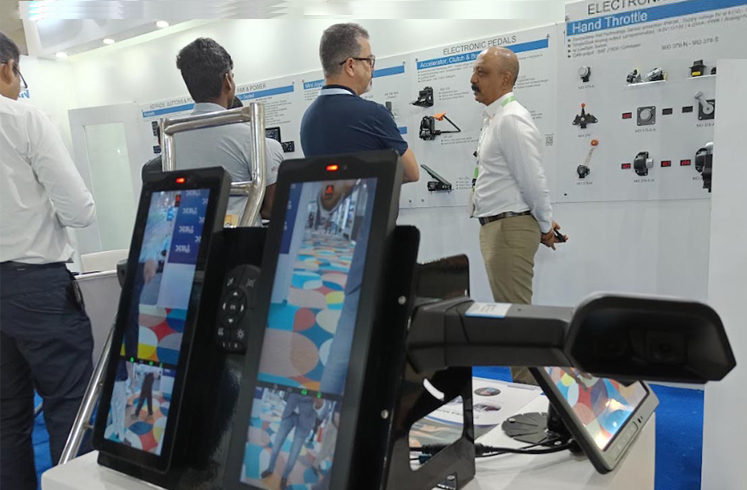
At bauma CONEXPO INDIA 2026, Makersan will showcase this wider ecosystem through rugged HMI displays, electronic pedals and hand throttles, single- and multi-axis joysticks, CAN-bus keypads and a range of sensors.
Makersan is taking its vision of integrated machine control a step closer to reality with the introduction of a new generation of HMI displays and a broader portfolio of connected electronic and electromechanical solutions for mobile and field applications. The Turkish technology company has recently introduced a unified HMI display family in 4.3-inch, 7-inch, 10-inch and 12-inch formats, combining multi-touch capacitive screens, CAN-bus connectivity, video inputs and on-device visualisation. Series production is planned from the third quarter of 2026.
The new display platform is significant because it reflects where off-highway machine electronics are heading; towards common architectures, greater software flexibility and increasingly intuitive operator interfaces. Instead of developing completely different interfaces for different machine platforms, OEMs can work around a common technology base while adapting the software and functionality to individual applications. This approach is particularly relevant as construction, mining, agriculture and material-handling equipment become more electronically sophisticated.
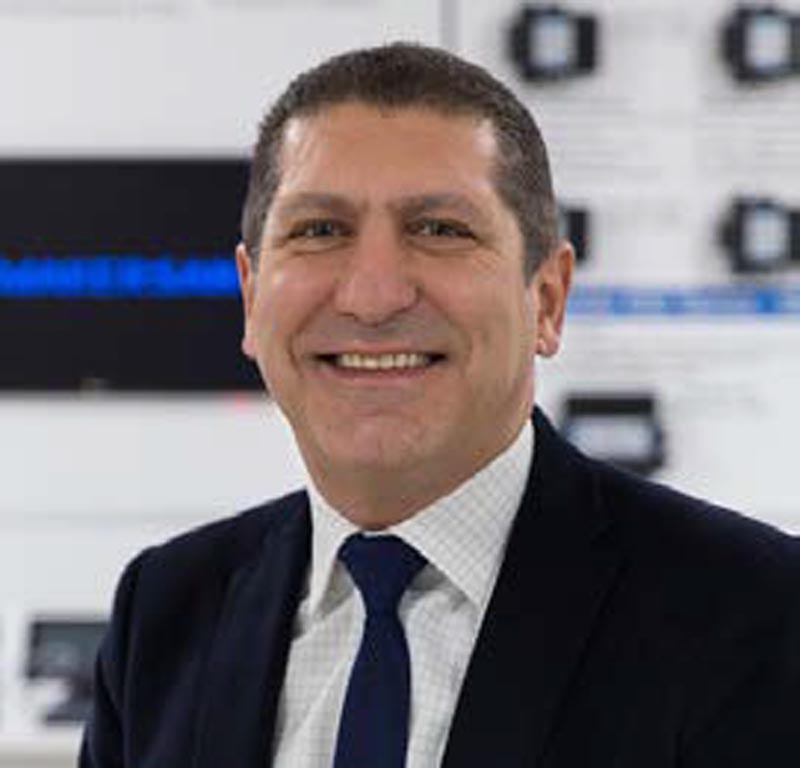
“Makersan’s vision is to provide OEMs with technology platforms that can grow with their machines. We want to combine proven hardware, software and connectivity so that manufacturers can develop smarter equipment without unnecessarily increasing system complexity,” says Oktay Pehlivanoglu, Global Marketing Director, Makersan A.S.
Building a broader machine-control ecosystem
At bauma CONEXPO INDIA 2026, Makersan is expected to showcase this wider ecosystem through rugged HMI displays, electronic pedals and hand throttles, single- and multi-axis joysticks, CAN-bus keypads and a range of sensors. The company’s portfolio is designed around mobile and field applications where vibration, dust, moisture, temperature variation and intensive operating cycles place high demands on electronic components.
Among the strongest areas of interest in India are HMIs, CAN keypads, joysticks and pedals. These are no longer simply individual components; they increasingly form part of a connected operator-control architecture. A modern HMI, for instance, can bring machine information, diagnostics and camera feeds together, while CAN-based controls can simplify wiring and enable more flexible machine architectures. Makersan’s joystick portfolio uses contactless Hall-effect sensing and includes solutions ranging from full-size multi-axis controls to compact fingertip and thumb-operated interfaces.
According to Oktay, the shift is ultimately being driven by the changing expectations of both OEMs and equipment users. “The strongest demand is not necessarily for one isolated component. It is for product groups that can work together as an integrated machine-control solution, giving manufacturers flexibility while making the operator’s interaction with the machine simpler and more effective.”
From components to intelligent machine architecture
Electrification, automation, connectivity and operator safety are increasingly converging in off-highway equipment. Electrification changes the electrical architecture of machines, while automation requires more accurate sensing and control. At the same time, connected equipment is creating demand for better access to machine data, diagnostics, maintenance information and operational insights.
Makersan is responding by extending beyond hardware into software and system engineering. Its Makcon platform brings configuration and diagnostics for CAN-bus and embedded products into a single environment, supporting functions such as parameter configuration, firmware updates, live CAN monitoring and diagnostics. Its MakIOT platform is positioned around connected-machine applications and data management.
This integrated approach also supports a gradual transition towards automation. Construction and material-handling machines do not necessarily need to become fully autonomous overnight; instead, electronic control can progressively enable functions such as configurable operating modes, position monitoring, load-related functions, machine diagnostics and safety interlocks. Sensors, controllers and operator interfaces become the building blocks for these capabilities.
India emerges as an important growth market
India occupies an increasingly important position in Makersan’s international strategy. The company already lists India among the 37 countries in which its products are in service and has an Indian presence in Pune.
The opportunity is being supported by the continuing expansion of India’s construction and mining equipment industry, infrastructure development, mechanisation and the growing technological sophistication of domestic OEMs. Indian manufacturers are also increasingly looking at export markets, creating demand for components that combine competitive economics with international levels of reliability, durability and functionality.
“Our objective in India is not simply to supply individual components. We want to build long-term relationships with OEMs and support them with application engineering, customisation and local responsiveness,” says Oktay. Makersan is consequently increasing engineering capability through its Pune operation, with the objective of providing closer technical assistance and responding more effectively to customer requirements.
Engineering support becomes a key differentiator
For OEMs developing new machines, the value of an electronics supplier increasingly extends beyond the product catalogue. Application-specific software, calibration, validation, system integration and engineering support can have a direct impact on development time and machine performance.
Makersan’s current system-engineering proposition covers requirements definition, system architecture, CAN-bus layouts, application engineering, validation and calibration, retrofit integration and machine modernisation. The company positions this as an end-to-end approach in which hardware, software and mechanical elements can be considered together rather than as disconnected components.
This is particularly relevant for OEMs looking to modernise existing machine platforms. Electronic controls, HMIs, sensors and connectivity can be introduced without necessarily redesigning the entire machine. For new platforms, meanwhile, the same approach can help manufacturers establish a scalable electronic architecture from the beginning.
A clear roadmap for the next generation
Looking ahead, Makersan’s medium- to near-term focus is on scalable hardware platforms, configurable software, connected-machine technologies and application-specific engineering. The company is also expanding its capabilities in areas such as rugged camera systems, advanced monitoring and motor-drive technologies, strengthening its position beyond traditional operator controls.
The underlying philosophy is to offer standardised technology where it makes sense while retaining the ability to customise solutions for individual machines. This balance can help OEMs reduce development effort while still creating differentiated products for specific applications and operating environments.
“OEMs need both standardisation and flexibility. Our goal is to give them a proven technology platform, while allowing the interface, software and functionality to be adapted to the machine and its operator,” Oktay explains. “That is how we see Makersan evolving from a component supplier into a technology partner for intelligent, connected and reliable mobile equipment.”
With more than four decades of engineering experience, products serving markets across 37 countries and a portfolio spanning displays, controllers, sensors, pedals, joysticks, keypads and connectivity, Makersan is building its next phase around a broader proposition; not simply supplying what the machine needs to function, but helping OEMs develop what the next generation of machines will need to do.