The auto parts maker has won a ₹2,500 crore order for pickup truck components. The deal follows its expansion a year ago into five new product lines, including differential gears and CV joint parts.

An Indian auto parts group – Highway Roop Precision Technologies Ltd, backed by private equity firm Carlyle has won the biggest order in its history. It is a contract worth about ₹2,500 crore over its lifetime, from one of the largest drivetrain makers in the United States. The parts will go into full-size pickup trucks, the most profitable vehicles for America’s “big three” carmakers. The company’s CEO Mr. Dharmesh Arora told this publication that it would not even have been considered for a deal this size a few years ago.
The order will be delivered over the next six to eight years. Until now, the group’s deals were of ₹200 crore to ₹300 crore. What changed was scale. Three companies now sit under one roof: Highway Industries, Roop and, since a month ago, Chamundi Diecast. “We have never lost one customer,” he said, adding that trust is why big buyers are willing to hand them bigger jobs.
Two Stories
Two companies, established decades ago in different places, had one vision — to grow bigger by expanding their clientele and product portfolio. Highway Industries started about 50 years ago in Ludhiana, part of the Munjal family. It first supplied Hero Cycles, then Hero Motorcycles, and about 18 to 20 years ago it won an export customer, Magna. It makes drivetrain parts such as crankshafts and connecting rods. Roop began about 35 years ago, when three founders started making steering parts, especially yokes. Both do precision metal work, but they sell to different customers. Putting them together lets each sell to the other’s buyers. They joined under Private Equity firm Carlyle in February last year.
Growing Fast
For four decades, Chamundi Die Cast has supplied precision-machined aluminium castings to domestic and export automotive markets. Specialising in high-pressure and gravity die casting, it offers end-to-end solutions, from tool design to CNC machining, powder coating and sub-assemblies. It serves two- and four-wheelers and is expanding into EV and non-automotive components. It runs four plants in Tumkur and Ranipet, backed by a logistics and warehousing hub in North Carolina, USA.
Highway and Roop together made about ₹2,100 crore in sales last year. Chamundi Diecast adds ₹500 crore to ₹600 crore, takes the group to about ₹2,600 crore. The aim is to add another ₹1,000 crore this year, and to keep growing 20 to 25% a year. Global buyers want fewer suppliers with more skills, so a wider range wins more business, Mr. Arora stated.
Carlyle not only brings money but also ambition and a network. Its board includes Mr. Kishore Saletore, former CFO of Bharat Forge, and Mr. Mark Blaufuss, who has 30 years of experience in the US auto industry.
Right Fit
Lighter cars matter more now, because electric vehicles need a lighter body to reach the same range without a bigger battery. Aluminium is one way, so Chamundi’s skills fit well. It can cast parts up to about seven kg on a 1,650-tonne press. One of its parts, for a viscous fan clutch, has hundreds of fins as tall as 40 mm and as thin as 0.8 mm, and must be cast perfectly balanced. Chamundi makes its own tools, which he called the key to such precision.
Plants and Parts Manufactured
Highway Roop has manufacturing facilities spread across five States: Mangli, Sanewal and Gill Chowk in Punjab; Sohna, Manesar, Dharuhera and Gurugram in Haryana; Chakan in Maharashtra; Tumkur in Karnataka; and Ranipet in Tamil Nadu.
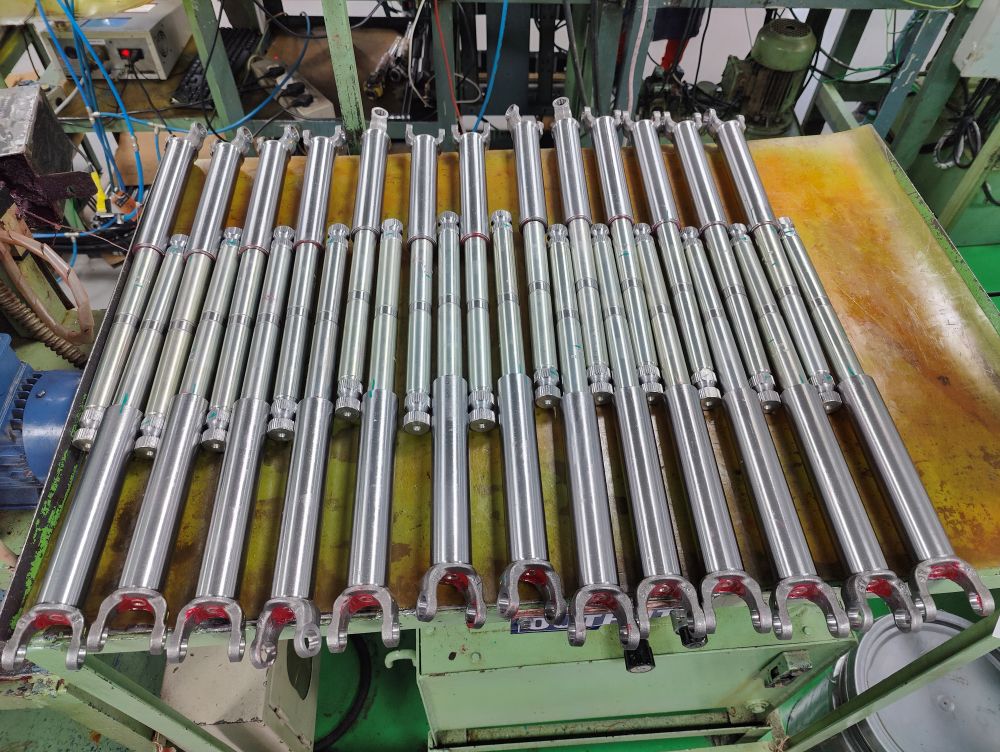
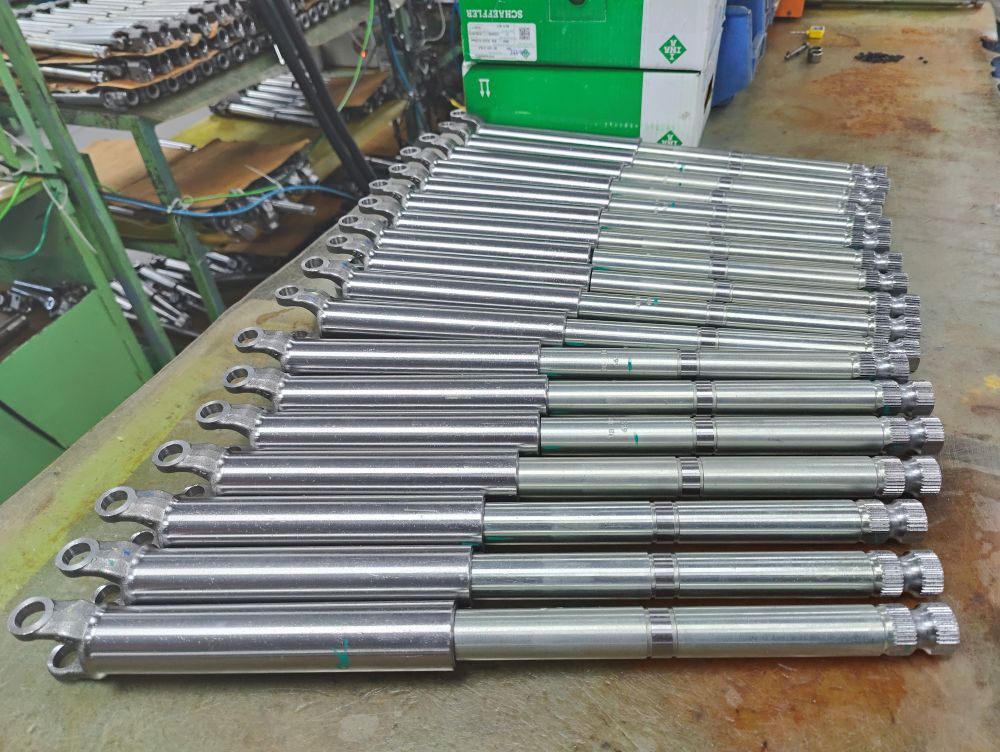
The steering and suspension business unit makes yokes, steering assembly sockets, axle shafts, flanges and sleeves, steering gearboxes, steering shafts and tubes, and universal joints and their assemblies. The powertrain business unit produces transmission shafts and their assemblies, transmission gears, yokes, brackets, camshafts, crankshafts, connecting rods, control arms, flanges and sleeves, CV joints, differentials and their assemblies, housings and sockets, and spiders. The lightweighting business unit makes brackets, viscous clutches, shock absorbers and EV parts.
New Products
The group usually builds to a customer’s drawings, but buyers now want suppliers who can also design. A year ago, company picked five entirely new product areas, including spiders, differential parts and constant-velocity joint parts. Three already have orders, and he expects the other two within six months. Some of the new work will be on show at Bharat Mobility in February, he indicated.
Safe Bets
About 55 to 60% of sales are exported to 17 countries including the US and Canada to Brazil, Europe and Thailand. No customer, including Magna, Dana, Hero, BorgWarner and ZF, is more than 12 to 13% of sales. And 60 to 70% of products work in petrol, hybrid or electric vehicles.
Tariffs have not cost it a customer, he said. Moving overseas is not an answer either, because steel-making and forging skills have long left the US and would be costly to rebuild. The group plans more land, and more than ₹50 crore for automation this year, because factory workers are getting harder to find.
Factory Floor Files
Step inside the group’s steering plant, and the story becomes more personal. Behind the big orders are people, machines and a plan to make both work better together.
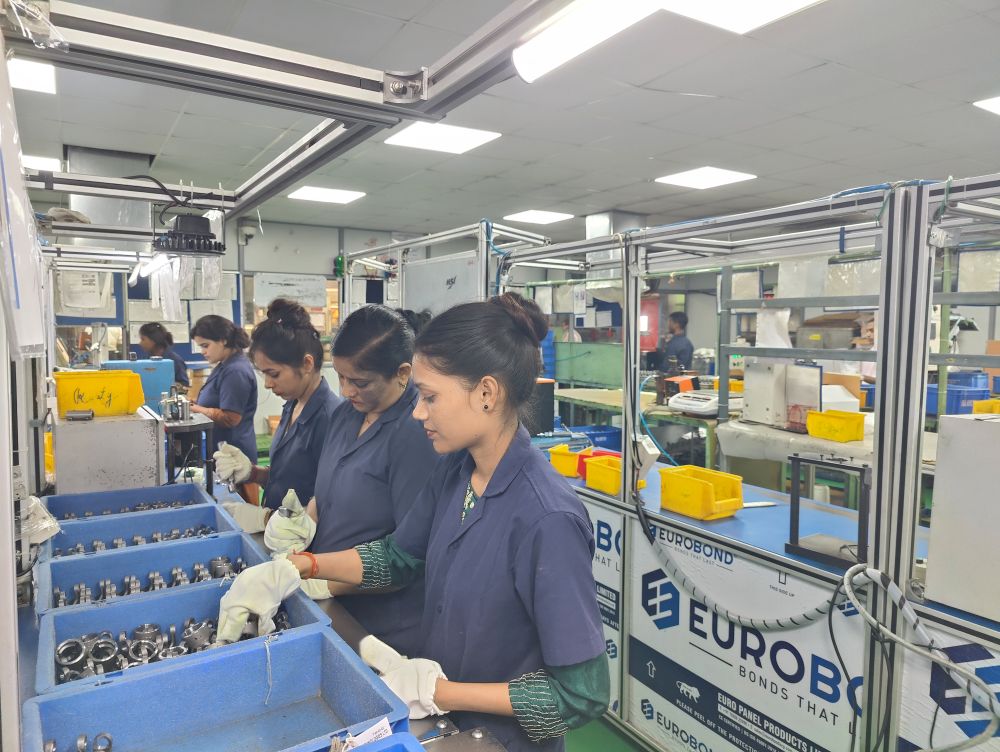
New workers are often young people from remote places with schooling only up to class eight or 10. Before anyone touches a machine, the plant’s HR team gives them a six-day induction. They learn about pay, medical cover, injury cover and ESI cover for their families. They learn what the company makes, where the raw material comes from, and how design, quality and maintenance work. Then come safety and technical modules, with tests and retests. Only after six days do they move to the shop floor, though they visit it during training too. In the last few years, the plant has hired more women, not only as staff but also as operators on the shop floor.
Robot Road
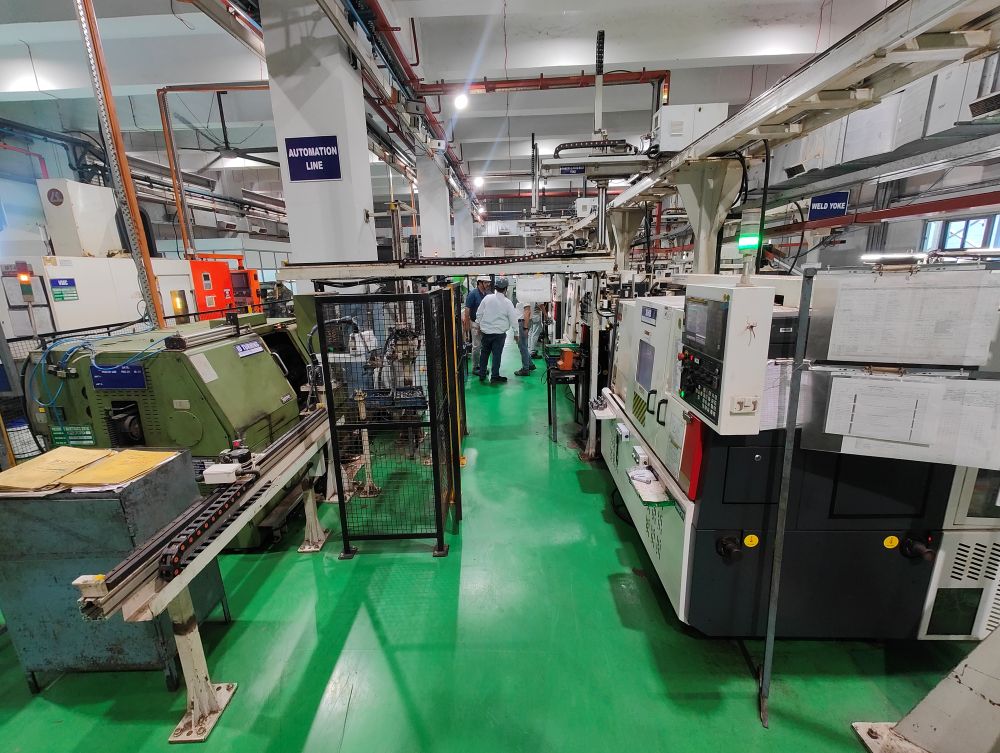
The plant also offers a glimpse of how work on the shop floor has evolved. In the early days, it took 19 or 20 people working on manual machines to make a single steering part. The shift to CNC machines brought the next leap, raising both output and quality. Today, one line has been running almost unmanned for about a year and a half, and a second line will be fitted with robots in the next three to four months. The goal is consistent quality and higher capacity, not fewer jobs.
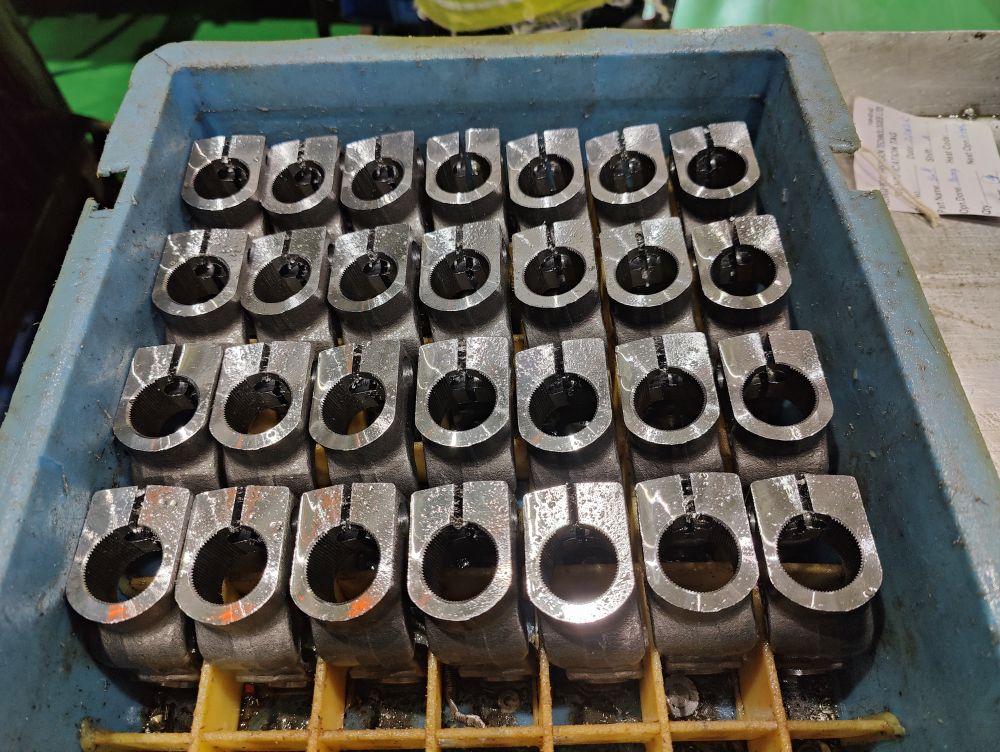
Yet the old lines still run alongside the new. Automation pays off for high-volume parts, but low-volume parts need frequent changeovers that eat into running time, and space on the shop floor is limited. Where automation has come in, the gains are clear. In one robotic cell, loading and unloading are fully automatic, and several operations have been combined, cutting the process from 18 or 19 steps to about 15. Even so, a few tasks still cannot be automated.
The group now wants to make precise, specialised parts rather than chase the highest volumes. Some are parts that Indian or European customers used to import from China and Korea. Sheet-metal forming for yokes is done in-house. Forging comes from long-standing suppliers, including a group company in Dharwad that makes yokes and ball joints, Mr. Arora concluded.