
Commercial vehicle aftersales is moving from a reactive, calendar-based model towards a connected and predictive ecosystem. With software-defined vehicles generating continuous diagnostic and operational data, OEMs can increasingly identify developing issues before they result in breakdowns. KPIT is pursuing this transformation through iDART, its AI-led integrated automotive aftersales and diagnostics platform designed for software-defined vehicles.
Amit Shah, Vice President & Business Head, iDART, KPIT, believes the fundamental change is towards condition-based maintenance, where vehicle health and usage determine when intervention is required. Connected diagnostics can combine fault signals, operating conditions, usage patterns and service history to create a more accurate picture of vehicle health.
“The important shift is from asking, ‘When is the vehicle due for service?’ to asking, ‘What attention does this specific vehicle need, and when?’ Preventive maintenance will not disappear. It will become more intelligent.”
Connecting vehicle intelligence with aftersales
KPIT sees iDART’s role as connecting vehicle engineering, connected intelligence and aftersales execution. The platform brings together engineering diagnostics, remote diagnostics, predictive maintenance, guided fault resolution, AI-powered service content and OTA software management.
The objective is to move beyond simply displaying fault codes. When a vehicle reports a developing issue, the system should help determine its likely cause, severity and whether the vehicle can continue operating. It can then identify whether the issue requires remote intervention or physical workshop attention.
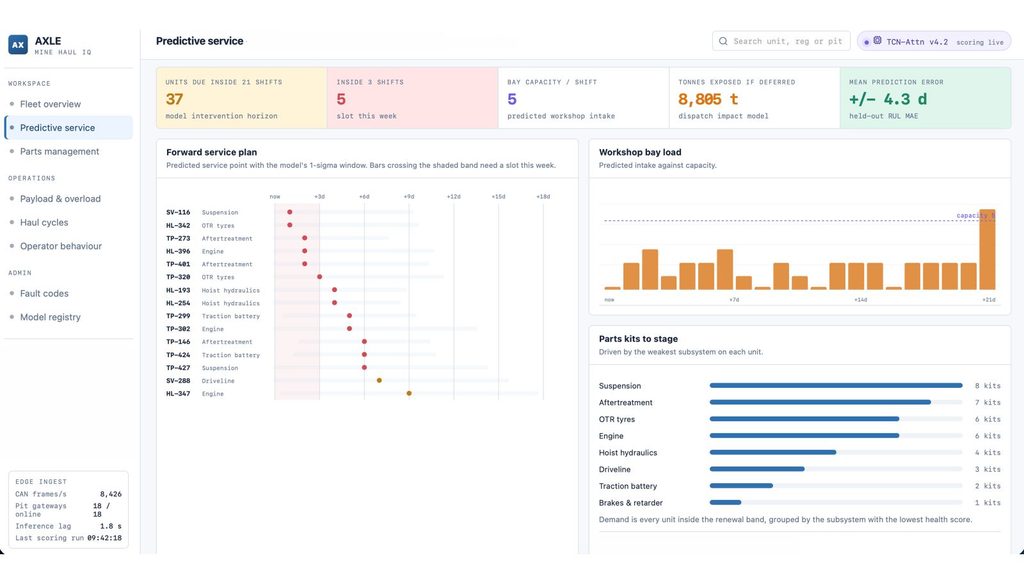
“The intent is not to introduce another isolated digital tool, but to establish a continuous flow of intelligence from the vehicle to the fleet operator, workshop and OEM engineering teams.”
KPIT’s Trace2Fix guided diagnostics solution can help technicians follow structured diagnostic paths using vehicle information, fault data and engineering knowledge. Its AI-powered content capabilities can also support OEMs in maintaining service and repair information as vehicle variants and software configurations evolve.
Making workshops more productive
Digital diagnostics will not eliminate the traditional commercial vehicle workshop. Instead, the workshop is likely to become more digitally enabled, with much of the initial diagnosis potentially taking place before the vehicle arrives. Job cards can be pre-populated, probable causes prioritised, repair information made available and parts prepared in advance.
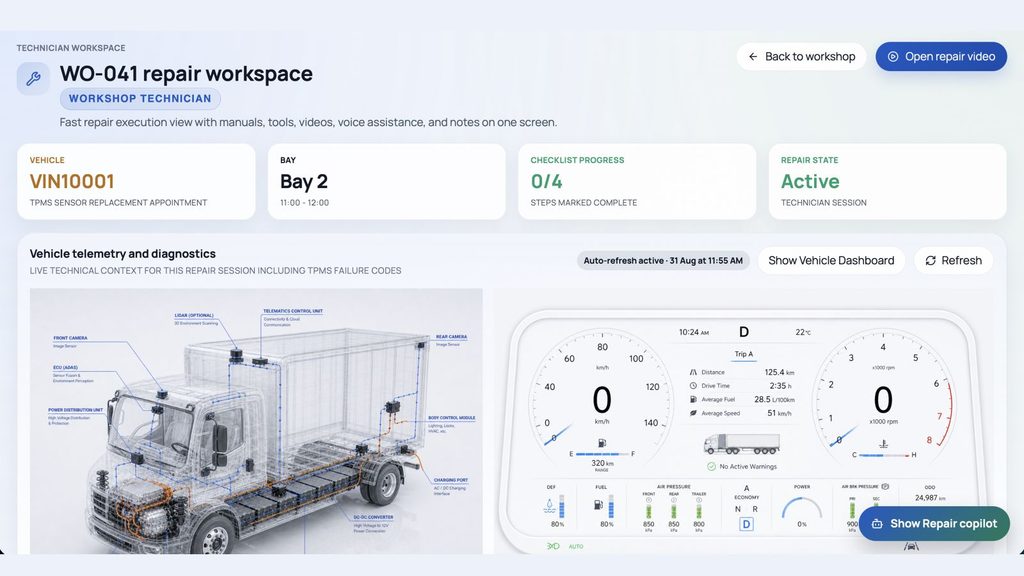
This can reduce diagnostic time and improve technician and bay utilisation. Remote software interventions and OTA updates could also resolve certain issues without requiring a physical visit, while complex mechanical, electrical and safety-critical repairs would continue to require skilled technicians.
“The future is not digital versus the workshop. It is digital intelligence strengthening the workshop.”
For technicians, this means moving increasingly from manual fault searching towards digitally supported problem-solving. Guided diagnostics can help less-experienced technicians follow consistent procedures, while specialists can focus on more complex repairs.
From data to measurable outcomes
For fleet operators, the value of connected aftersales ultimately lies in action rather than data volume. The key questions are whether a failure is developing, whether the vehicle can continue operating, what intervention is required and whether the right workshop, technician and parts can be prepared.
Connecting diagnostic and telematics data with vehicle configuration, service history, parts, warranty and repair information can turn an alert into a complete service action. This also creates opportunities for recurring services around vehicle-health monitoring, predictive maintenance, remote diagnostics and uptime-oriented maintenance programmes.
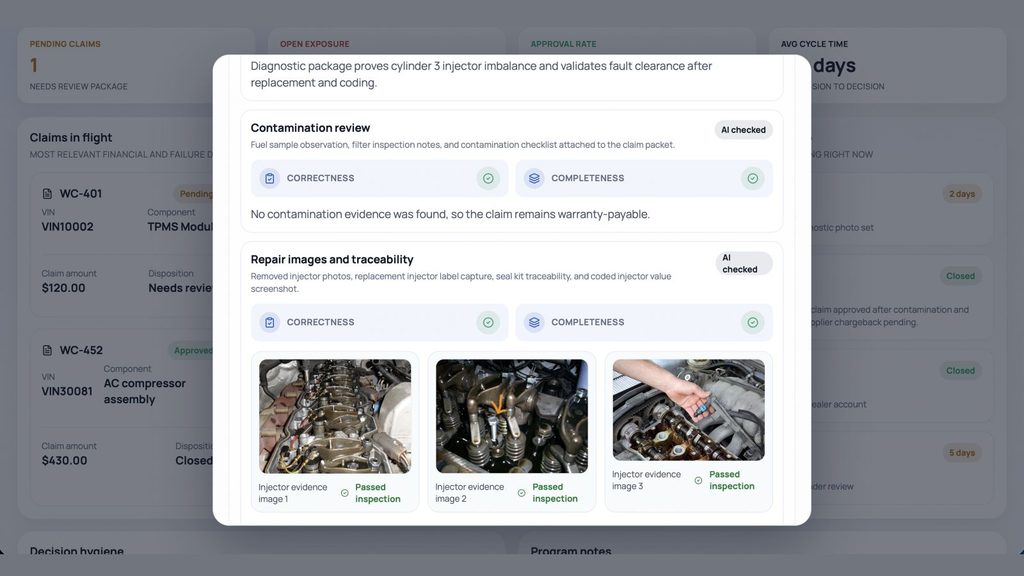
“The objective should not be to collect the maximum amount of data. It should be to convert the right data into a clear and timely action.”
For OEMs, this foundation can support subscription-based vehicle-health monitoring, paid remote diagnostic assistance and uptime-oriented maintenance contracts. Usage-based service packages and software updates that improve vehicle performance over its lifecycle could offer further opportunities. However, these models will depend on demonstrable value for fleet operators, supported by customer consent, robust cybersecurity and transparent data governance.
KPIT is also looking at AI-led orchestration across service intake, diagnostics, parts, warranty and customer communication. Through its SERVIO platform, the intent is to work across existing OEM systems rather than replace every dealer, CRM or enterprise platform.
India offers a practical opportunity
India’s diverse commercial vehicle ecosystem makes the transition particularly interesting. Large organised fleets and uptime-sensitive operators are likely to lead adoption, while simpler connected services can gradually reach smaller fleets and owner-operators through mobile applications, dealers and assisted service channels.
Solutions will also need to account for intermittent connectivity, mixed vehicle generations, varied workshop capabilities and different levels of digital maturity. Wider adoption will require OEMs to connect fragmented service systems, dealers to embrace tools that simplify their work, technology providers to design for Indian operating conditions and technicians to receive accessible training and repair information. The independent aftermarket must also be considered, given its role in servicing a large and diverse installed vehicle base.
“India has an opportunity to create a distinctly practical model for connected aftersales. It can begin by making every available vehicle signal more actionable and every workshop visit better prepared.”
For KPIT, the near-to-medium-term opportunity is to help OEMs create a connected aftersales ecosystem linking diagnostics, telematics, service, parts, warranty and workshops. The larger vision is a closed-loop model where every vehicle signal can lead to the right action, every repair can improve future diagnosis and every intervention ultimately contributes to better uptime.