By. Ravichandran Srinivasan
The Indian automotive industry is undergoing a structural shift in outbound logistics. Traditionally reliant on highway tractor-trailers (car carriers), Original Equipment Manufacturers (OEMs) are pivoting toward multimodal transport—combining rail freight, coastal Ro-Ro (Roll-on/Roll-off) shipping, and road haulage. This transition optimizes long-distance transit costs, shrinks lead times, and slashes Scope 3 carbon footprints.
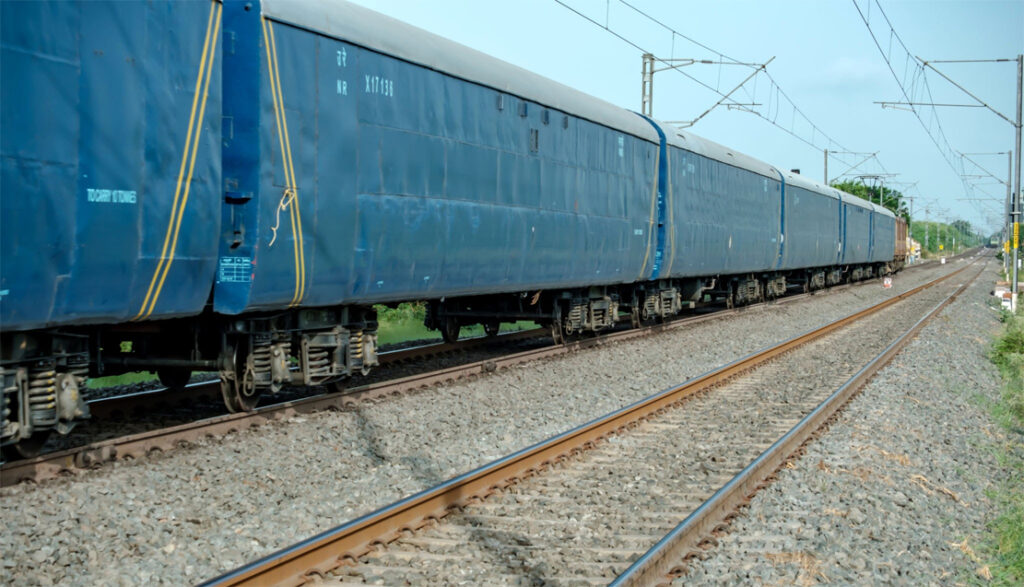
Infrastructure Catalysts: Dedicated Freight Corridors & Liberalized Policies
The growth of rail-based automotive logistics is driven by policy and infrastructure modernization by Indian Railways (IR):
- Automobile Freight Train Operator (AFTO) Scheme: Allows private logistics service providers and OEMs to procure, own, and operate specialized double-decker auto-carrier rakes.
- Specialized Wagon Designs:
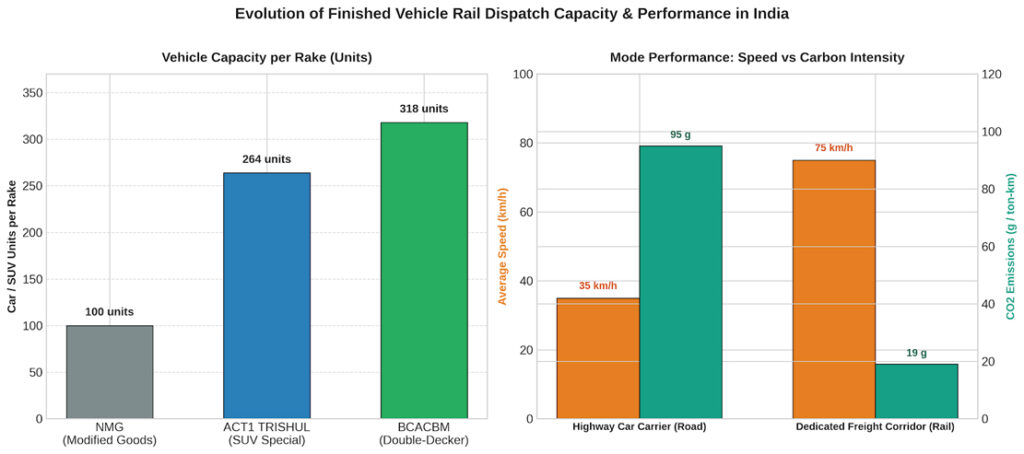
- OBCACBM Rakes: Covered double-deck wagons capable of carrying up to 318 small/medium cars per rake.
- OACT1 TRISHUL Rakes: Next-generation double-decker rakes tailored to carry taller SUVs (up to 264 SUVs per rake). IVC Logistics Limited
- ONMG/NMGH Rakes: Modified passenger coaches suited for versatile automotive movements.
Dedicated Freight Corridors (DFCs): High-speed, electrified Western and Eastern DFCs enable higher axle loads and faster average speeds, drastically cutting transit times between northern manufacturing hubs and western/southern ports or demand zones.
Supply Chain Ecosystem: OEM Adaptations and 3PL Collaboration
OEM Vehicle Rail Dispatch Estimates (India)
| OEM Manufacturer | CY 2025 Rail Volumes (Units) | CY 2026 Target / Projected Rail Volumes (Units) | Est. Rail Share of Total Dispatches (%) |
| Maruti Suzuki (MSIL) | 585,000 | 650,000–680,000 | 26% – 28% |
| Hyundai Motor India | 110,000 | 130,000 | 18% – 20% |
| Tata Motors | 85,000 | 105,000 | 14% – 16% |
| Kia India | 60,000 | 75,000 | 20% – 22% |
| Other OEMs (M&M, Toyota, Honda) | 90,000 | 115,000 | 10% – 12% |
Major OEMs across India are integrating rail dispatches into their core outbound supply chain operations:
- Maruti Suzuki India Limited (MSIL): Leading the industry, MSIL scaled rail dispatches to over 585,000 units (~26% of total volumes) in 2025. Leveraging in-plant railway sidings at Manesar and Gujarat, MSIL aims to increase rail dispatch share to 35%. Maruti Suzuki
- Other Major OEMs: Hyundai Motor India, Tata Motors, Kia India, Mahindra & Mahindra, Honda Cars, and Toyota Kirloskar Motor utilize rail and coastal modes to move inventory across regional hubs.
3PL Partner Collaboration: The Case of IVC Logistics
Logistics partners like Indian Vehicle Carriers (IVC Logistics) bridge the gap between IR infrastructure and OEM production lines. Managing dedicated fleets of double-decker rakes (including ACT1 TRISHUL and BCACBM) alongside over 1,300 road car carriers, IVC delivers end-to-end multi-modal solutions:
IVC Logistics Limited
- In-Plant Siding Operations: Handling direct loading at OEM plant terminals to eliminate road transport to public railway goods sheds.
- Damage Elimination: Enclosed steel railway rakes safeguard vehicles from highway hazards, stone pelting, weather exposure, and transit transit damages.
Coastal Shipping & Hub-and-Spoke Distribution
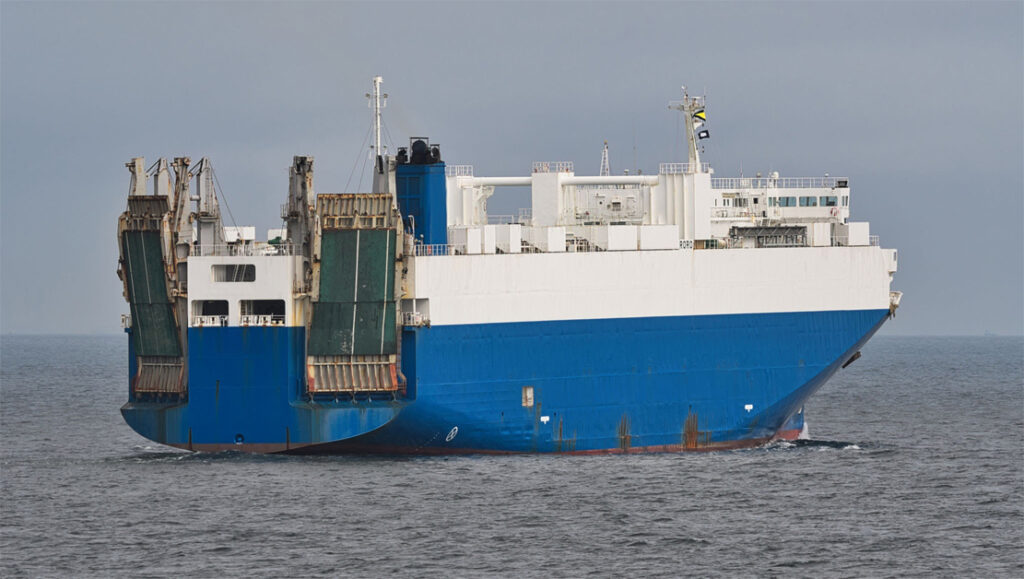
To bypass congested highways, OEMs selectively deploy coastal Ro-Ro shipping for long hauls along India’s coastline.
Major Rail & Sea Nodes in India
- Primary Rail Loading Hubs: Gurgaon / Manesar (Haryana), Farukhnagar (Haryana), Detroj / Hansalpur (Gujarat), Vallarpadam (Kerala), Ennore / Chennai (Tamil Nadu), Penukonda (Andhra Pradesh), Pune / Chakan (Maharashtra).
- Coastal Shipping Routes & Ports: Connecting western ports like Mundra and Pipavav to southern and eastern maritime terminals including Chennai, Cochin, Visakhapatnam, and Kolkata (Haldia).
Key Challenges & Strategic Solutions
| Operational Challenge | Root Cause | OEM & Logistics Partner Solution |
| Last-Mile Maritime Bottlenecks | Port congestion, lack of dedicated Ro-Ro berths, and limited coastal ship calls. | Developing dedicated auto-terminals at major ports; integrating port railway sidings for direct ship-to-rail intermodal transfers. |
| Rake Availability & Return Load Mismatch | Empty wagon runs on return legs (e.g., North to South vs South to North volume imbalance). | Multi-OEM rake sharing and backhaul cargo optimization managed by specialized 3PL operators. |
| Terminal Yard Capacity | Congestion at destination railway goods sheds during peak festival delivery seasons. | Private Freight Terminals (PFTs) and dedicated OEM stockyards equipped with auto-ramps and multi-tier parking. |
| Height Restrictions for Large SUVs | Older NMG rakes cannot accommodate modern tall SUVs. | Deployment of high-clearance ACT1 TRISHUL and specialized double-decker wagons. |
Tier-1 to Tier-2, 3 & 4 Distribution Model
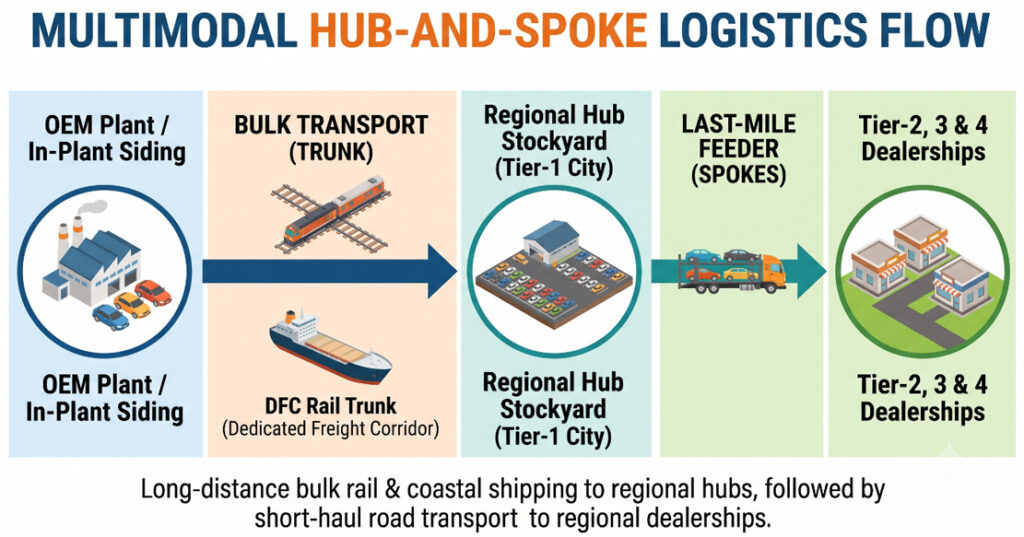
Multimodal logistics relies on a structured Hub-and-Spoke framework:
[OEM Plant / In-Plant Siding]
▼ (Rail Rake / Coastal Vessel – Trunk Movement)
[Regional Stockyard / Auto Hub in Tier-1 City ]
▼ (Short-Haul Road Carriers – Last-Mile)
[ Tier-2, Tier-3 & Tier-4 Dealerships ]
- Trunk Movement (Bulk): Rakes or Ro-Ro vessels move 250–300 vehicles simultaneously from manufacturing plants to mega-stockyards in Tier-1 cities.
- Regional Stockyards: Vehicles undergo inspection and PDI (Pre-Delivery Inspection) at central hubs.
- Last-Mile Spoke Delivery: Small road car carriers (carrying 4–8 vehicles) transport units from Tier-1 hubs across short radii (100–300 km) to Tier-2, 3, and 4 town dealerships.
Strategic Outlook
The transition toward multimodal logistics is re-engineering automotive supply chains in India. By combining the speed and scale of Dedicated Freight Corridors with coastal maritime routes and agile last-mile road haulage, OEMs are reducing transit times, minimizing transit damage, lowering costs, and achieving environmental sustainability targets.
About the Author
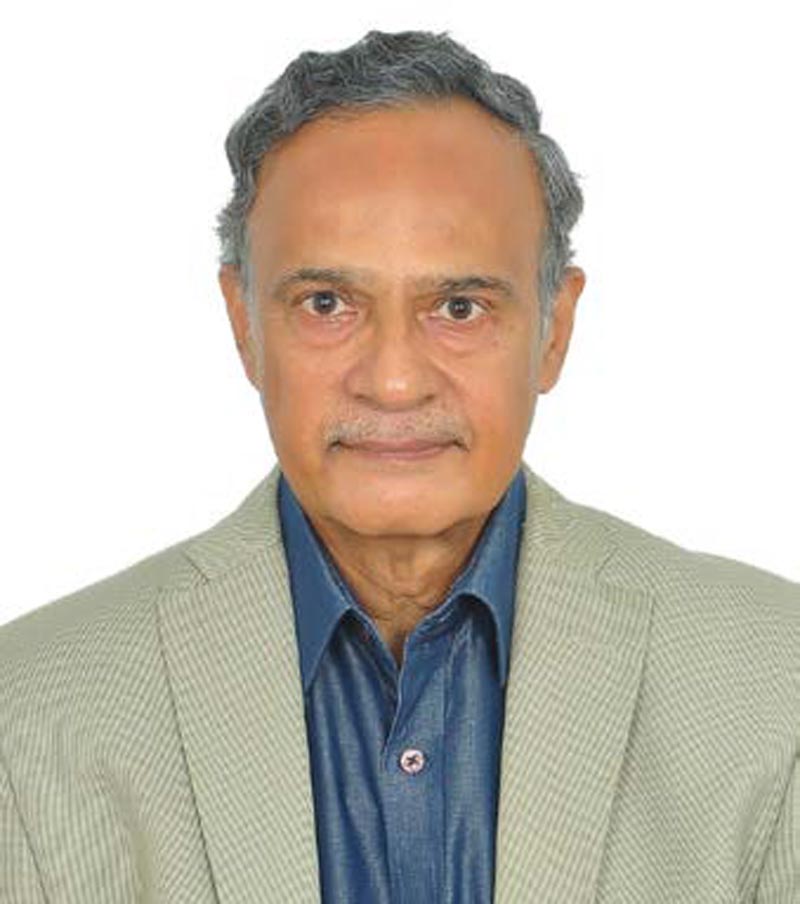
With over four decades of experience across India and overseas markets, including a significant stint in Oman, Mr. Ravichandran Srinivasan brings deep expertise in process excellence, leadership, and team development. He has held senior roles at Maruti Suzuki Limited, culminating as General Manager, and has led large automotive dealership operations as COO/CEO, overseeing Sales, Service, Parts, and Used Car businesses. He also worked as Head of Logistics & Distribution Division in Saud Bahwan Group, Oman and Maruti Udyog Ltd, Gurgaon (presently MSIL). His international exposure and hands-on leadership across OEMs, distributors, and dealerships provide a comprehensive, results-driven perspective on the automotive ecosystem.