Six global forces are reshaping the world simultaneously — and the CV industry stands at the intersection of all of them. For Mr. Kamal Bali, President & Managing Director of Volvo Group in India, the response is unambiguous: bet big on India, and lead the transformation from here.
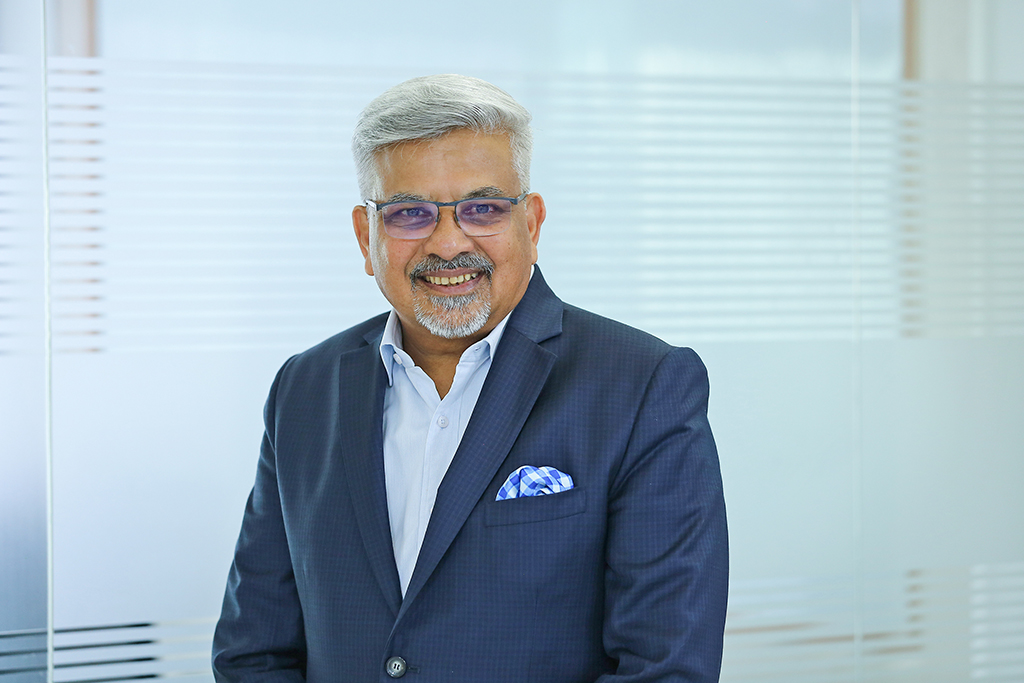
The world is not simply changing. It is changing along six different axes simultaneously, and the commercial vehicle industry sits squarely at the intersection of all of them.
That is the framing Mr. Bali offers on the major trends shaping the CV and construction equipment industries in the years ahead. It is not with vehicles or technology, but broader forces will reshape the world itself — geopolitical, as power shifts from a unipolar to a multipolar world; geo-economic, as countries weaponise trade and seek economic sovereignty through friend-shoring; geographical, as the centre of gravity moves from west to east; technological, as AI and future technologies disrupt existing business models; demographic, as some countries age and others grow younger; and ecological, as sustainability becomes a non-negotiable threshold for doing business globally.
All these shifts happen at the same time, creating a level of churn in global business and commerce that is without recent precedent. It is in this context, he says, that the CV industry’s own transformation must be understood. And that transformation is significant. The shift from ICE to alternative powertrains is a once-in-a-lifetime change — something that happens once every 130 to 200 years. For lighter vehicles, the pathway is relatively clear: electrification will lead. But for heavy-duty trucks, the picture is more complex. Batteries alone may not solve the challenge of long-haul freight at scale, and Mr. Bali sees green H2 ICE or Fuelcells as a credible alternative alongside biofuels. The industry, he believes, will not converge on a single answer.
Software-defined vehicles are transforming trucks into connected, intelligent platforms, while new business models are shifting the industry from vehicle ownership to use-and-pay arrangements.
The Next Chapter
It is against this backdrop that Volvo Group’s plans for India take on their full significance. The company is bringing a hydrogen-powered truck to India as part of the National Hydrogen Mission, in collaboration with ARAI and HPCL. The system operates at 700 bar — significantly higher than the 200 to 300 bar that others have attempted — reflecting a genuine leap in technology rather than an incremental step.
More significantly, the Group has decided to make Bangalore its fourth global manufacturing hub for trucks. Construction of a new advanced factory, contiguous to the existing facility in Hoskote, has already begun. The investment is flowing. The intent is clear — India will produce not just for India, but for the world, he concluded.
“The CV industry’s own transformation must be understood. And that transformation is significant. The shift from ICE to alternative powertrains is a once-in-a-lifetime change — something that happens once every 130 to 200 years.”