According to Mr. C. S. Vigneshwar, President, FADA, the dealer’s role evolves — from a point of sale into the customer’s trusted transition partner and long-term mobility advisor.
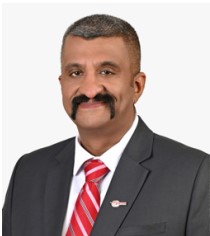
The FY’26 closed as a landmark year for Indian auto retail — the industry retailed close to 2.97 crore vehicles, up over 13% and within touching distance of the three-crore mark, with five of six categories at record highs. Commercial Vehicles crossed 10 lakh units for the first time, Passenger Vehicles crossed 47 lakh, and Two-Wheelers reclaimed their pre-COVID peak. That is the platform on which the rest of this decade will be built, Mr. Vigneshwar, said.
In the immediate term, three trends define the dealer’s world. First, affordability has been reset. GST 2.0, from September 2025, lowered the effective tax on mass-mobility and turned tentative enquiry into conversion — the momentum has carried into FY’27, with June’26 our best-ever June at 25.57 lakh units. Second, the powertrain mix is diversifying faster than most anticipated: alternative fuels — CNG, hybrid and electric — have crossed 40% of passenger-vehicle retail, and overall EV penetration has moved past 12%. Third, and most operationally important, inventory discipline has become the single biggest determinant of dealer health. When channel stocks drift beyond our recommended 21-day benchmark, it is the dealer who carries the financing cost. Aligning wholesale despatch to genuine retail demand is no longer a request — it is the discipline the next phase demands.
On the global front, the watch-outs are real — West Asia, oil, and supply-chain fragility can transmit quickly to fuel prices and sentiment. But India’s strength is that its demand is domestic and structural. Rural is now growing in step with urban, and that broadening base is our best insulation against external shocks.
Looking to 2030, the defining trend is that India will remain a genuinely multi-powertrain market. The transition to electric is irreversible in direction — three-wheelers are already over 60% electric, two-wheeler EV share has entered double digits — but it will be led by total cost of ownership, not by mandate. Commercial-vehicle electrification will scale through fleet-procurement cycles as logistics operators electrify routes. Alongside this, the used-vehicle market, the service-and-aftermarket business, vehicle financing, and digital-first “phygital” retail will move from the margins to the centre of the dealership’s profit story. Through all of it, the dealer’s role evolves — from a point of sale into the customer’s trusted transition partner and long-term mobility advisor.
Onward and Upward
For FADA, “the road ahead” means preparing the entire auto-retail fraternity — nearly 9,000 Dealer Principals having 15,000 dealerships converting to 30,000 + outlets, who are, at heart, MSMEs and among the largest organised employers (~ 5.5 Mn) in the country — to be future-ready. Our mission to 2030 rests on five priorities.
First, dealer viability. Record volumes must translate into sustainable dealer profitability. We are working towards a fair, balanced and transparent framework governing the OEM-dealer relationship — one that protects the capital and livelihoods a dealer invests, so that the last mile of the industry stays financially healthy.
Second, human infrastructure. The single biggest binding constraint on this industry is skilled people — in sales, in service, and increasingly in EV and connected-vehicle technologies. Through the FADA Academy, we are building a talent pipeline that can staff a modern, multi-powertrain showroom and workshop.
Third, data and research leadership. FADA’s retail data — drawn from the Government’s VAHAN platform — and our proprietary dealer surveys have become the truest demand signal for the sector. We will deepen this so that dealers, OEMs, financiers and policymakers all plan on the same verified numbers.
Fourth, a technology-neutral transition. Our consistent stance is to bring the customer to the centre and offer the right product with the right technology — and to favour phased, orderly transitions over abrupt ones. Practically, that means preparing dealers with the infrastructure, service capability and skilling to sell and support every powertrain, and readying the CV ecosystem for its own electrification curve.
Fifth, responsible advocacy. From ensuring fairness on legitimate tax credits, to inventory discipline, to the digitisation of registration and compliance, to road safety and scrappage — we will continue to engage constructively with Government and OEMs.
Our target for 2030 is not a single number. It is a healthier, more professional, more resilient dealership sector that grows with India — deepening vehicle penetration in a country where per-capita ownership is still low, formalising the used-vehicle and financing ecosystems, and standing as the trusted human interface between the customer and the mobility revolution. If we get that right, the volume records will take care of themselves. India’s growth story will be written on its roads, and the dealer will be right at the centre of it.
“As India moves towards being the world’s third-largest economy and towards Viksit Bharat 2047, mobility is not a passenger in that story — it is one of its engines.”