Magna, one of the world’s largest automotive suppliers and a trusted partner to automakers, showcased a wide range of engineering solutions at the recently concluded IAA Transportation 2026 in Hannover. The exhibits aimed at helping carmakers bring products to market faster and at lower cost. Highlights included advanced simulation tools that cut welding points by up to 20%, hybrid drive units, simplified battery components for both passenger & commercial vehicles, energy management and body & chassis solutions.
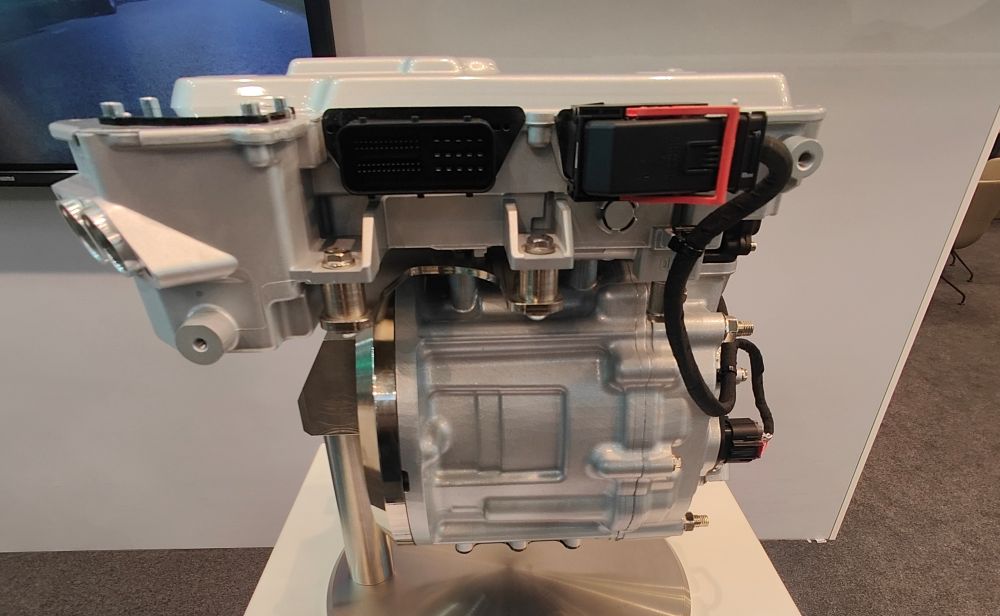
At the heart of Magna’s presentation was its finite element analysis (FEA) simulation capability, used to test structural stiffness and durability at multiple levels, from full vehicle components down to individual solder joints on electronic parts, helping identify potential failure points before physical production even begins.
In body and chassis engineering, the company demonstrated a simulation method for optimising joining points in metal assembly, such as spot welding used to secure glued components together. Since engineers traditionally tend to add extra joining points to ensure adhesion, Magna’s simulation can precisely calculate the actual number of spot welds needed, allowing manufacturers to reduce joining points by up to 20%. In vehicle production, this directly translates into shorter cycle times, lower costs, and higher units produced per hour, a company official stated.
On thermal management, Magna showcased a heat pump system designed to capture and reuse energy that would otherwise be wasted, particularly relevant for electric vehicles, where recovered energy can be redirected to improve cooling efficiency, boosting overall vehicle performance.
For heavy-duty electric vehicles, the company presented a standalone electric hydraulic pump unit. Traditional hydraulic pumps are mechanically driven by the engine, so they can only work when the engine is running. The new unit removes that dependency. With this separate electric-powered fully replacing that requirement, engines no longer need to idle just to operate hydraulic systems.
According to the official, its core advantage is adapting components already in high-volume production for its passenger car business for commercial vehicle use. Commercial vehicle volumes alone are rarely large enough to justify developing new components from scratch, so this approach passes the benefits of economies of scale on to customers as lower costs.
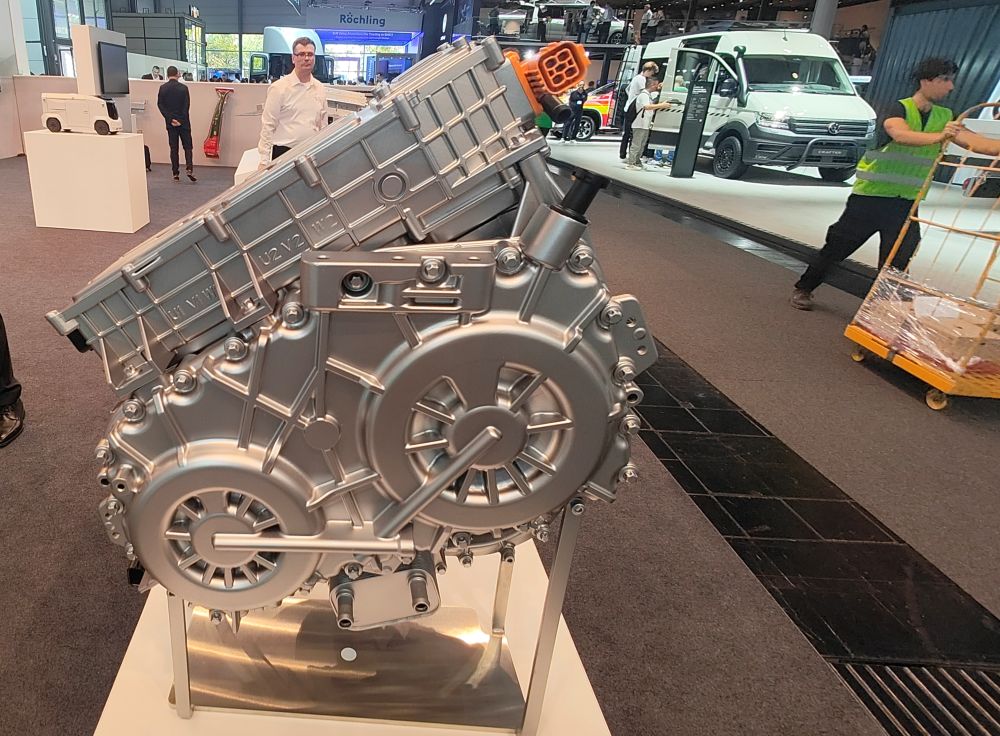
Magna also displayed its Dedicated Hybrid Drive (DHD Duo), a scalable multi-speed system designed for hybrid (HEV) and plug-in hybrid (PHEV) vehicle. Featuring two electric motors, a smaller and a larger one, the system allows both serial and parallel hybrid configurations depending on driving conditions. In one setup, the combustion engine can drive the axle directly; in another, the smaller motor generates electricity that’s routed through an inverter into the battery, which then powers the vehicle via the electric motor. Designed primarily for light commercial vehicles up to 3.5 tonnes, the unit is built to deliver strong power output within a notably compact packaging footprint.
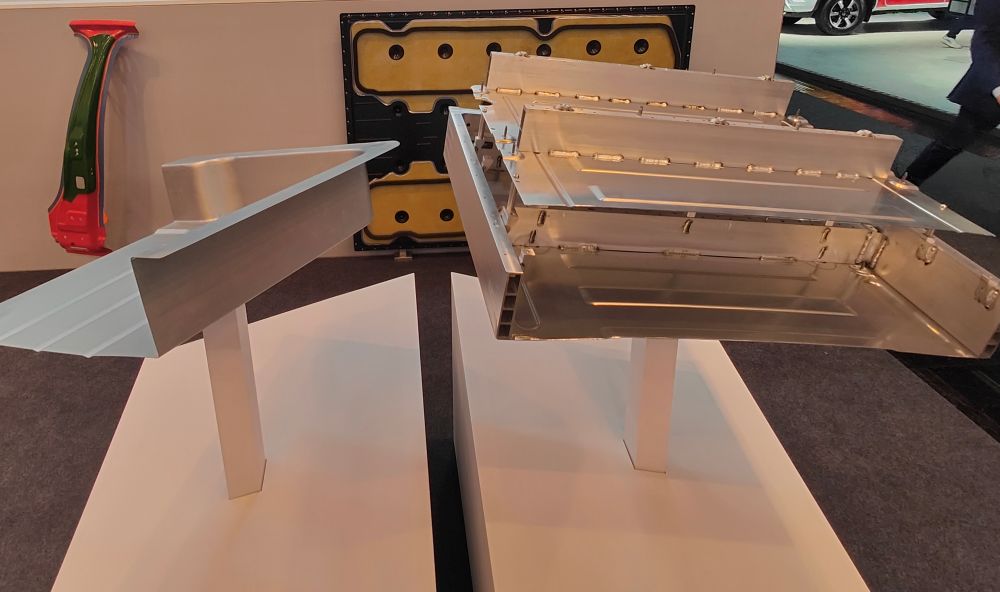
On electric storage, the company showcased an aluminium battery tray already in high-volume production for an American customer. The design combines what would normally be several separate parts into a single component. Deep-draw forming and tight, precisely engineered corners help it make the most of the available packaging space.
Magna emphasised its flexibility in offering steel, aluminium, or multi-material solutions depending on customer needs, alongside sustainability-focused innovations, including a door carrier made from flax fibre, part of the company’s broader push to combine part reduction with more sustainable materials.
The company also displayed a battery cover developed for a German OEM, engineered to meet strict heat-resistance and fire-safety requirements despite its visually simple appearance, reflecting the significant engineering complexity often hidden behind seemingly straightforward components.
Summing up its approach, the official said its broader goal is to draw on its deep experience working across multiple OEMs and vehicle segments to consistently recommend the simplest, most cost-effective solution for each customer’s specific requirements, whether that means reducing part counts, reusing existing components, or introducing more sustainable materials into vehicle design.