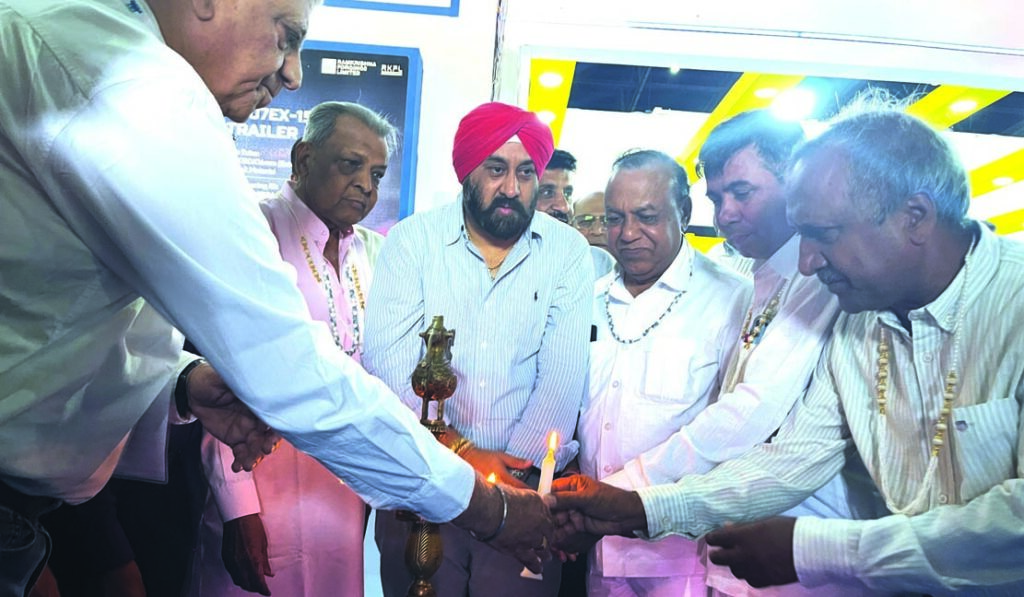
Reaching the milestone of its 10th edition, the Truck Trailer and Tyre Show in Jaipur once again reaffirmed its position as India’s only exhibition dedicated exclusively to the trailer ecosystem. Held in one of the country’s largest trailer manufacturing hubs, the event brought together around 70 to 80 exhibitors representing every aspect of the industry, from trailer manufacturers and axle suppliers to suspension specialists, braking technology providers, wheel manufacturers, software developers and aftermarket companies.
Unlike conventional commercial vehicle exhibitions, where trailers form only a small part of a much larger display, the Jaipur event offered visitors an opportunity to closely examine the technologies shaping the future of trailer transportation. The focus was no longer limited to increasing production volumes or introducing new products. Instead, exhibitors highlighted engineering improvements aimed at delivering higher payloads, lower operating costs, improved safety, longer service life and faster vehicle turnaround.
Walking through the exhibition halls, one could observe how the trailer industry has steadily progressed from traditional fabrication to engineering-led manufacturing. Lightweight structures, advanced suspension systems, electronic braking technologies, digital fleet management platforms and automated manufacturing processes reflected an industry that is investing heavily in innovation while responding to the changing expectations of fleet operators.
The exhibition also underlined Rajasthan’s growing importance as a manufacturing and business hub for trailers. According to the organisers, the state’s concentration of trailer manufacturers, suppliers and transport operators continues to make Jaipur an ideal venue for bringing together stakeholders from across the country. As the exhibition completes a decade of operations, it has evolved into a platform where new technologies are introduced, business relationships are strengthened and industry trends become clearly visible.
Among the various exhibits, three companies particularly stood out for the scale of their offerings and the direction they represent for the industry: Five Lasercut, Jamna Auto Industries and RKFL.
Five Lasercut Demonstrates Biz Case for Lightweight Trailers
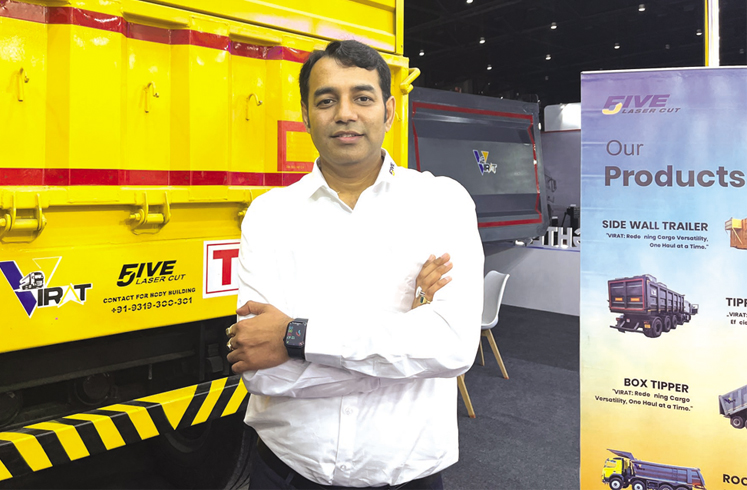
Five Lasercut attracted considerable attention by presenting products that challenge conventional thinking on trailer design. Rather than simply reducing weight, the company has focused on engineering trailers that combine lower kerb weight with structural strength, enabling fleet operators to carry higher payloads without compromising durability.
The highlight of its display was one of India’s lightest trailers, weighing around 6,200 kg, nearly two to two-and-a-half tonnes lighter than conventional trailers. The company also unveiled what it describes as India’s first lightweight box tipper, which weighs approximately 1.1 to 1.2 tonnes less than traditional designs while eliminating the need for hard-facing, thereby reducing maintenance requirements over the life of the vehicle.
“Our philosophy is simple. Being lightweight should never come at the cost of strength. We have engineered trailers that are among the lightest in India while also delivering the durability customers expect,” said Mr. Arpit Dixit, Co-founder.
The company’s lightweight approach extends across its entire product portfolio, which includes sidewall trailers, tip trailers, bulkers, flatbeds, container trailers, skeleton trailers and specialised bomb cart trailers for port applications. This demonstrates that lightweight engineering is not limited to a single product but forms the foundation of its design philosophy.
Behind these products lies a highly automated manufacturing process driven by CNC equipment with minimal manual intervention. Every trailer undergoes extensive validation, including raw material testing, welding penetration analysis and performance evaluation under loads of up to 75-80 tonnes across mines, highways and varying road conditions before reaching customers.
Another important discussion at the company’s stand centred around electric commercial vehicles. As battery packs increase vehicle weight, lightweight trailers can significantly improve payload capacity and driving range, making them an ideal partner for future electric tractor-trailer combinations.
“As battery weight increases in electric trucks, our lightweight trailers become the perfect complement by improving payload capability as well as driving range,” Mr. Dixit explained.
Having already supplied around 1,500 trailers, Five Lasercut currently manufactures between 125 and 150 trailers every month. The company enjoys a strong presence across Rajasthan, Gujarat, Madhya Pradesh, Maharashtra and Chhattisgarh while steadily expanding into Uttar Pradesh, Bihar, Andhra Pradesh and Karnataka.
Its growth strategy is equally supported by a nationwide after-sales network comprising dedicated service engineers, authorised workshops and a 24×7 toll-free customer support system aimed at ensuring service assistance within 24 hours.
Looking ahead, the company plans to double production capacity to 250-300 trailers per month, reflecting growing acceptance of lightweight trailer technology among fleet operators.
Jamna Auto Industries Expands Beyond Suspensions
While Five Lasercut focused on lightweight engineering, Jamna Auto Industries showcased how it is building an integrated trailer ecosystem through investments in suspension systems, axles, manufacturing, research and customer support.
Despite temporary market softness arising from global uncertainties, the company remains confident about long-term demand and has continued with its planned investments.
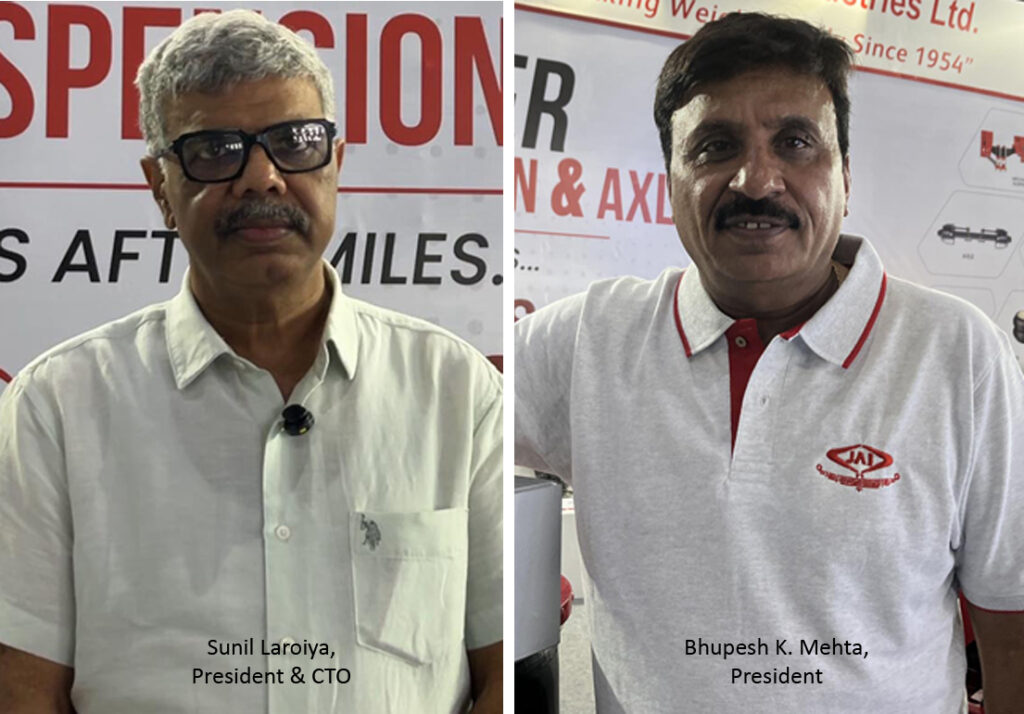
“The current slowdown is temporary. We don’t see any long-term impact on the Indian market, which is why none of our planned investments have been put on hold. We continue to invest with a long-term vision,” said Mr. Sunil Laroiya, President and CTO.
One of the company’s biggest strengths is its strategy of backward integration. In addition to trailer suspensions, Jamna is expanding its portfolio to include U-bolts, bushings, greases and coolants, allowing customers to source a wider range of products from a single supplier.
Its manufacturing footprint is also expanding through a new facility at Pithampur near Indore, while research and product validation continue at its advanced engineering centre in Pune. Every product undergoes extensive testing before commercial production, ensuring reliability across demanding operating conditions.
The company also highlighted its single-piece axle beam manufactured without welded joints, offering improved structural integrity for heavy-duty trailer applications.
“What sets Jamna apart is that we manufacture critical components in-house. Our single-piece axle beam, without any welded joints, delivers superior strength and reliability for trailer applications,” said Mr. Bhupesh K. Mehta, President.
Another area receiving significant attention was research and development. Jamna works closely with trailer manufacturers to develop application-specific suspension solutions while validating every individual component rather than only complete assemblies.
“Our biggest strength is our in-house R&D. We don’t just validate complete suspension systems; we can test and optimise every individual component, allowing us to deliver highly reliable and application-specific solutions,” Mr. Laroiya said.
Recognising that customer expectations extend beyond products, the company is significantly strengthening its aftermarket presence. Over the next year, Jamna plans to establish nearly 200 additional customer touchpoints, including exclusive service centres and authorised workshops capable of supporting air suspension installation and maintenance.
The company has also introduced a rapid-response service model with dedicated engineers expected to reach breakdown locations within two to three hours.
“For fleet operators, uptime is everything. Our focus is not only on supplying quality products but also on ensuring quick service support because every hour a trailer is off the road impacts business,” Mr. Laroiya concluded.
The company’s long-term plans also include expanding into Europe and North America through its upcoming single-tube axle manufacturing facility, highlighting its growing global ambitions.
RKFL Focuses on Quality Through Complete In-House Manufacturing
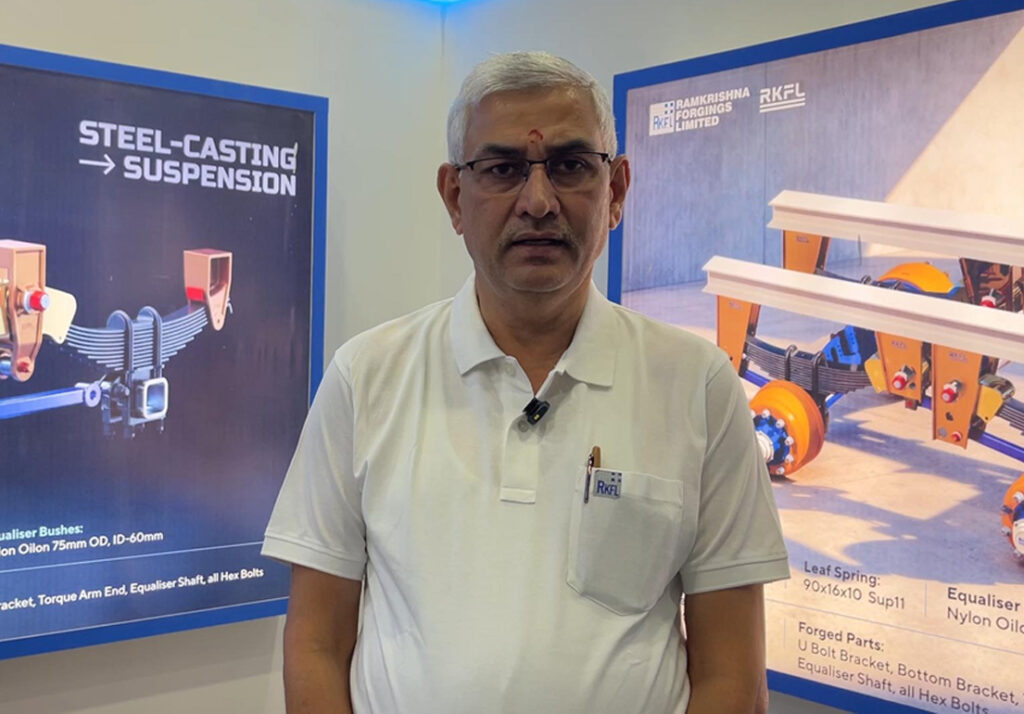
Another company that left a strong impression at the exhibition was RKFL, which has steadily built its reputation around complete control over manufacturing and dependable after-sales support. At a time when many manufacturers outsource critical processes, RKFL continues to manufacture almost every major component in-house, including forging, casting, machining and fabrication. Only fasteners and leaf springs are sourced, and these too are produced to the company’s specifications.
“Our strength lies in complete control over manufacturing. From design and engineering to forging, casting and fabrication, almost every critical component is produced in-house, ensuring consistent quality and reliability,” said Mr. Gyan Ojha, Vice President, Sales & Marketing.
The company displayed its range of 13-tonne to 17-tonne trailer axles along with mono air and mechanical suspension systems catering to applications such as bulkers, flatbeds, LPG bullets, ammonia tankers and running gear systems. RKFL is also testing products for modular trailers and car carriers, indicating its intention to expand into specialised transport applications.
Beyond manufacturing, the company has invested significantly in customer support. Every axle is backed by a lifetime warranty on the axle beam, while customers receive installation drawings, certification documents and pre-delivery inspection support. Its nationwide service network operates round the clock with the objective of resolving minor issues within four to six hours and major breakdowns within 24 to 48 hours. The company has even introduced a compensation mechanism if a vehicle remains off the road beyond 48 hours due to product-related failures.
RKFL currently manufactures around 1,500 to 1,800 axles and up to 1,000 suspension systems every month from its Jamshedpur facility and plans to substantially increase capacity while strengthening its presence in southern India as well as export markets including the Middle East, Nepal and Bhutan. Its emphasis on localisation, engineering and service reflected the increasing expectations of today’s fleet operators, who value long-term reliability as much as product performance.
Innovation Extends Across the Trailer Ecosystem
Beyond the major trailer and axle manufacturers, several exhibitors demonstrated how every component of the trailer ecosystem is undergoing continuous improvement
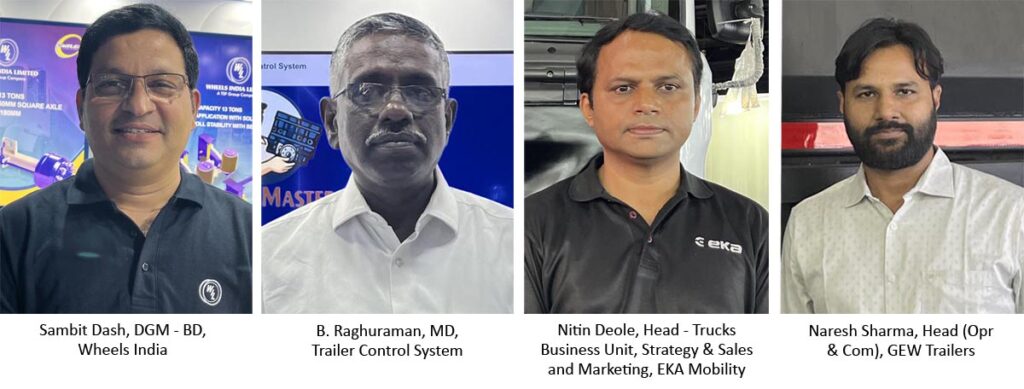
Wheels India highlighted the industry’s shift towards higher payload capacities by introducing new high-load wheel variants and expanding its portfolio of tubeless wheels. Alongside wheel technology, the company also displayed complete suspension kits comprising axles, brake drums and suspension components. Equally important was its emphasis on customer education through wheel safety and maintenance programmes, reinforcing the growing importance of preventive maintenance.
Safety technologies also received considerable attention. Trailer Control System showcased its Brake Master range of ABS and Electronic Braking Systems (EBS), underlining how increasing vehicle speeds and payloads are driving demand for more sophisticated braking solutions. The company pointed out that fleet operators who have adopted electronic braking have reported improved vehicle stability, shorter stopping distances and greater driver confidence, leading many to standardise EBS across their fleets.
Electrification emerged as another significant talking point. EKA Mobility attracted visitors by displaying the only electric tractor-trailer at the exhibition. Its 55-tonne 6×4 electric tractor, already undergoing trials with cement and steel companies, demonstrated that heavy-duty electric transportation is gradually moving closer to commercial deployment. The company also emphasised that lightweight trailers will play a crucial role in maximising payload and driving range, making them an important part of the electric transport ecosystem.
Meanwhile, GEW International showcased its application-focused trailer philosophy, developing products around specific customer requirements rather than offering standardised solutions. The company’s engineering-led approach, coupled with compliance to ICAT and CMVR standards, reflected the increasing importance of design validation and regulatory conformity within the organised trailer industry.
Manufacturing Technologies Continue to Advance
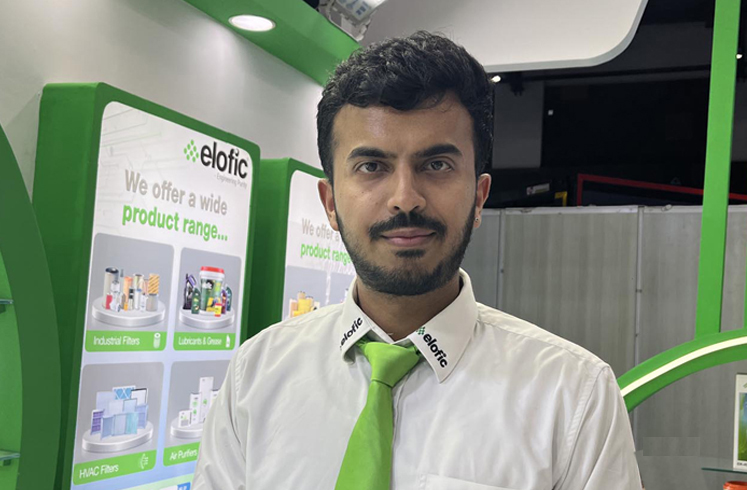
The exhibition also highlighted the technologies supporting trailer manufacturing itself. Elofic Industries, celebrating 75 years of operations, showcased its comprehensive filtration portfolio covering commercial vehicles, passenger vehicles and industrial applications. With a strong OEM presence and an expanding distribution network, the company reaffirmed the importance of quality filtration in ensuring engine reliability and reduced maintenance costs.
Fronius demonstrated advanced welding solutions designed to improve productivity while maintaining consistent weld quality, even with semi-skilled operators. Its Velo welding technology generated considerable interest among trailer manufacturers looking to address skill shortages without compromising manufacturing standards.
Power Drive Bearings presented its expanding range of automotive and industrial bearings while highlighting recent investments in automated manufacturing. The new production facilities are expected to significantly increase output, supporting both domestic demand and export markets. The company’s expansion into electric braking systems also demonstrated how component manufacturers are diversifying alongside changing vehicle technologies.
Similarly, Akshay Bearings displayed its extensive range of heavy-duty wheel, axle and hub bearings developed for leading commercial vehicle platforms. Supported by advanced testing laboratories and growing exports, the company continues to strengthen its presence across both OEM and aftermarket segments.
Agya Auto, with nearly four decades of expertise in suspension springs, highlighted its backward-integrated manufacturing operations and growing aftermarket ambitions. While the company remains a strong OEM supplier, it is steadily expanding its distribution network to strengthen its presence in replacement markets across the country.
Digitalisation Takes Centre Stage
While hardware dominated much of the exhibition, Lozics demonstrated how software is becoming equally critical in modern transport operations.
The company showcased its cloud-based Transport Management System, Fleet Management System and Warehouse Management System, serving nearly 850 customers across India and overseas markets. By integrating GPS tracking, FASTag data, fuel cards, banking systems and maintenance records, the platform enables fleet operators to monitor vehicle performance, operating costs and business profitability from a single interface.
Looking ahead, the company revealed its work on AI-powered capabilities that will allow users to retrieve reports and operational insights through simple natural language queries while helping transporters forecast demand, optimise fleet deployment and improve decision-making.