Early in the day at Taloja, Rahul Chobe prepares his tanker for another journey. The cargo is hydrogen gas; something that demands far more than simply getting behind the wheel and driving. Before setting off, Rahul makes sure the vehicle is ready, checks the important systems and reminds himself of the responsibility that comes with the load. The destination may change, but his approach never does: the journey begins with safety.
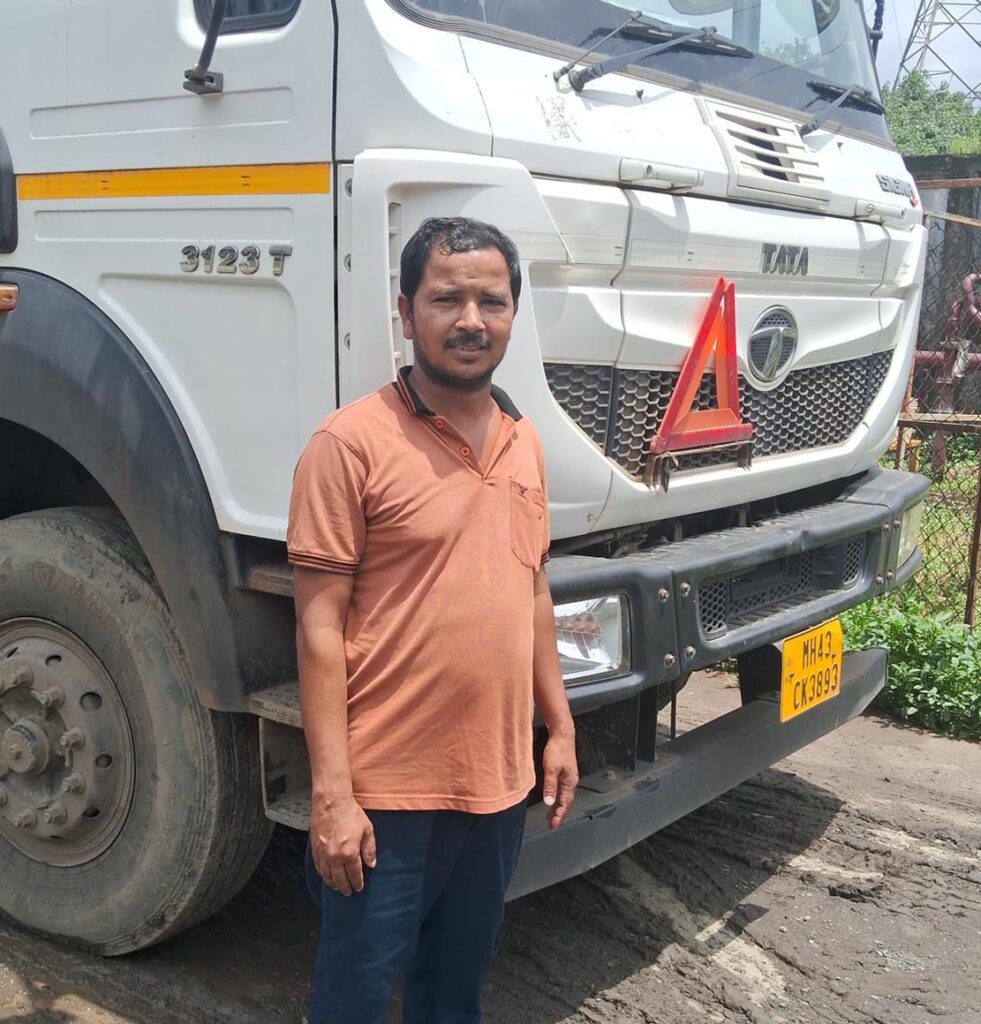
“Hydrogen is a sensitive load. Before I leave, I check everything properly. Once I take the vehicle out, I know that the responsibility is mine.”
Rahul works with Thakker Roadlines Pvt. Ltd., a company established in 1985 that has grown from a regional transporter into a logistics partner for India’s industrial, chemical and energy sectors. Its fleet carries hazardous and non-hazardous chemicals, petroleum fuels, industrial and medical gases, refrigerated cargo, perishables and heavy equipment. Rahul’s assignments take him from industrial locations such as Taloja and Tata Steel facilities towards destinations across Maharashtra, including Karnapur, Osmanabad and other parts of Marathwada.
“We take the load from the factory and have to deliver it safely wherever the company sends us. The place may be different, but our duty remains the same.”
For Rahul, the road itself is a teacher. Long-distance driving has taught him that commercial driving is not about speed. It is about understanding the road, anticipating what other vehicles may do and knowing when to slow down. Expressways may make travelling easier, but every route has its own challenges. A driver has to remain alert for hours, particularly when carrying a specialised and potentially hazardous load.
“A good driver is not the one who drives fast. A good driver is the one who understands the road and brings the truck and the load back safely.”
His relationship with the truck is equally practical. Before and during a trip, Rahul pays attention to the steering, brakes, tyres, lights, engine and other aspects of the vehicle. He understands that preventive checks can avoid trouble later. Modern commercial vehicles have become more comfortable and capable, but Rahul believes technology and the driver must work together.
“The truck gives you many facilities today. The cabin is better, braking is better and the vehicle is easier to drive. But the driver must also know his vehicle and take care of it.”
The responsibility becomes even greater while loading and unloading hydrogen. Rahul knows that safety procedures cannot become routine simply because he has done the job many times. Leakage, improper handling or carelessness can put people and property at risk. That is why he treats every loading point and every delivery as a fresh responsibility rather than another ordinary trip.
“Even if I have done the same work many times, I don’t take it casually. With gas, one has to follow every precaution and every guideline properly.”
Behind that responsibility is also a sense of belonging to Thakker Roadlines. Rahul values the stability that comes with the company; timely salary, insurance and medical support; and understands what that means for a driver and his family. For him, a company that looks after its people earns something more valuable than loyalty on paper: it earns commitment on the road.
“When the company looks after us and our families, we also feel that we must do our work honestly. You don’t feel like you are working only for a salary; you feel that you belong to the company.”
That feeling may be one of the most important lessons Rahul can offer to young people considering commercial driving. The profession is changing, with safer vehicles, better cabins, modern fleet technology and greater emphasis on training. But no technology can replace the human being who sits behind the wheel and makes the right decision at the right moment.
“Young drivers should learn properly, respect the vehicle and never take safety lightly. If you do your work sincerely, there is respect in this profession.”
At the end of every journey, Rahul’s achievement is simple but significant: the tanker reaches its destination, the cargo is delivered and he returns safely. From Taloja to distant industrial destinations in Maharashtra, his work keeps essential industries moving quietly in the background. He may be called a driver, but Rahul sees himself as something more; a custodian of his company’s trust and a small but important link in the chain that keeps society moving.
“I feel proud when I complete a trip safely. I am doing my duty, the company is trusting me, and the people are depending on this work. For me, that is what being a driver means.”