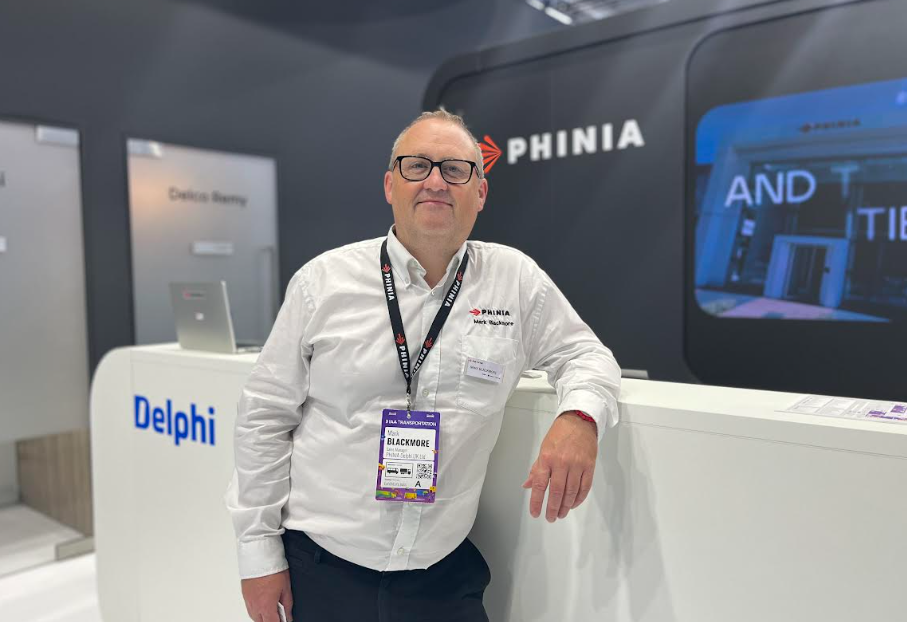
PHINIA Delphi UK Ltd. showcased its full range of fuel injection and after-treatment technologies at the recently concluded IAA Transportation 2026. The range covers heavy-duty engines of up to 17 litres and beyond. The company also showed new pump developments and a growing line-up of starters and alternators for the European market.
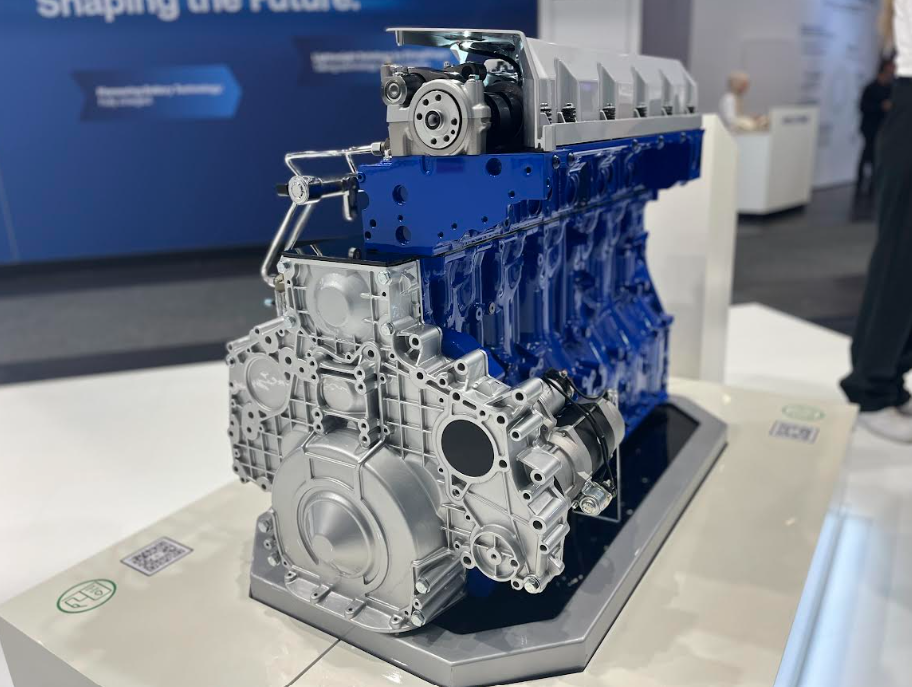
At its heavy-duty display, the company showed its complete injector system, with six injectors featuring closed-loop control. This technology keeps the injectors performing consistently throughout their working life, from day one to the end.
Sharing his views to this publication, Mr. Mark Blackmore, Sales Manager, PHINIA Delphi UK Ltd. said, as a full-system supplier, the company offers injectors, pumps, rail, ECUs, and software, capable of supporting engines ranging from 11 to 17 litres. It is already exploring even larger engine applications beyond that range.
The booth also featured a new addition to its portfolio, the DFP4 pump, a fresh development being showcased for the first time this year. Recognising that customer needs vary, he said it can scale its offering depending on requirements; some customers want a complete system, while others prefer to focus only on the “wet side,” injectors, pumps, and rail.
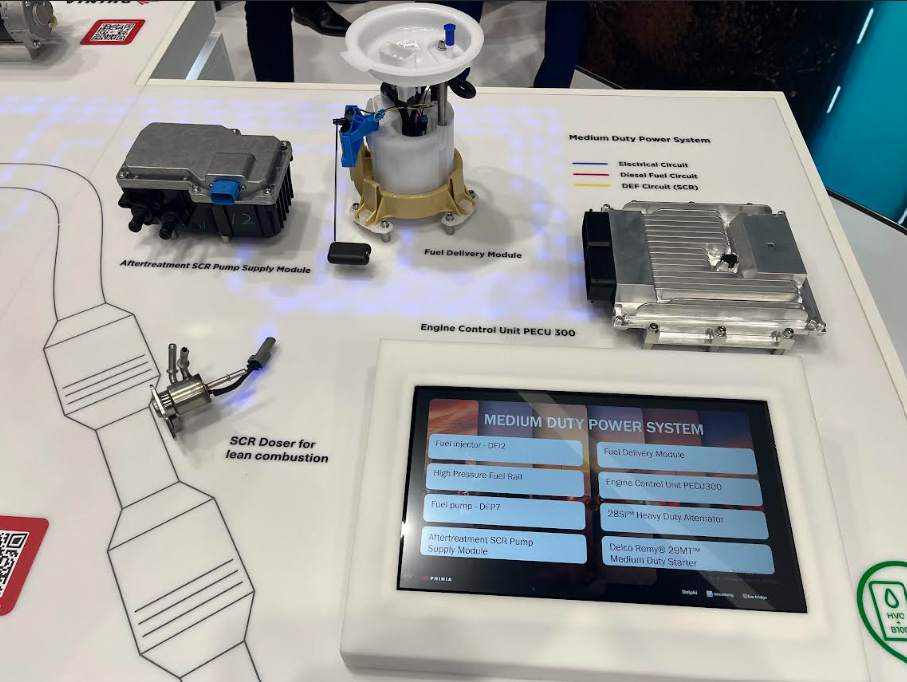
In the medium-duty segment, covering engine sizes between three and 8.9 litres, the components maker showcased a similar setup featuring its DFI2 injector paired with a DFP7 pump and common rail system, alongside ECU and software capability. For this segment, the company also offers a complete after-treatment system. It includes a tank-mounted SCR pump supply module and a doser. This lets PHINIA’s software manage the whole process, from fuel combustion right through to the exhaust. All these systems, he confirmed, are Euro 7 ready, with dedicated concepts already developed to support customers requiring compliance with the upcoming emissions standard.
The company also highlighted its starter and alternator lines of business. These product lines are already well established in the US, and PHINIA now plans to expand them into Europe, where customer interest is growing. On the shift toward software-defined vehicles (SDVs), Mr. Blackmore said it continues to regularly improve and update its software offerings, though how that software ultimately reaches the vehicle, including via over-the-air updates, remains largely the customer’s responsibility.
On whether SDVs might drive greater hardware standardisation, since software updates can reduce the need to redesign hardware from scratch, he acknowledged the appeal but said full standardisation remains difficult in practice. The company builds its products on common platforms, such as its DFI21 heavy-duty injector and a shared medium-duty injector base. Even so, it still has to meet customer-specific needs, such as different header designs. So, while PHINIA keeps its core designs as consistent as possible, some variation between products can’t be avoided, he added.