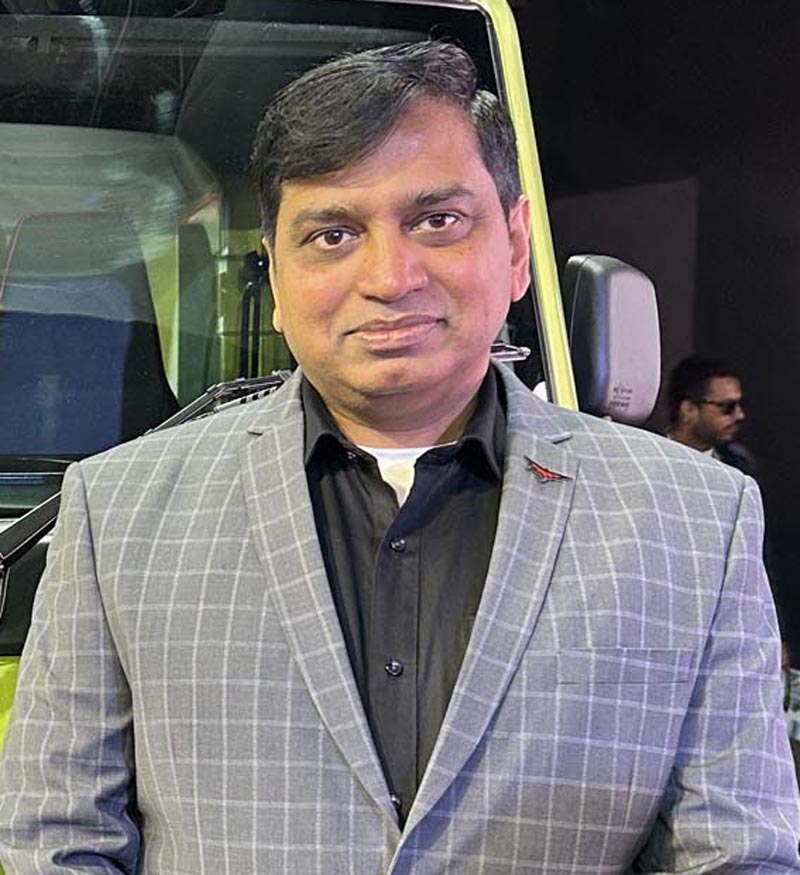
Success in 2030 will be measured in electrified freight corridors running end to end, fleet operators who no longer see electric trucks as experiments, and a supply chain built substantially in India, says Mr. Jalaj Gupta, Managing Director, Montra Electric.
India runs on close to four million heavy trucks, and until recently, virtually none moved freight without burning diesel. With crude oil near $100 a barrel, fuel volatility has become a boardroom concern. Government policy is also maturing — PM E-DRIVE remains the biggest accelerant for commercial EVs, but equally significant are the MoUs Montra signed with the Ministry of Road Transport and Highways supporting the NCRPB’s scheme to replace ageing trucks and buses across Delhi-NCR. Programmes like this shift the conversation from buying an EV to replacing a fleet, creating far more durable demand.
Commercial mobility will not electrify at a single pace. Two- and three-wheelers are already electrified at scale, small commercial vehicles are following on urban logistics demand, and heavy trucks will take longest given battery weight, route economics, and financing cycles. The smarter approach is to go where the application fits first — ports, cement, steel, mining, and fixed corridors.
Manufacturing resilience is still catching up. India imports almost all its lithium-ion cells, and despite an ambitious 50 GWh ACC PLI target, only a fraction has been commissioned. This year’s Union Budget took real steps to close that gap, but a competitive cell ecosystem will take years, not quarters. India’s real advantage is that it need not choose between building vehicles and building the ecosystem — it can do both at costs the world will find hard to match.
Vision for Tomorrow
“Our goal is not to sell the most electric vehicles, but to make electrification the default choice for Indian fleet operators — corridor by corridor, before scaling volume. The Manesar deployment will help create one of India’s longest electrified freight corridors, driven by customers in cement, steel, mining, and infrastructure who now see electric trucks as mainstream, not experimental,” he said.
Every Montra vehicle runs on software-defined architecture with telematics and OTA capability. “We have set a public target of roughly ₹1 billion in turnover within four to five years, with heavy trucks contributing half, and are building export readiness for SAARC and African markets,” Mr. Gupta added.
“The industry will not be won by whoever puts the most electric trucks on the road, but by whoever builds continuous, reliable corridors for them to run on.”