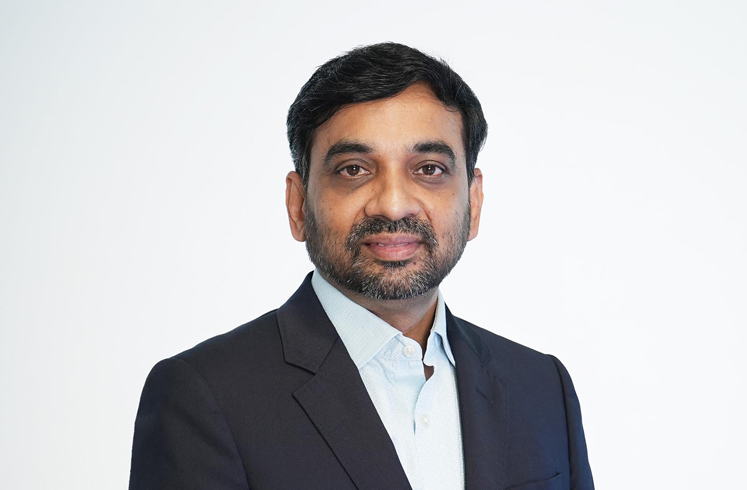
The company delivered 1,280 units in FY26 — its highest ever since inception. Mr. Mahesh Babu, Managing Director – Olectra Greentech Limited, said, the e-CV industry in India is at an inflection point.
Over the next five years three powerful forces — policy, customer economics, and industry dynamics — will together reshape how buses and trucks are powered, owned, and operated across the country. According to Mr. Babu, the direction from the Government of India is increasingly clear. With the country growing at 7% to 8% annually and still heavily dependent on fossil fuels, the arithmetic simply does not add up. “Energy self-sufficiency and import substitution have become strategic imperatives, and clean energy — backed by expanding solar capacity and storage infrastructure — is at the heart of that push. For commercial vehicles, this translates into sustained and growing policy support for electrification, with incentives, mandates, and regulations increasingly tilted in favour of zero-emission mobility,” he said.
Economics Shifting Fast
Euro-7 norms are tightening the regulatory vice on conventional vehicles, while fuel cost uncertainty — driven by rupee-dollar volatility and geopolitical tensions — is making diesel increasingly unpredictable for fleet operators. Governments can absorb only so much before passing costs on, and when that happens, operational costs for bus and truck operators will rise sharply.
“Against that backdrop, the total cost of ownership of electric vehicles will look more and more attractive with each passing year — not as a future possibility, but as a present-day business decision,” he mentioned.
Competitive Shift
“Bus electrification in city transport has already crossed 9% adoption. Experience from three-wheelers — where electric is now near-default — suggests that once adoption crosses 15%, the tipping point arrives fast and the transition becomes near-irreversible. That moment for city buses is likely just two years away; for trucks, closer to five. And when that shift happens, it will be led not by traditional incumbents but by a new generation of players building around electric from the ground up,” Mr. Babu observed.
Future Proofing
For companies navigating this transition, the response cannot be passive. The approach being adopted by Olectra involves technology licensing partnerships — including with global leaders — alongside research and manufacturing cooperation to stay current with developments in China, Europe, and beyond. “We have to develop core technologies in house over a period of time with partnership with people rather than bringing only technology from outside and just localise it, he added.
“Clean energy, backed by expanding solar capacity and storage infrastructure, is fast becoming India’s most strategic tool for energy self-sufficiency and import substitution.”