LOTS247 Sarathi is a self-serve, fully digital roadside legal assistance plan from Lawyered, India’s legal infrastructure company for mobility. Designed specifically for Driver-Cum-Owners (DCOs) – the millions of individual owner-operators who drive their own trucks, tempos, cabs and light commercial vehicles as their primary livelihood – the platform provides on-call legal support, on-site lawyer access, challan discovery and resolution, Personal Accident insurance and a digital compliance dashboard. Priced at ₹999 per vehicle per year, Sarathi is designed to give owner-drivers access to legal and compliance support directly through their smartphones, without any human sales intervention.
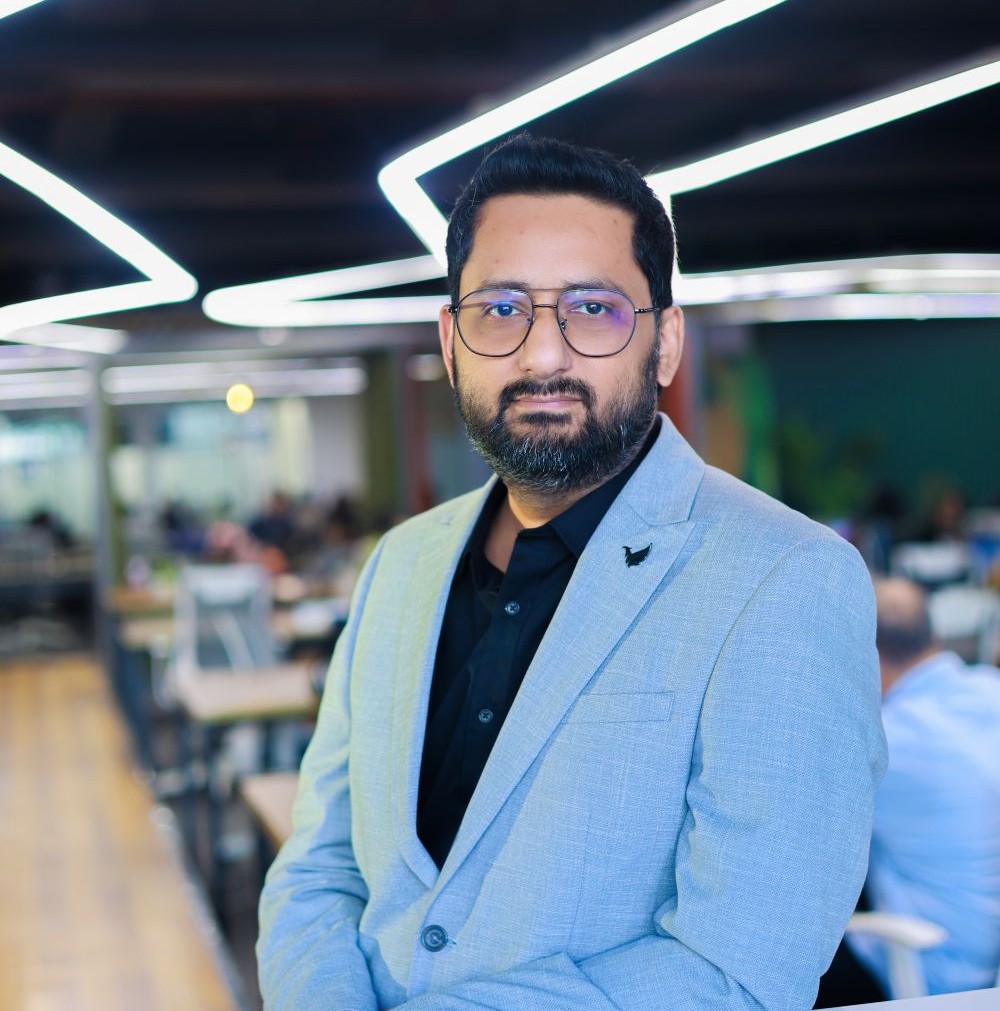
Lawyered operates LOTS247, which provides on-road legal assistance for commercial fleets, as well as ChallanPay, a challan discovery and resolution platform, and On Spot Lawyer. The company is backed by Rainmatter (Zerodha), Turbostart and MeitY (Ministry of Electronics & IT). In this interview with Mr. Himanshu Gupta, Founder & CEO, Lawyered, he discusses the legal, compliance and enforcement challenges faced by India’s commercial vehicle owner-drivers, the gap in structured on-demand legal assistance, and how LOTS247 Sarathi aims to provide them with a reliable legal safety net.
What are the most common legal, compliance and enforcement-related challenges faced by independent commercial vehicle owner-drivers today, and how significantly do these issues impact their operations and earnings?
India’s commercial vehicle owner-drivers, whom we call Driver-Cum-Owners, or DCOs, are among the most legally unprotected working professionals in the country. They are not employees of a fleet company with a legal team or an HR department. They own their vehicle, they drive it themselves, and when something goes wrong on the road, they face it entirely alone.
The challenges they face fall into three distinct categories, each with its own financial, operational and human cost.
The first is the challan problem. India issues over 8 crore traffic challans annually, worth more than ₹12,000 crore in aggregate. The closure rate between 2019 and 2024 was only 27.5%. A significant portion of those outstanding challans belong to commercial vehicle operators who did not even know the challan existed until they were stopped at a checkpoint or tried to renew a permit. Challans are issued across multiple state and central systems; there is no single view, no automatic notification and no guidance on how to dispute a challan that was wrongly issued. A DCO who pays a wrong challan loses money. A DCO who ignores a challan risks vehicle detention.
The second is the incident problem. When a DCO is stopped by traffic police, involved in an accident or has their vehicle seized, the consequences are immediate and severe. Every hour of detention is income lost. A commercial vehicle earns its owner between ₹2,000 and ₹5,000 per day. A missed delivery means a penalty from the logistics company. An FIR without legal guidance means the DCO may not know whether to speak, what documents to produce or how to initiate the process of getting the vehicle released. In the absence of any structured support, they turn to local touts and fixers, who overcharge them and often make things worse.
The third is the compliance gap. A commercial vehicle needs to maintain valid insurance, PUC certification, fitness certificate, RC and driving licence simultaneously across timelines that do not always align and are not tracked in one place. When any one of these lapses, the vehicle becomes legally vulnerable. An expired PUC certificate at a checkpoint can lead to a challan, a fine or vehicle detention. Most DCOs track these manually or not at all because no single platform existed to do it for them.
The cumulative financial impact is significant. A single unresolved incident, a vehicle detained for 48 hours, a wrong challan paid without dispute, or legal fees paid to an unqualified tout can cost a DCO ₹10,000 to ₹50,000. For someone whose monthly income is ₹30,000 to ₹60,000, that is a month’s earnings erased in a single encounter.
Roadside assistance and insurance are now relatively well-established services for commercial vehicles. Why has structured, on-demand legal assistance remained largely outside this ecosystem, and what gap does Lawyered see in the market?
Roadside assistance and insurance have found their way into the commercial vehicle ecosystem because they fit neatly into existing distribution channels. Insurance is mandated by law and sold through brokers, agents and dealerships. Roadside assistance – towing, breakdown support and emergency fuel – is bundled with insurance or sold through fleet tech platforms. The revenue model is clear, the claim process is standardised, and the regulatory framework exists.
Legal assistance has none of these structural advantages. The legal system in India is fragmented by state, by court and by enforcement agency. There is no standardised ‘legal claim process’. A challan dispute in Andhra Pradesh is handled differently from one in Maharashtra. A vehicle seizure case requires knowledge of the local police station, the relevant provisions of the Motor Vehicles Act and, in some cases, a lawyer who appears at the right magistrate court. This variability has made it extremely difficult to productise legal assistance, which is precisely why no one has done it until now.
The second reason is the infrastructure gap. Even if a company wanted to offer on-demand legal assistance to a DCO on a highway at 2 am, it would need a verified, trained lawyer reachable within a meaningful distance from that location across every highway, in every state, at any hour. Building that network is a years-long, capital-intensive exercise. Without it, the promise of ‘on-demand legal assistance’ is meaningless.
The gap Lawyered has identified and spent years building the infrastructure to address is this: between the moment an incident happens on the road and the moment it is legally resolved, there is a complete vacuum of structured support. Insurance covers the financial outcome. Roadside assistance covers the mechanical problem. Nothing covers the legal dimension – what to say to the police, how to challenge a wrong challan, how to get a vehicle released and how to avoid self-incrimination during an enforcement stop.
With LOTS247 Sarathi, we are stepping into that vacuum with a product that is affordable, digital-first and backed by real on-ground legal infrastructure – 85,000 lawyers across India, a 24×7 call centre with legal experts, and a platform that has already resolved over 2,00,000 incidents. The market has always existed. The infrastructure to serve it reliably simply had not been built.
Could you explain how LOTS247 Sarathi works in practice – from challan discovery and resolution to roadside legal assistance and on-ground lawyer support – and how it can help an owner-driver deal with an issue when it arises on the road?
Let us walk through it the way a DCO would actually experience it.
A truck driver, let’s call him Ramesh, owns and drives a single truck on the Delhi-Mumbai corridor. He purchased LOTS247 Sarathi for ₹999, activated it on his smartphone in under five minutes, and has not had to think about it since. His vehicle number is registered on the platform. His PA insurance is active. His compliance dashboard is tracking his insurance, PUC, fitness certificate and RC renewal dates.
One morning, Ramesh is stopped at a checkpoint in Rajasthan. The traffic officer tells him there is a pending challan of ₹3,500 for a lane violation that he says he never committed. Ramesh does not know if the challan is genuine or not. He does not know if he should pay it or dispute it.
He opens the LOTS247 Sarathi app and taps ‘Report Incident’. Within 15 minutes, a legal expert from our 24×7 support team is on the call with him. The expert checks the challan details in real time, confirms whether it is a valid challan or a disputed one, and advises Ramesh on what to say to the officer and what his rights are. In 85% of such situations, the call itself is enough to resolve the matter. The DCO gets clear guidance, knows what to do, and the situation is de-escalated without any further intervention.
If the matter requires physical presence – say, the vehicle has been seized and needs a lawyer to appear before a magistrate – LOTS247 Sarathi coordinates the dispatch of a lawyer from our network. We have 80,000 lawyers onboarded across India, positioned so there is legal coverage available within every 50 kilometres. The lawyer reaches the DCO within two business hours. The lawyer’s fees and any on-ground resolution costs are charged at actuals, transparently, and are separate from the Sarathi subscription. The plan covers access and coordination. There are no hidden charges.
Meanwhile, on the challan discovery side, Sarathi automatically scans for all pending e-challans and court challans across state systems for Ramesh’s registered vehicle. If a new challan appears, he gets a notification immediately, not when he is stopped at a checkpoint. He can resolve it directly from the app, using the 1,000 challan credits included in his plan, which absorb the platform convenience fees. If the challan is incorrect, the platform initiates a dispute process.
His compliance dashboard runs quietly in the background. Thirty days before his vehicle’s insurance is due for renewal, he gets an alert. The same applies to PUC, fitness certificate and driving licence. He no longer has to remember these dates manually or risk a checkpoint stop because a certificate has lapsed.
The entire experience is designed for a DCO who may not have formal education but is deeply comfortable with a smartphone. The app works in Hindi and English. The support team speaks in the language the DCO is comfortable with. The entire onboarding process, from landing on the page to plan activation, takes under five minutes.
With India’s commercial vehicle ecosystem becoming increasingly digitised and compliance-driven, do you see legal assistance evolving into an essential support service for transporters and owner-drivers, much like insurance and roadside assistance?
Absolutely, and we believe the digitisation of enforcement is actually accelerating this shift faster than most people realise.
Consider what has changed in the last three to four years. E-challans are now issued automatically through cameras and sensors at thousands of checkpoints across the country. The VAHAN database is connected to state traffic systems. Court challans are digitised. The MoRTH’s plan to bring all states onto the Bharat Connect e-challan network is already live in five states and expanding. What this means is that enforcement has become more efficient, more automated and more comprehensive than it has ever been.
For the DCO, this is a double-edged shift. More digital enforcement means more challans being issued, more accurately, with fewer gaps for challans to simply go unnoticed. It also means the consequences of non-compliance are more immediate. You cannot drive from Andhra Pradesh to Maharashtra without your digital challan record following you.
In this environment, legal and compliance support is not a nice-to-have. It becomes as essential as roadside assistance. When every enforcement interaction is logged digitally, when every challan creates a record that affects your vehicle’s compliance score and, therefore, your insurance premium and your ability to get commercial contracts, the stakes of getting legal guidance right have never been higher.
We also see a parallel shift in what enterprise customers, logistics companies, fleet aggregators and e-commerce players are demanding from their transport partners. They increasingly want their vendors and sub-contracted drivers to maintain a documented compliance record. A DCO with a clean, verified legal and compliance history becomes a more valuable commercial partner. LOTS247 Sarathi contributes directly to building that record.
We believe that within five years, legal assistance will be as standard a line item in a commercial vehicle owner’s annual costs as insurance. The question is not whether the market will get there – it will. The question is whether the product exists that makes it accessible, affordable and trusted at scale. That is what LOTS247 Sarathi is built to be.
Looking ahead, what changes do you believe are needed in India’s commercial vehicle ecosystem to make legal and compliance support more accessible, affordable and effective for the millions of owner-drivers who keep the country’s freight and passenger transport networks moving?
The commercial vehicle ecosystem in India carries the country’s economy on its back, literally. Over 90% of India’s goods move by road. The people who make that happen are among the least protected working professionals in the formal economy. Addressing that requires changes at three levels: infrastructure, policy and institutional awareness.
At the infrastructure level, the most urgent need is a unified compliance view for vehicle owners. Today, a DCO’s challans, insurance status, PUC, fitness certificate and RC all live in separate state and central systems that do not talk to each other. A DCO should be able to see the complete legal and compliance status of their vehicle in one place, receive proactive alerts before expiry, and take action directly from their phone. The technology exists. The integration work is what remains. LOTS247 Sarathi is building this layer privately, but a public infrastructure equivalent, perhaps through the Parivahan or VAHAN ecosystem, would make this universally accessible.
At the policy level, two changes would make a significant difference. First, a structured challan dispute mechanism that is digital, standardised across states and has defined timelines for resolution. Today, challenging a wrongly issued challan is a procedurally opaque process that differs by state, by court and by enforcement agency. Standardising the dispute process would reduce both wrongful payments and harassment. Second, legal aid provisions under the Motor Vehicles Act should be made more explicit for DCOs, particularly around their rights during vehicle detention and enforcement stops. Most DCOs do not know that they have the right to be informed of the grounds for detention, or that there are time limits on how long a vehicle can be held without a formal order.
At the institutional level, transport associations such as AITWA, BGTA and others have a critical role to play in legal awareness. These associations have deep trust within the DCO community. If they consistently communicated the legal rights of their members during enforcement interactions, the level of harassment and wrongful payment would reduce materially. Lawyered has exclusive partnerships with several of these bodies precisely because we believe that institutional trust, combined with accessible technology, is the only way to reach the DCO at scale.
Finally, we believe the insurance industry has an important part to play. Motor insurance already touches every commercial vehicle. Adding a legal assistance component to motor insurance, similar to how RSA is now commonly bundled with comprehensive policies, would make legal protection the default rather than the exception. Lawyered is in active conversation with insurance partners to explore exactly this model, and we see it as one of the most scalable distribution paths for LOTS247 Sarathi over the next three years.
The goal is not just a better product for DCOs. It is a transport ecosystem where the people who keep India moving have a reliable legal safety net, so that no driver has to face a checkpoint alone at 2 am, without guidance, without support and without recourse.