As India’s automotive and manufacturing sectors enter a new phase defined by electrification, localisation, efficiency and advanced engineering, specialty lubrication is emerging as a critical enabler of performance, reliability and sustainability. In this interview with MOTORINDIA, Hitendra Bhargava, CEO and Regional Management Board Member Asia Pacific, Klüber Lubrication, shares his insights on the evolving automotive landscape, India’s manufacturing ambitions, the growing importance of energy efficiency and the company’s role in supporting next-generation mobility and industrial growth.

India’s automotive industry is entering a very different decade. How do you see the sector evolving from 2026 onwards?
India’s automotive industry is no longer defined purely by volume growth. The next phase will be shaped by technology depth, manufacturing resilience, localisation, energy efficiency, exports and the ability to build vehicles that are relevant not only for India, but for global markets as well.
We are witnessing several shifts simultaneously. Passenger vehicles are moving towards premiumisation, SUVs and feature-rich platforms. Two-wheelers and three-wheelers are seeing faster electrification, while the commercial vehicle sector is increasingly being shaped by fuel efficiency, uptime expectations and total cost of ownership. At the same time, OEMs and component manufacturers are preparing for tighter efficiency requirements, greater localisation and more demanding customer expectations.
For a company like Klüber Lubrication, this is a defining moment. Lubrication may not always be visible to the end user, but it plays a crucial role in how efficiently, quietly and reliably a vehicle performs. Whether it is an EV, an ICE platform, a hybrid architecture, a high-load SUV application or a precision component, the need for advanced specialty lubrication will continue to grow.
The opportunity ahead is significant. India has the potential to become not only one of the world’s largest automotive markets, but also one of its most capable engineering and manufacturing hubs. Our role is to support that ambition with solutions that help customers improve reliability, reduce friction losses, enhance component life and build with confidence for the future.
SIAM recently reported that the second half of FY2025 – 26 witnessed strong growth after a softer first half, while electric passenger vehicle registrations increased by more than 80% year-on-year. This underlines how quickly the market is evolving.
What does Klüber Lubrication India stand for today, after more than 25 years in the country?
For us, 25-plus years in India is not merely a milestone – it is a responsibility we have earned through trust, technical performance and long-term partnerships.
Today, Klüber Lubrication India stands at the intersection of German engineering, Indian manufacturing strength and deep application expertise. Over the years, we have supported customers across automotive and industrial sectors where performance is non-negotiable. Our products operate in some of the most demanding applications, ranging from bearings, gears and actuators to electric mobility components, food-grade applications, textiles, steel, cement, wind energy, railways and more.
What has changed significantly is the role lubrication plays within industry. Earlier, lubrication was often viewed simply as a consumable. Today, more customers recognise it as an engineering lever. The right specialty lubricant can help improve energy efficiency, reduce wear, extend maintenance intervals, lower noise, support compact designs and improve total cost of ownership.
That is where Klüber creates value. We are not merely supplying lubricants – we are helping customers solve performance-critical engineering challenges. As India moves towards higher-quality manufacturing, tighter efficiency standards and greater global competitiveness, this role becomes even more relevant.
How is Klüber contributing to “Make in India” and strengthening India as a manufacturing and innovation base?
For us, Make in India is not only about manufacturing locally – it is about building capability locally.
Klüber Lubrication has steadily strengthened its India footprint through local manufacturing, application engineering, customer proximity and technical competence. A significant part of our portfolio is manufactured in India, and we continue to develop solutions that are relevant for Indian operating conditions while meeting global expectations.
The important point is that India is not merely a market for us – it is a capability base. Our teams understand the realities of Indian manufacturing, including high-load conditions, dust, heat, humidity, cost pressures, demanding uptime expectations and the need for quick technical support. When this local understanding is combined with Klüber’s global technology base, the result is a solution that is both technologically advanced and practically relevant.
This becomes especially important for the automotive sector. Indian OEMs and component manufacturers are building not only for India, but increasingly for global platforms as well. They require suppliers who can support design, testing, validation and scale. Klüber is well positioned to contribute to that journey because we combine product technology with application know-how, manufacturing discipline and long-term customer collaboration.
Ultimately, Make in India is about helping Indian industry move from cost competitiveness to performance competitiveness.
What are the biggest technical changes shaping lubrication requirements in the automotive sector?
The biggest change is that every component is now being asked to do more.
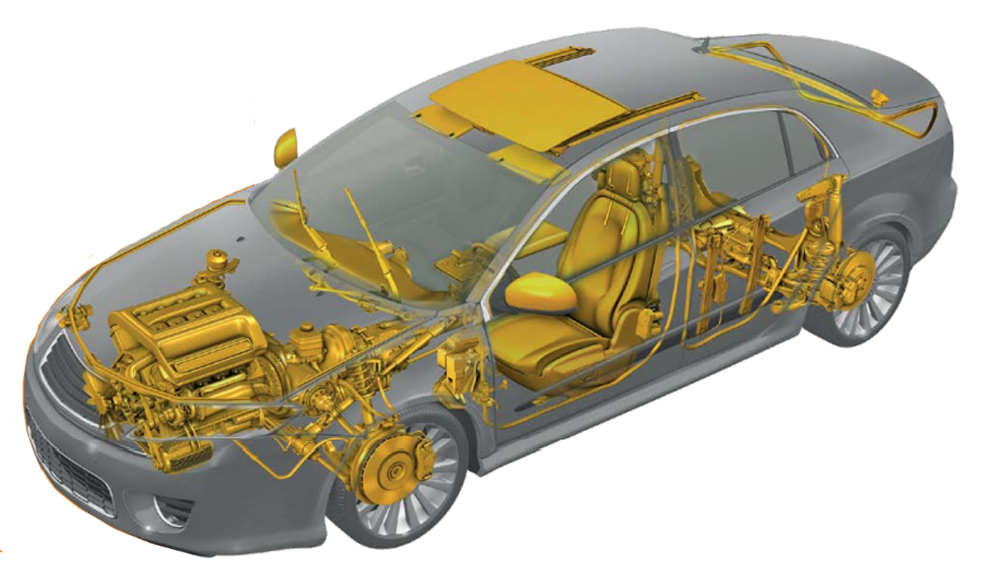
Vehicles are becoming more compact, more powerful, more efficient, quieter and increasingly electronically integrated. This places entirely new demands on components and, by extension, on lubrication solutions. Greases and oils today must support lower friction, higher load-carrying capacity, longer service life, wider temperature ranges, improved material compatibility and better noise behaviour.
In electric vehicles, this becomes even more pronounced. EVs have fewer masking noises compared to conventional vehicles, which means even minor frictional noises or vibrations become more noticeable. As a result, NVH performance becomes critically important.
Lubricants must therefore support quiet operation, low torque, wear protection and efficiency across applications such as bearings, e-motors, gear systems, actuators and connectors.
At the same time, ICE and hybrid platforms will continue to evolve. The industry is not moving in a single straight line. India will continue to see multiple powertrain technologies coexist for several years. This means lubrication solutions must support EVs, hybrids, ICE platforms, CNG vehicles, commercial vehicles and export-oriented applications with equal seriousness.
Our focus is to work with customers early in the design and validation stages. The earlier lubrication is considered within the engineering process, the greater the performance advantage it can create.
With EV adoption increasing, what specific value does Klüber bring to the electric mobility ecosystem?
Electric mobility is not simply a change in powertrain – it is a transformation in the entire performance expectation of a vehicle.
In EVs, efficiency directly influences driving range. Friction losses, even at the component level, matter more than ever before. At the same time, customers expect quiet operation, long life, safety, comfort and reliability. This creates a very clear and important role for specialty lubrication.
Klüber supports electric mobility through solutions designed for low torque, wear protection, thermal stability, compatibility with advanced materials and improved NVH behaviour. These attributes are critical in applications such as e-motor bearings, gearboxes, actuators, seat systems, steering components, braking systems, charging interfaces and other precision assemblies.
India’s EV transition is accelerating, but it is also becoming more mature. The focus is gradually shifting from early adoption towards long-term reliability, range confidence, component durability and customer experience.
NITI Aayog has highlighted that India’s EV sales grew from around 50,000 units in 2016 to 2.08 million units in 2024, while the country continues to target a 30% EV share in total vehicle sales by 2030.
For us, this is where the real engineering conversation begins. EV success will not be defined solely by batteries and motors. It will also depend on the performance of every moving component that contributes to efficiency, comfort and durability.
How do you see energy efficiency becoming a boardroom topic for Indian manufacturers?
Energy efficiency has evolved from being an engineering improvement initiative into a strategic business priority.
Manufacturers today are under pressure to improve productivity, control costs, meet customer expectations and support responsible growth. Energy remains one of the largest controllable costs in many industrial operations. Yet, a significant portion of energy loss happens quietly through friction, heat generation, poor lubrication conditions, contamination, over-lubrication, under-lubrication and inefficient maintenance practices.
That is why we believe energy efficiency is not always about investing in new machines. In many cases, it begins with unlocking better performance from machines that are already operating.
Klüber Energy Efficiency solutions are built around this principle. We help customers identify friction-related energy losses, recommend application-specific lubrication improvements and, where applicable, support the measurement and verification of savings.
In many critical applications, the right lubrication strategy can deliver measurable energy savings in the range of 2% – 5%, depending on the equipment, operating conditions and baseline.
The most important aspect is credibility. Energy efficiency claims must be measurable, documented and application-specific. We follow robust methodologies such as DIN ISO 50015 and IPMVP-aligned approaches where relevant, enabling customers to make decisions based on evidence rather than assumptions.
For Indian manufacturers, this represents a powerful opportunity. Energy efficiency can simultaneously improve cost competitiveness, asset reliability and operational discipline.
Sustainability is becoming more regulated and more scrutinised. How is Klüber approaching it in a credible way?
Sustainability communication today must be precise, transparent and evidence-based. Broad claims are no longer enough – nor should they be.
At Klüber, we approach responsible growth in two ways. The first is improving our own operations through better resource efficiency, responsible manufacturing practices and continuous improvement. The second is helping customers achieve measurable performance outcomes such as lower friction, reduced energy consumption, longer lubricant life, lower maintenance frequency and improved equipment reliability.
This distinction is important. We do not see sustainability as a slogan; we see it as measurable progress in clearly defined areas.
Our EcoVadis Gold recognition for the fifth time is an important validation of this approach, placing Klüber Lubrication among the top 2% of companies assessed globally by EcoVadis. However, we are careful in how we communicate this achievement. EcoVadis evaluates company-level sustainability management systems – it is not a product certification and should not be presented as a product-level claim.
For us, the real value lies not merely in the medal, but in the discipline behind it – governance, transparency, continuous improvement and the ability to support customers with credible, technically sound solutions.
How are customer expectations changing when it comes to specialty lubricants versus commodity lubricants?
The conversation has changed significantly over the years.
Earlier, many customers evaluated lubricants primarily through purchase price. Today, more customers are assessing the total impact lubrication can have on their operations. They are asking better and more strategic questions. Can this reduce downtime? Can it extend component life? Can it improve energy efficiency? Can it reduce noise? Can it support higher loads? Can it minimise maintenance intervention? Can it help us design better products?
This is precisely where specialty lubricants create value.
A commodity lubricant may appear economical at the point of purchase, but in demanding applications, the real cost often lies hidden in wear, breakdowns, energy losses, quality issues and shorter maintenance intervals.
Our role is to make that value visible. We work closely with customers to understand the application, operating conditions, failure modes, maintenance practices and performance targets before recommending a solution based on technical fit rather than simple product availability.
This approach is especially relevant for automotive OEMs and component manufacturers because every design decision carries long-term implications. When a lubricant is selected correctly, it can support reliability, warranty performance, customer comfort and manufacturing consistency.
The future belongs to value-based lubrication decisions, not price-based lubrication decisions.
What role will regulations and efficiency standards play in shaping future automotive technologies?
Regulations will certainly play a major role, but the most forward-looking companies will not treat them merely as compliance requirements. Instead, they will view them as innovation triggers.
Automotive manufacturers are already preparing for stricter efficiency expectations, fuel economy norms, emissions-related requirements and greater accountability across the value chain. In India, the Bureau of Energy Efficiency has already worked on the next phases of CAFE norms, while industry discussions around CAFE III point towards tighter fleet-wide efficiency expectations from 2027 onwards.
This has a direct connection with lubrication. When OEMs are required to improve fuel efficiency, reduce friction, enhance durability and optimise performance, every component becomes important. Lubricants can support these objectives by reducing energy losses, enabling smoother operation and improving long-term component protection.
The same principle applies to EVs. Efficiency standards may be discussed at vehicle level, but achievement ultimately happens at the component level. Bearings, gears, joints, actuators and other moving systems all contribute to overall vehicle performance.
Our approach is to support customers before regulations become a pressure point. We aim to participate in early-stage engineering discussions where the right lubrication strategy can contribute to design optimisation, efficiency and reliability.