By Ravichandran Srinivasan
In the highly competitive and complex automotive industry, OEMs (Original Equipment Manufacturers) like MSIL face the formidable challenge of orchestrating an extensive and efficient transportation network. Their goal is to deliver vehicles seamlessly across diverse markets—domestic and export—while maintaining quality, optimizing costs, and adhering to strict timelines.
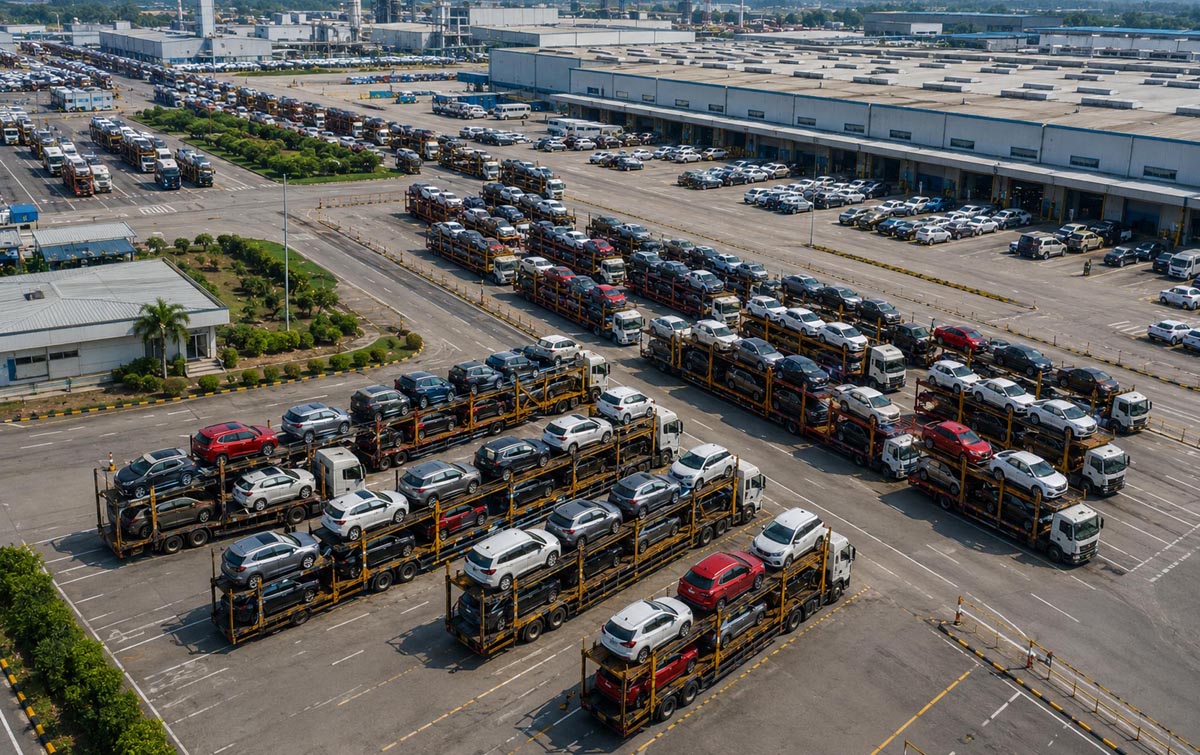
This article explores the intricacies of transport planning employed by OEM passenger car companies, highlighting the strategies, operational challenges, safety standards, technological integration, and evolving logistics landscape that underpin successful vehicle dispatches.
Dispatch Volumes and Distribution Modes
For the fiscal year 2025-26, OEM’s Viz MSIL dispatched an average of 5,500 cars and SUVs daily for the domestic market, along with an average of 1,250 units per day for export. This significant volume necessitates a highly coordinated logistics operation to meet delivery schedules and customer expectations.
Transporting these vehicles involves a mix of modalities—rail and road. Based on the MSIL press notes , it is interpreted that about 25% of dispatches, roughly 1,700 units per day, were transported via rail, leveraging the efficiency and cost-effectiveness of rail networks for long-distance movement. The remaining 5050 vehicles are shipped via road, primarily using specialized car carriers designed for safe and damage-free transportation.
Road Dispatch and Fleet Requirements
The hub-and-spoke distribution system forms the backbone of the OEM’s road dispatch strategy. Vehicles are first transported from manufacturing plants to regional hubs or depots, from where they are dispatched to Tier 3 and Tier 4 cities and dealerships. This approach ensures coverage of remote markets while maintaining control over vehicle quality and delivery.
Estimating the fleet requirement, OEMs like MSIL typically need around 700 car carriers availability daily, (including a 10% cushion) to accommodate unforeseen delays or operational contingencies. These carriers are distributed strategically across factories and logistics hubs, ensuring timely pick-up, loading, and dispatch.
Factors Influencing Transport Operations
Transit Time and Turnaround Time
Transit Time (TT) is a critical parameter that influences the availability of vehicles at hubs and dealerships. TT varies depending on the distance from the manufacturing plant to the destination, road conditions, and logistical factors. To preserve the vehicles’ pristine finish, OEMs enforce strict policies—they do not allow any cars to be driven on roads post-assembly. Instead, vehicles are transported directly from the factory to the designated hubs or dealerships via carriers. TAT is very important for the car carriers to report back to the factory after completing the trip . Normally most of the transport companies have tied up for return load with the auto OEM’s for economical operations .
Carrier Mobilization and Coordination
The OEM’s Transport Planning team maintains continuous interaction with large transport companies, which often operate extensive fleets of car carriers. Regular issuance of Letters of Intent (LOIs) ensures fleet availability and readiness. Effective coordination involves detailed planning of carrier mobilization, loading schedules, and reporting protocols to avoid congestion within factory yards.
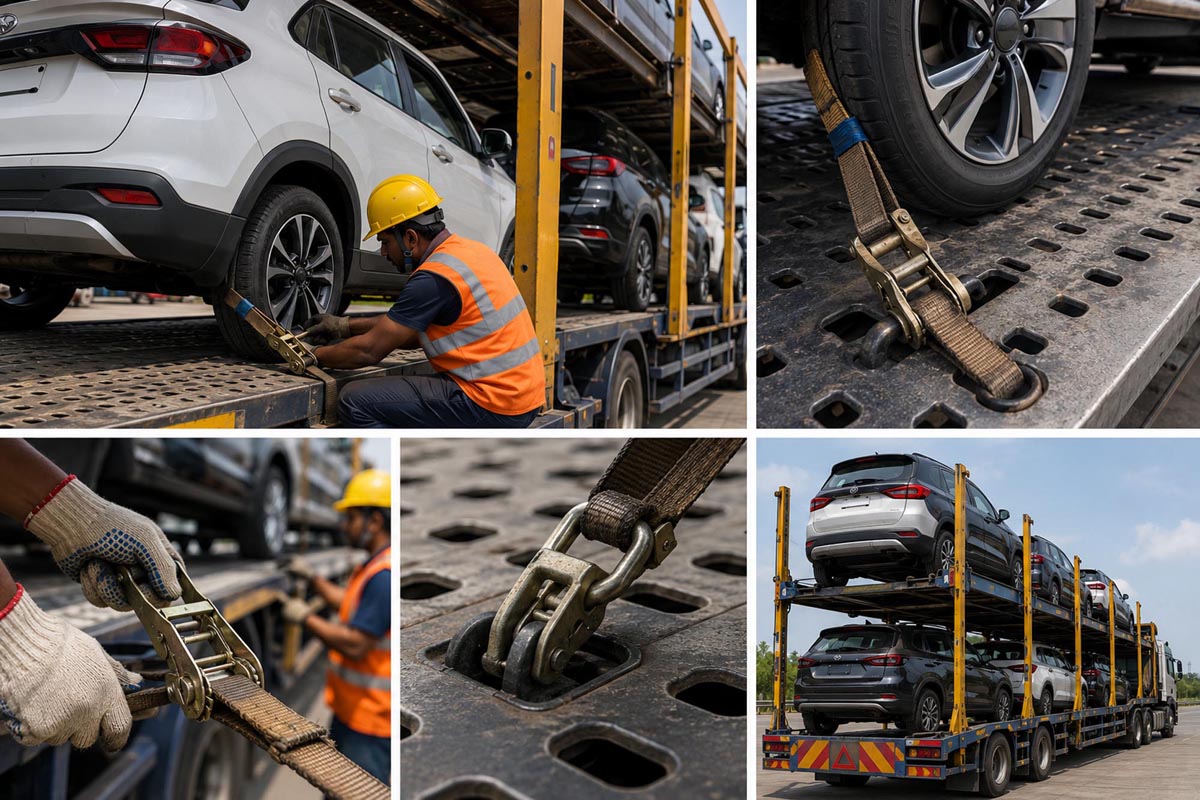
Carrier dispatches are tightly scheduled, with carriers required to report promptly upon arrival, load vehicles efficiently, secure them with standardized lashing systems, and clear the factory gates within designated timeframes. Such discipline prevents bottlenecks, reduces idle time, and ensures adherence to delivery schedules.
Operational Hours and Key Performance Indicators (KPIs)
The Logistics Division operates daily from 8 a.m. to 8 p.m., working year-round to meet dispatch targets. Their performance is gauged through several KPIs including:
- On-Time Availability: Ensuring carriers are ready and vehicles are dispatched as per schedule.
- Transit Time Monitoring: Tracking movement from factory to destination.
- Transit Damage Rate: Maintaining damage levels below 0.5%.
- Fleet Utilization Rate: Achieving over 85% utilization.
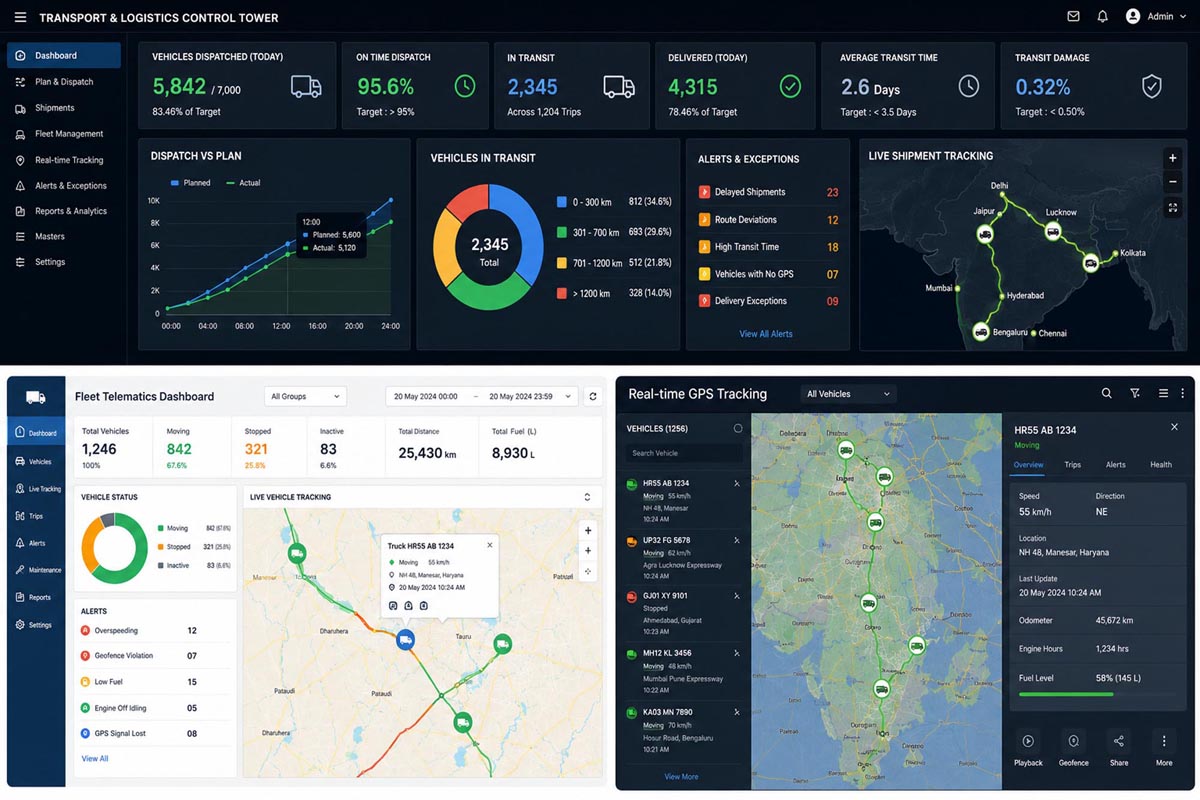
- Telematics Adoption: Ensuring the majority of the fleet is equipped with GPS and telematics systems for real-time tracking.
Fleet Management and Safety Standards
Maintaining a reliable, safe, and efficient fleet is central to successful vehicle dispatch. Car carriers are expected to meet stringent safety and maintenance standards, often mandated by OEM policies.
Vehicle Specifications and Safety Features
Modern car carriers are equipped with advanced safety features, including:
- GPS and Telematics: For real-time tracking, route optimization, and performance monitoring.
- Standardized Lashings: To secure vehicles safely during transit.
- Safety Systems: Most of the latest Prime Movers are fitted with ADAS (Advanced Driver Assistance Systems), ESC (Electronic Stability Control), Collision Avoidance Systems, EBS (Electronic Braking System), ABS, and underrun protection devices.
- Driver Comfort and Safety: Many OEMs insist on AC driver cabs, reinforced cabins, wide-angle mirrors, reverse parking sensors, and driver monitoring systems.
- Maintenance and Service: OEMs prefer their carriers (Prime Movers )to be serviced at authorized dealership workshops, ensuring high standards of maintenance and prompt repairs. Regular audits and inspections are conducted to verify compliance with safety standards.
- Human Resources (Drivers and Crew): Each car carrier typically employs two drivers working in shifts to cover an 8-hour driving window, with mandated rest periods en route as per safety regulations. Ensuring driver health, fitness, and adherence to safety protocols is vital. Many big Transport Companies also emphasize driver training, health check-ups, and motivation programs like performance incentives, trips, and conferences.
Technological Advancements and the Role of ERP Systems
The logistics landscape has evolved significantly with the integration of technology. Many OEMs and transport companies utilize ERP (Enterprise Resource Planning) systems for real-time fleet monitoring, route planning, and MIS (Management Information System) reporting. These systems facilitate:
- Performance Tracking: Monitoring fleet utilization, fuel consumption, and driver behavior.
- Predictive Maintenance: Scheduling servicing based on usage data.
- Compliance Management: Ensuring adherence to safety and regulatory standards.
Transport companies managing large fleets—often exceeding 500 carriers—maintain yards in metro cities for effective fleet oversight, maintenance, and quick deployment.
Evolving Logistics Landscape and Future Trends
Over the years, logistics has transitioned from a purely operational function to a strategic component of OEM supply chain management. The focus is shifting towards:
- Sustainability: Incorporating eco-friendly vehicles, alternate fuels, and reducing carbon footprints.
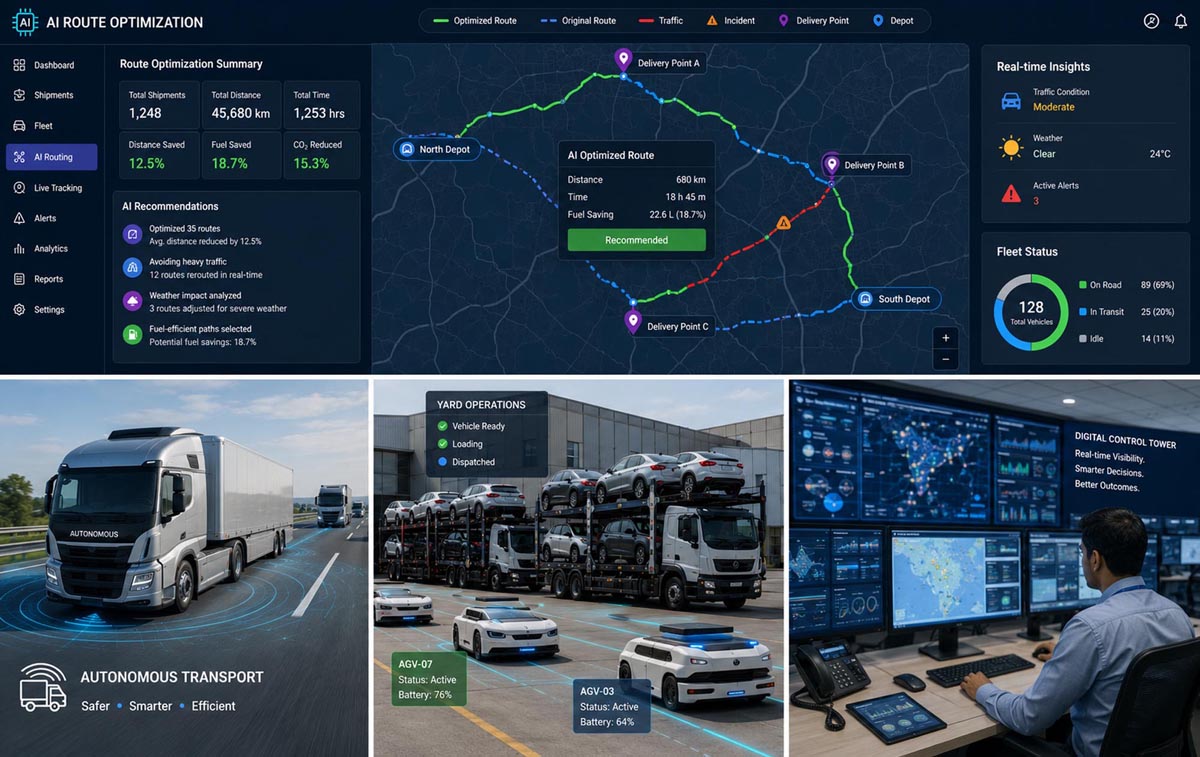
- Digitalization: Increasing use of AI, IoT, and Big Data for predictive analytics and smarter dispatch planning.
- Safety and Compliance: Continuous upgrades to safety features and driver training programs.
- Enhanced Fleet Efficiency: Implementing telematics, GPS tracking, and automated reporting for better resource utilization.
OEMs are also incentivizing transport companies through motivational schemes, performance awards, and health camps for drivers, fostering long-term partnerships built on trust and performance.
Conclusion
Effective transport planning is pivotal for OEM passenger car companies to meet their delivery targets while maintaining vehicle quality, safety, and cost efficiency. From managing vast fleets and ensuring safety standards to leveraging cutting-edge technology, every component plays a critical role in the seamless movement of vehicles across the country.
As the industry continues to evolve, OEMs and logistics partners must adapt by embracing innovation, sustainability, and safety to stay competitive in a dynamic market environment. The future of vehicle dispatch hinges on collaborative efforts, technological integration, and a relentless focus on excellence in logistics management.

About the Author
With over four decades of experience across India and overseas markets, including a significant stint in Oman, Mr. Ravichandran Srinivasan brings deep expertise in process excellence, leadership, and team development. He has held senior roles at Maruti Suzuki Limited, culminating as General Manager, and has led large automotive dealership operations as COO/CEO, overseeing Sales, Service, Parts, and Used Car businesses. He also worked as Head of Logistics & Distribution Division in Saud Bahwan Group, Oman and Maruti Udyog Ltd, Gurgaon (presently MSIL). His international exposure and hands-on leadership across OEMs, distributors, and dealerships provide a comprehensive, results-driven perspective on the automotive ecosystem.