As India’s logistics sector undergoes a massive transformation, the Confederation of Indian Industry (CII) recently hosted a high-powered roundtable discussion bringing together OEMs, fleet operators, policymakers, and technology providers.
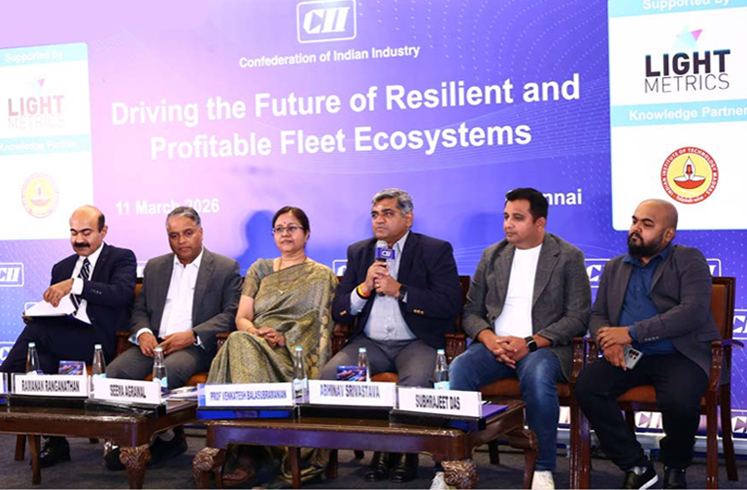
The event highlighted a critical industry milestone: India’s logistics costs have dropped from a historic 14% of GDP to near global benchmarks of roughly 8%. However, sustaining this efficiency amid geopolitical shifts and cost volatility requires a fundamental transition from siloed operations to a collaborative, technology-driven ecosystem.
Here are the key takeaways from the three-part session on the future of Indian commercial transport.
Trucks as “Software on Wheels”
The modern commercial vehicle is no longer just a mechanical asset. Abhinav Srivastava, CIO at Daimler India Commercial Vehicles, noted that today’s trucks generate a staggering 60 million data points per second. “A truck is now a bundle of software on wheels, carrying over 3GB of code with edge-computing capabilities,” he explained.
This wealth of data is revolutionizing fleet management. Ramanan Ranganathan, CIO of TVS Supply Chain Solutions, highlighted how AI and predictive analytics allow logistics providers to forecast freight volumes with up to 90% accuracy, dynamically scaling fleet deployment during peak festive seasons. Furthermore, technology partners like LightMetrics emphasized a shift from reactive to proactive safety. Through AI-enabled video telematics, fleets can now analyze contextual driver behavior in real-time, coaching drivers and preventing crashes before they happen, rather than simply recording them. Subhrajeet Das, Head of Sales, India & SEA, LightMetrics, highlighted that the real challenge isn’t generating data, but triaging it. By using AI to filter 30,000+ monthly events down to the few moments that actually require intervention, fleets can scale safety without increasing the manual workload of depot managers.
Spearheading Tech-Enabled Safety
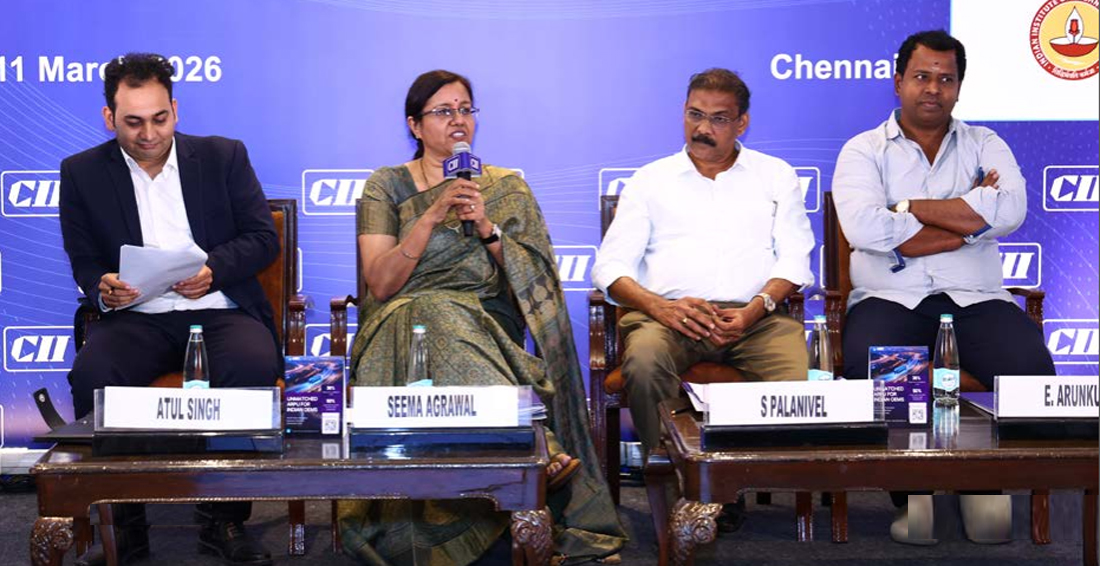
AI video telematics provider LightMetrics played a central role in shaping the narrative around technology-driven fleet resilience. Pushkar Patwardhan (Co-Founder & Head of Cloud Engineering, LightMetrics), emphasized a crucial shift from reactive vehicle tracking to capturing the “contextual truth” of fleet operations.
Rather than relying on simple GPS pings or generic incident alerts, LightMetrics showcased how advanced AI and edge computing can analyze millions of data points to offer real-time, personalized virtual coaching to drivers and instantly exonerate drivers on the spot through video evidence, providing an immediate source of truth rather than waiting for a post-incident report.”. Furthermore, by seamlessly integrating video analytics with vehicle CAN/OBD data, fleets can predict maintenance needs and even monitor container capacity.
Redefining Hazmat Safety: The Driver as the First Responder
The safe transportation of hazardous materials (hazmat) took center stage in a dedicated session steered by Mr. Atul Singh and Prof. Venkatesh Balasubramanian of the Centre of Excellence for Road Safety, IIT Madras.
Smt. Seema Agrawal, DGP, Tamil Nadu Fire and Rescue Services, stressed that the commercial driver is the undisputed “hero” of the hazmat ecosystem. She advocated for rigorous driver training on Standard Operating Procedures (SOPs), particularly in understanding Emergency Information Panels (EIPs). Recognizing specific chemical payloads is critical; for instance, using water on certain chemical fires can trigger a catastrophic Boiling Liquid Expanding Vapor Explosion (BLEVE).
This emphasis on SOPs found a practical dimension when DGP Agrawal visited the LightMetrics booth. She experienced the company’s Edge AI driving simulator firsthand, a system that detects fatigue, distraction, and speed violations in real time and coaches the driver proactively. For someone who leads the state’s emergency response, the visit underscored how technology can support, not replace, the driver’s critical role.
Industry experts also highlighted advancements in tank manufacturing, noting that modern bottom-loading systems, vapor recovery pipelines, and rigorous pressure testing are drastically reducing the risk of explosions during transit and decantation.
Unlocking Lifecycle Profitability and Asset Utilization
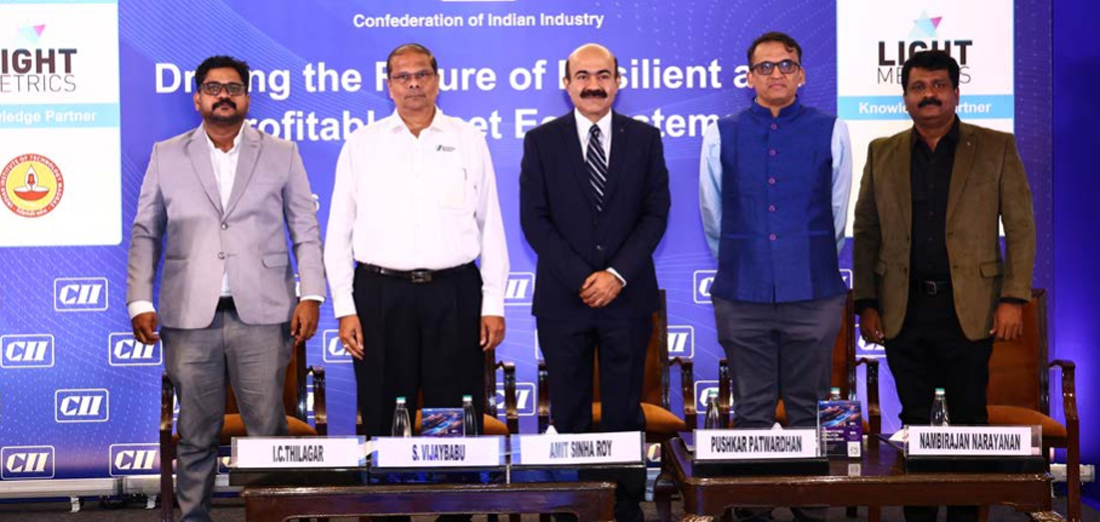
Profitability in modern fleet operations extends far beyond the initial vehicle acquisition. Nambirajan Narayanan of Maersk Line urged fleet owners to transition from “price-based buying” to “lifecycle-cost-based buying,” factoring in fuel efficiency, predictive maintenance, and aftermarket support.
A glaring issue limiting fleet profitability is asset underutilization. S. Vijaybabu of Schwing Stetter India pointed out that Indian trucks average only 250–300 kilometers per day, compared to 500+ kilometers globally. Furthermore, 25% to 30% of trips are empty return hauls. By utilizing digital freight matching, collaborative planning, and early invoice discounting platforms, OEMs and transporters can secure guaranteed backhauls and ease working capital, shielding razor-thin margins from diesel price volatility.
Pushkar Patwardhan of LightMetrics noted that profitability is also embedded in vehicle data itself. By integrating video analytics with CAN and OBD interfaces, fleets can shift from reactive repairs to predictive maintenance, anticipating breakdowns before they translate into downtime and lost revenue.
The Human Element: Solving the Driver Shortage
Despite advancements in AI, telematics, and infrastructure, the roundtable concluded on a deeply human challenge: India’s severe commercial driver shortage. Even with improved highway infrastructure and roadside amenities, the lack of professional respect, tough working conditions, and financial hurdles deter new entrants.
During an interactive Q&A, industry voices called for the government to grant formal “industry status” to road transport to enable cheaper lending rates, and stressed the need to bring back the “cleaner-to-driver” progression system.
Building a resilient and profitable fleet ecosystem is impossible without prioritizing driver well-being and treating commercial driving as a respected, formalized profession. The future of Indian logistics will be defined by those who successfully marry cutting-edge connected vehicle technology with human-centric operational strategies.