Where financing meets data-driven fleet efficiency
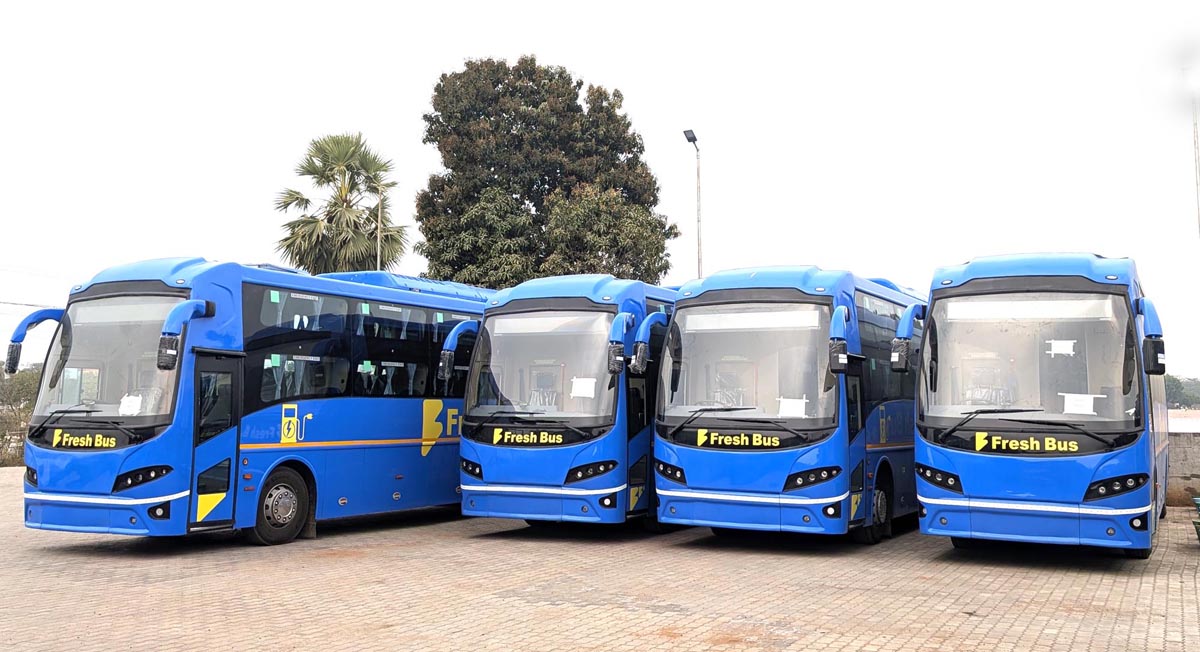
The transition to electric mobility in India’s heavy commercial vehicle space has long been discussed, but rarely executed at scale. Drivn has begun to change that narrative by addressing one of the most critical gaps in the ecosystem; access to capital for large electric assets like buses and heavy-duty trucks. With a sharp focus on intercity buses and 55-tonne trucks, the company has quickly positioned itself as a key enabler in accelerating EV adoption where it matters most.


Founded by Mr. Manav Bansal, CEO & Co-founder, Drivn, along with Alpna and Madhujeet Chimni, the company emerged from a clear understanding of structural inefficiencies in financing high-value electric commercial vehicles. Both Bansal and Alpna bring strong institutional finance backgrounds, having worked with global development finance institutions. This foundation has shaped Drivn’s approach to building a capital-intensive yet scalable business.
“The gap was always visible; smaller EVs had access to financing, but large trucks and buses were left out because of their high upfront costs,” says Mr. Bansal. “We built Drivn with a very clear thesis; solve for the 90 percent of the market that remains underserved, not just the visible 10 percent.”
What sets Drivn apart is its early commitment to scale. Unlike typical startups that begin with limited capital deployment, the company entered the market with significant financial backing, including a major investment led by Nomura. Within a short span since its formal launch in February 2026, Drivn has already built a strong pipeline and committed fleet size, aiming to emerge as one of the largest EV fleet leasing platforms in India.
The company’s core proposition is simple yet powerful; remove the burden of ownership while enabling operators to benefit from the economics of electric mobility. “Operators don’t need to worry about owning the asset anymore. They focus on operations, and we take care of the asset, financing, and optimization. It becomes a win-win structure where everyone benefits from the cost savings,” he explains.
Redefining Economics Through Leasing
At the heart of Drivn’s business model lies a compelling financial logic. Traditional diesel buses typically cost operators around ₹50 per kilometre to run, whereas electric buses bring this down to approximately ₹35 per kilometre. This translates into savings of nearly ₹30 lakh annually per vehicle, assuming standard utilisation.
Despite these savings, adoption has been slow due to the higher upfront cost of electric vehicles, often ₹70–75 lakh more than their diesel counterparts. This is where Drivn steps in, offering a leasing model that bridges this affordability gap while sharing the operational savings with the operator.
“The math is very straightforward; electric vehicles generate savings, but operators don’t have the capital to unlock them,” says Mr. Bansal. “We structure the model so that nearly 80 percent of the savings go to the operator, while we take a smaller share. That’s what makes the model sustainable.”
This approach effectively shifts the industry mindset from ownership to usage, a significant cultural shift in a sector where asset ownership has traditionally been seen as essential. By simplifying the proposition and making it financially viable, Drivn is gradually encouraging operators to embrace leasing as a practical alternative.
Importantly, the company has consciously avoided dependency on government subsidies. Its business model is designed to be viable on pure operating economics, ensuring long-term sustainability regardless of policy changes. “We do not build our business on subsidies,” he states firmly. “If any benefit comes, it is passed on entirely to the operator. Our focus is on building a fundamentally strong and independent model.”
Technology as the Core Differentiator
While financing is the entry point, technology is where Drivn is building its long-term moat. The company has invested over $2 million in developing a robust data and analytics layer that sits on top of its fleet operations.
Electric vehicles generate vast amounts of data, from battery health and driving patterns to route efficiency and maintenance cycles. Drivn captures and processes this data to provide actionable insights to operators, helping them optimise performance and reduce costs. “Electric vehicles are essentially data machines. We are not just leasing assets; we are creating an intelligence layer that tells operators how to run them better,” he says.
Through this system, operators can compare driver performance, evaluate route efficiency, and even benchmark different vehicle models. This level of insight is typically inaccessible to small and mid-sized fleet operators, giving them a significant advantage when partnering with Drivn.
One of the most critical applications of this data lies in determining residual value, a key concern in EV adoption. By continuously tracking battery health and vehicle performance, Drivn aims to create a transparent and reliable secondary market for electric commercial vehicles.
“We are building the capability to assess the real-time health of every asset. Five years down the line, we will be able to confidently underwrite the residual value of a truck or bus based on actual usage data,” he explains.
This data-driven approach also extends to insurance and risk assessment, where the company sees potential for cost optimisation as the ecosystem matures.
Building for Scale and Industry Alignment
Drivn’s growth strategy is closely aligned with broader industry trends. While the company initially expected intercity buses to lead adoption, recent developments indicate that heavy-duty trucks are gaining traction even faster, particularly in sectors like cement, steel, and FMCG.
“We are actually ahead of our plan on the trucking side,” notes Mr. Bansal. “The demand has picked up significantly, and we are seeing strong interest from large industries under pressure to reduce emissions.”
At the same time, the company remains committed to the intercity bus segment, where it expects a domino effect as leading operators begin adopting electric fleets. The focus is clearly on scale-driven deployments rather than pilot projects.
Infrastructure, often cited as a bottleneck, is addressed through a collaborative ecosystem approach involving charge point operators and fleet partners. Dedicated high-capacity chargers are deployed along specific routes, ensuring operational reliability for both buses and trucks. “Scale is the key to solving infrastructure challenges. Once you have five to six vehicles on a route, the economics of dedicated charging infrastructure start working,” he emphasises.
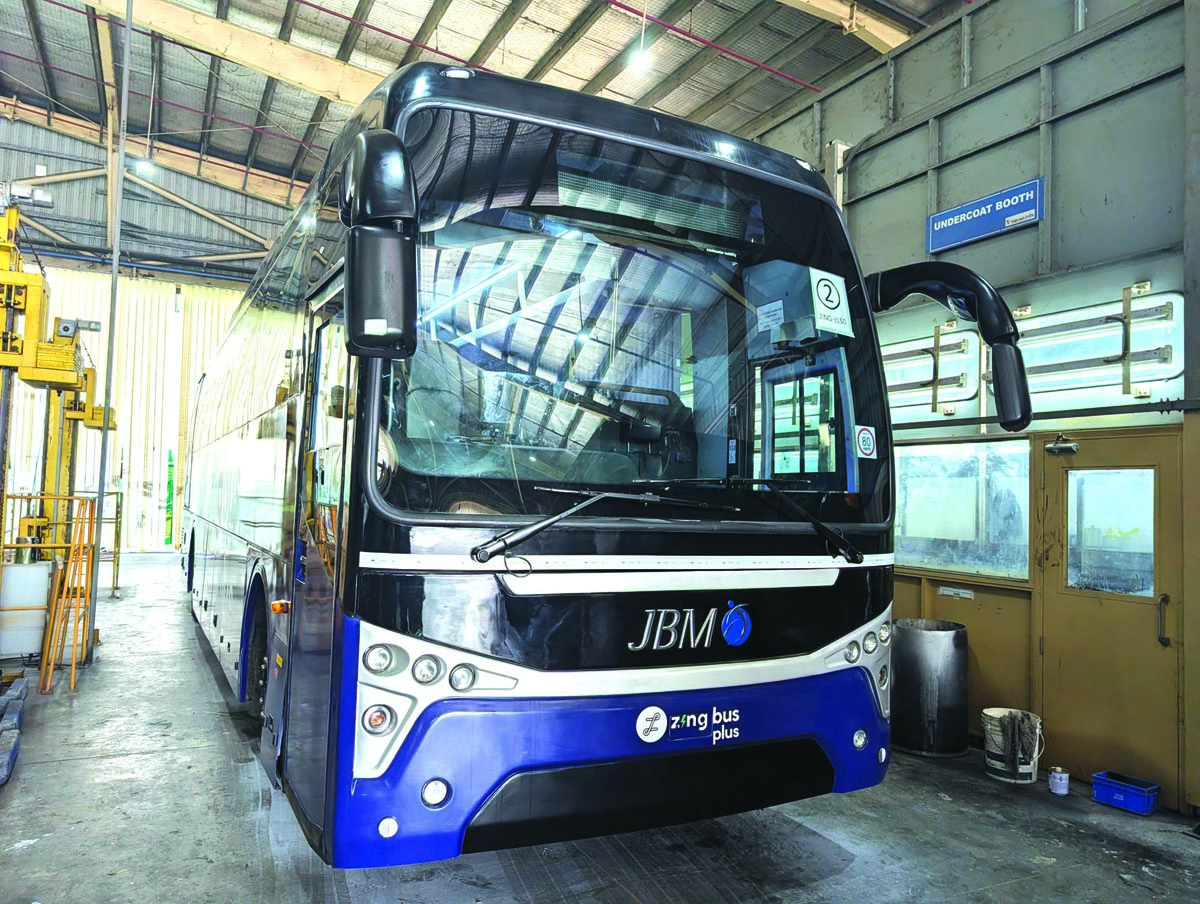
Looking ahead, Drivn has set an ambitious target of building a $1 billion asset portfolio within three years, translating to approximately 6,000 to 7,000 vehicles on the road. While aggressive, this target reflects both the scale of opportunity and the company’s confidence in its model. “The opportunity is massive; we are still scratching the surface,” says Mr. Bansal. “If all stakeholders; OEMs, operators, and financiers work together, this transition can happen much faster than expected.”
As the heavy commercial vehicle industry stands at the cusp of transformation, Drivn’s approach offers a pragmatic pathway forward; one that combines financial innovation, technology integration, and ecosystem collaboration. In doing so, it is not just enabling EV adoption, but reshaping how fleets are financed, managed, and scaled in India.