The company is redefining intercity mobility in India by combining electric mobility with a strong focus on punctuality, passenger comfort, safety and operational excellence, while rapidly scaling its footprint across the country’s evolving EV bus ecosystem.
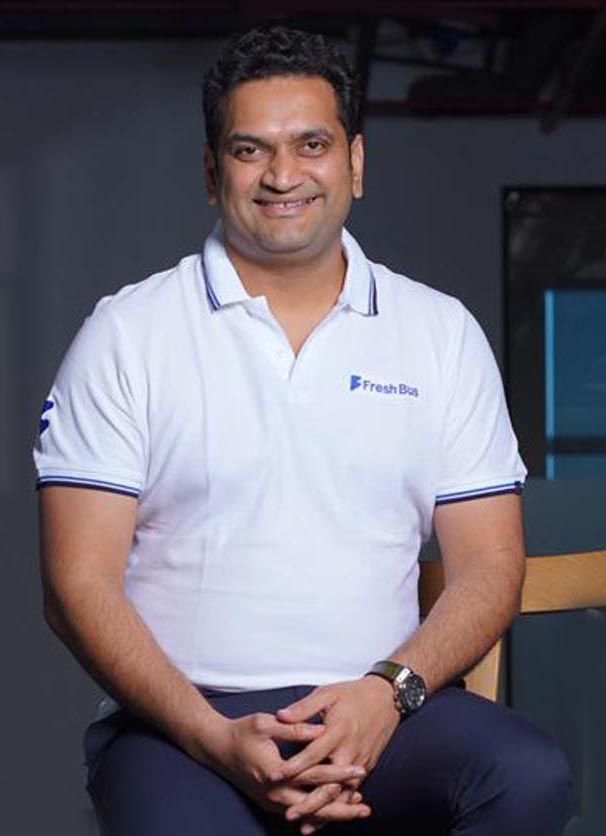
India’s intercity mobility landscape is slowly witnessing a shift where passengers are no longer looking only for a ticket from one city to another; they are seeking reliability, hygiene, safety, punctuality and a comfortable travel experience. Among the companies attempting to redefine this space is Fresh Bus, a startup that has rapidly grown from a five-bus operation to nearly 100 electric intercity buses across multiple routes in South India.
What makes the company stand apart is not merely its electric fleet, but the philosophy behind it. The vision comes from years of understanding the pain points of bus passengers and operators alike. At the centre of this journey is Mr. Sudhakar Chirra, who earlier built one of India’s leading online bus ticketing platforms, Abhibus, before stepping into the operations side of the industry.
“During my journey with Abhibus, we realised that ticket booking was only one part of the problem. Once passengers boarded the bus, there were still major issues around punctuality, hygiene, safety, tracking and overall travel experience. That gap led to the birth of Fresh Bus,” said Sudhakar Chirra, Founder & Chief Electric Officer, Fresh Bus.
Having spent nearly two decades in the intercity travel ecosystem, Sudhakar understood both the scale and complexity of the market. Starting Abhibus in 2008, he initially focused on bringing private bus operators online at a time when most lacked even basic software systems. Over the years, the platform expanded rapidly and also worked with several State Road Transport Corporations including APSRTC, KSRTC, TSRTC and others.
From 2014 onwards, Abhibus evolved into a large consumer-facing platform with millions of app downloads and massive ticket volumes. However, Sudhakar noticed that passenger dissatisfaction continued despite the convenience of online booking. “We were receiving thousands of customer calls daily about delayed buses, poor cleanliness, lack of trained staff and uncertainty around pickup locations. Women passengers especially faced discomfort during night halts and rest stops. We felt somebody had to solve these problems end-to-end,” recalled Sudhakar.
Building an Electric Intercity Brand From Scratch
Fresh Bus was conceptualised in 2019, although the Covid-19 pandemic delayed its launch plans. Commercial operations eventually began in 2023 with five electric buses operating between Tirupati and Bengaluru. Unlike conventional diesel operations, the company had to build charging infrastructure from the ground up.
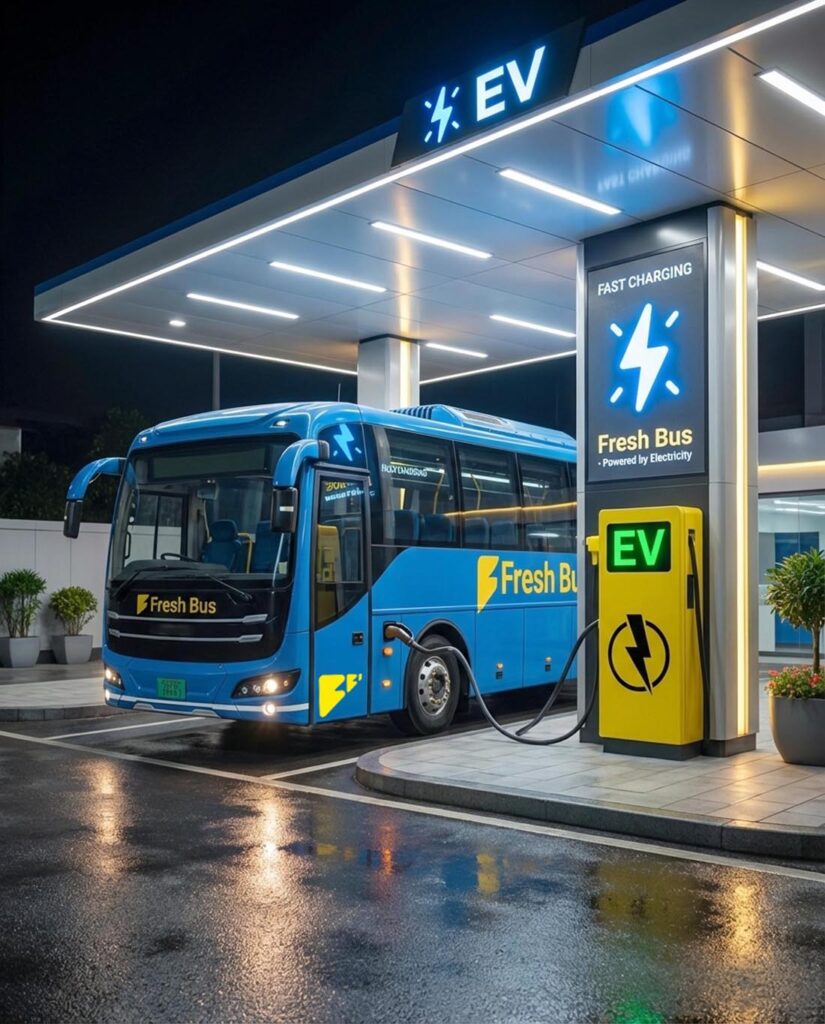
“At that time, intercity EV charging infrastructure was practically non-existent. We had to establish charging stations ourselves in Bengaluru and Tirupati before launching the route,” he explained. The company gradually expanded to routes such as Hyderabad-Vijayawada before growing into a 20-bus fleet by the end of 2023. The growth accelerated after Fresh Bus secured investments from Shell Ventures and Maniv Mobility in 2024. Today, the company operates close to 100 buses across nine routes.
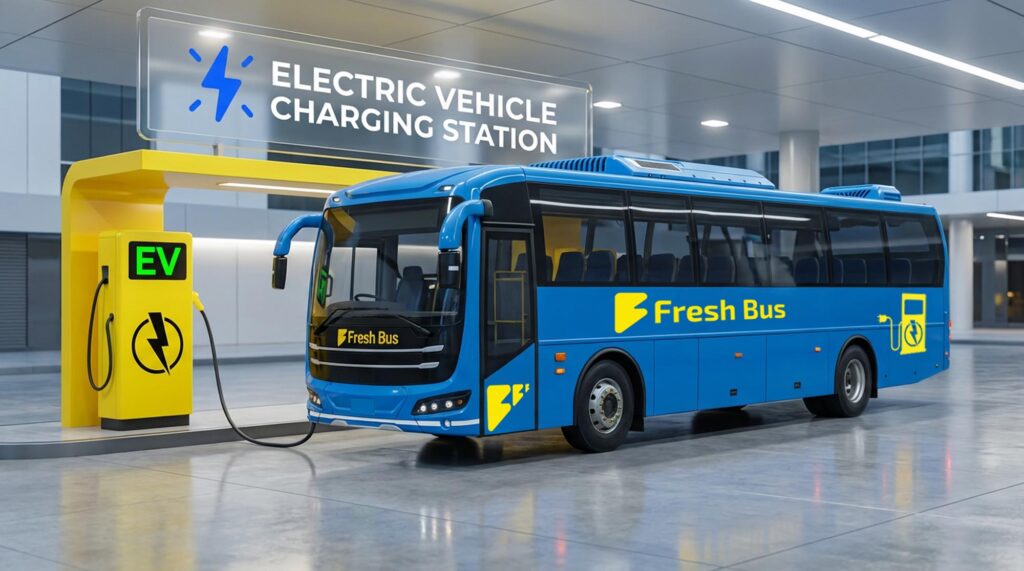
What is noteworthy is that Fresh Bus did not simply focus on deploying EVs. Instead, the company built a customer-first operational model around the advantages offered by electric mobility. Sudhakar believes EV economics allow operators to reinvest savings into improving passenger experience.
“The diesel cost alone forms almost 50 per cent of operating expenses for a traditional intercity bus. By switching to electric, we save significantly on operational costs and reinvest that money into better service quality, trained staff, safety systems and passenger comfort,” stated Sudhakar. The buses feature GPS-enabled live tracking, uniformed crew, CCTV cameras, onboard sensors, snack boxes, wet wipes, water bottles and designated clean and hygienic rest stops aimed at delivering a more premium and predictable journey.
Experience Over Mere Transportation
Fresh Bus believes that passengers today expect a holistic experience rather than basic transportation. According to Sudhakar, every stage of the journey matters; from booking and waiting for the bus to onboard comfort and rest-stop quality. “If passengers are standing on the roadside without knowing where the bus is, nobody feels comfortable; whether they are 18 or 60 years old. The entire journey experience has to feel seamless and trustworthy,” said Sudhakar.
The company has also introduced what it calls the “Fresh Promise.” If a bus gets delayed beyond 90 minutes at either pickup or drop-off points, passengers receive Rs. 1,000 directly into their bank account. Sudhakar claims this accountability mechanism forces the company to improve operational discipline internally. “We walk backwards from the promise. Our charging infrastructure, vehicle uptime and operational systems all have to support punctuality because once we commit a time to the passenger, we have to honour it,” noted Sudhakar.
Fresh Bus currently maintains around 93 percent on-time performance, a figure the company considers central to its brand positioning. Interestingly, Sudhakar believes sustainability alone is not enough to attract passengers. While some travellers consciously prefer greener mobility options, affordability and service quality remain critical.
“Our surveys indicate that while a large majority of intercity passengers choose us for the superior travel experience we offer, nearly 20 per cent actively prefer Fresh Bus for its sustainable and environmentally friendly mobility model. But ultimately, pricing and experience have to work together. Passengers choose us because the experience is better, not merely because the bus is electric,” he observed.
Tackling Operational and Infrastructure Challenges
Operating electric intercity buses in India comes with its own set of challenges. Unlike diesel operations where buses can be redeployed flexibly across routes, EV operations require route-specific charging infrastructure and significant upfront planning.
“In diesel operations, you can move buses between routes easily. In EV operations, once you commit to a route, you need charging infrastructure, scale and operational planning in place. That makes route selection extremely important,” explained Sudhakar.
Fresh Bus studies passenger demand, occupancy patterns, timings and fare structures extensively before entering a route. Sudhakar estimates that some key corridors such as Hyderabad-Vijayawada witness nearly 700 buses operating daily, indicating strong latent demand.
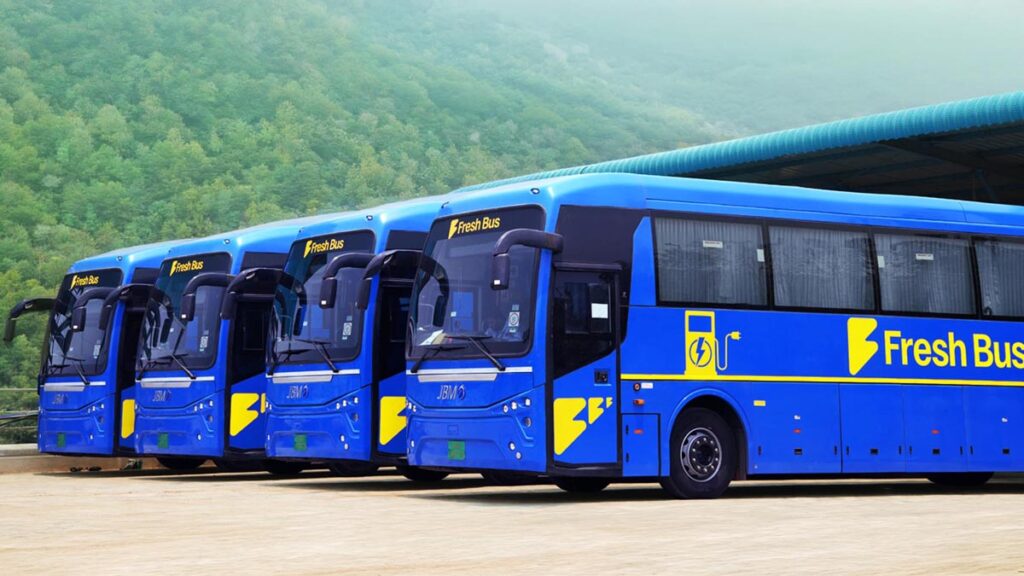
The company currently works with OEMs such as Olectra and JBM; get body built with Azad Coach. However, Sudhakar admits that choosing the right electric bus platform remains a learning process because the ecosystem is still evolving. “In the diesel world, operators have established brands like Volvo and Ashok Leyland with decades of proven reliability. In EVs, everybody is still learning. So, we conduct extensive testing before onboarding vehicles,” he said.
Fresh Bus has also collaborated closely with charging companies and OEMs to improve battery charging speeds and route viability. Sudhakar revealed that while earlier charging systems took much longer, newer technologies are rapidly improving turnaround time. “We are now moving towards megawatt charging solutions where buses can potentially be charged in 15 minutes. The ecosystem is evolving rapidly and operators also have to contribute towards building it,” he added.
Safety, Scale and the Road Ahead
Passenger safety remains another key focus area. Sudhakar strongly supports stricter government norms around bus body building and safety compliance following multiple fire incidents involving sleeper buses in India. “Earlier, anybody could build a bus body. Today, the government is moving towards stricter codes and better oversight. That is a very positive direction because passenger safety cannot be compromised,” he emphasised.
Fresh Bus buses are equipped with multiple fire extinguishers, emergency exit provisions and safety equipment that the company says exceed common industry practices. Looking ahead, the company plans aggressive expansion while remaining focused exclusively on the intercity segment.
Fresh Bus has already placed an order for 100 buses and aims to operate 500 buses within the next three years and nearly 2,000 buses over the next five years. “We want to become India’s largest electric intercity bus operator. Even 2,000 buses would still be a small fraction of the total intercity market opportunity available in India,” said Sudhakar.
The company also plans to expand beyond South India into western and northern markets in the coming years. Despite the rapid scale-up ambitions, Sudhakar remains convinced that the future of bus travel will depend less on fleet size and more on passenger trust.
“People stopped aspiring for bus travel because the experience deteriorated over time. If operators can rebuild reliability, safety, hygiene and convenience, buses can once again become aspirational for every category of traveller,” he concluded.