New Ajapar Plant Signals company’s Next Phase of Growth and Modernisation
For three decades, Atri Trailers has been a familiar name in Kutch’s transportation ecosystem. What began as a small entrepreneurial venture has steadily evolved into one of the region’s leading trailer manufacturing businesses. Today, with the commissioning of its modern manufacturing facility at Ajapar in Kutch, the company is preparing for its next phase of growth, combining its traditional strengths of quality and customer trust with enhanced manufacturing capabilities and modern production technologies.

The story of Atri Trailers is closely linked with the entrepreneurial spirit of Kutch. Recalling the company’s origins, Mr. Akash Atri, Director, Atri Trailers, shared how his father Salinderji Atri moved from Punjab to Gandhidham in 1988 in search of opportunities. After initially working in the textile sector, he embarked on an independent business journey, acquiring land in GIDC in 1992 and gradually expanding operations from repair work to trailer manufacturing.
By 1996, the company had established its first manufacturing facility in Gandhidham. During those years, the transportation industry looked very different from today. Flatbed trailers dominated demand, serving long-haul routes connecting Gujarat with northern and eastern India. Specialized trailer applications were limited, and transporters largely relied on conventional products to move goods across the country.
“The foundation of Atri Trailers was built on hard work and consistency. Every generation that led the business, including my uncle, Mr. Darshan Atri, who took charge after my father’s demise, contributed to its growth. Yet one thing remained unchanged; our commitment to quality and customer trust,” said Akash.
Modern Manufacturing for a Growing Market
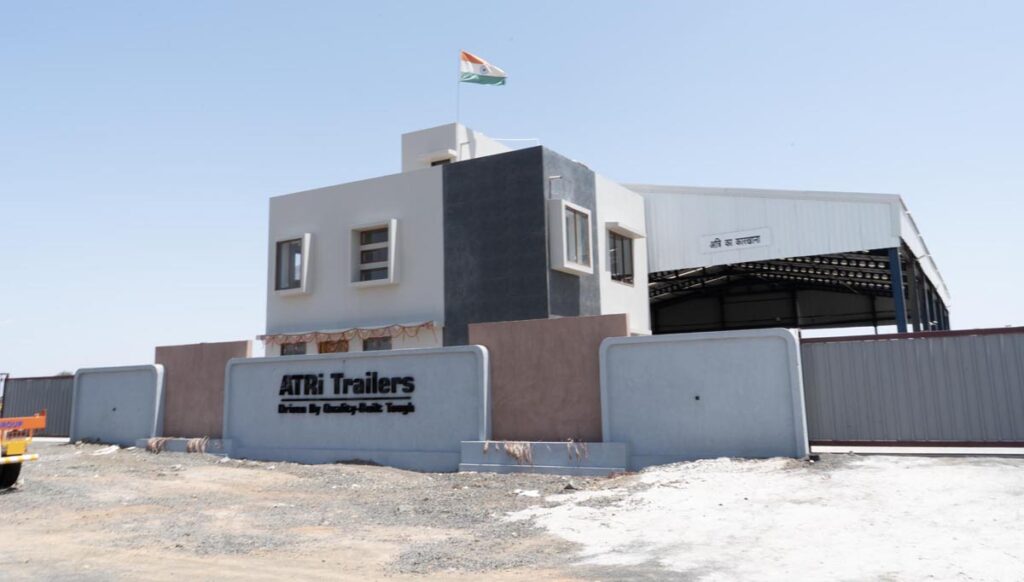
The newly established Ajapar facility represents a significant milestone for the company. Designed with a focus on improved productivity, better finishing and future-ready manufacturing practices, the plant reflects Atri Trailers’ ambition to serve a wider customer base across India.
Unlike the older manufacturing unit, the new facility has been designed around modern fabrication practices. MIG welding has been adopted throughout the production process, while semi-robotic systems have been introduced to improve consistency and precision. The company also intends to gradually increase automation levels as production scales up.
“At present, we have taken the first step towards automation through semi-robotic systems. Our vision is to continue learning, adapting and eventually move towards greater robotic integration wherever it adds value to quality and productivity,” Akash explained.
The product portfolio remains extensive and caters to multiple transportation requirements. The company manufactures 20-foot and 40-foot skeletal trailers, flatbed trailers, semi-low beds and low-bed trailers. While these products continue to form the backbone of the business, the new facility enables improvements in manufacturing quality, dimensional accuracy and overall finish.
Capacity has also increased substantially. The existing plant can manufacture around 50 to 60 trailers per month, while the new facility adds another 75 to 80 units of monthly production capability. Together, the two plants can produce approximately 125 to 150 trailers per month, depending on market demand and product mix.
Quality First, Margin Later
One of the recurring themes throughout the discussion was Atri Trailers’ emphasis on quality. Akash believes that consistency in materials and components is among the most important factors influencing product durability and customer satisfaction.
Following the untimely demise of his father and later his uncle, Akash took charge of the business and continued the philosophy established by the previous generations. The company has maintained long-standing relationships with its suppliers and component partners, choosing reliability over short-term cost savings. “I can compromise on margins, but I cannot compromise on quality. That principle has guided us for years and will continue to guide us in the future,” he stated.
The company relies on established suppliers for critical aggregates such as axles and suspensions while sourcing steel from reputed mills rather than opting for lower-cost alternatives. According to Akash, maintaining consistency in raw materials helps ensure predictable performance and longer product life.
This approach becomes especially important in a region like Kutch, where trailers often operate under demanding conditions involving container movement, port operations and long-distance transportation. Durability, structural strength and reliability directly impact transporter profitability by reducing downtime and repair costs.
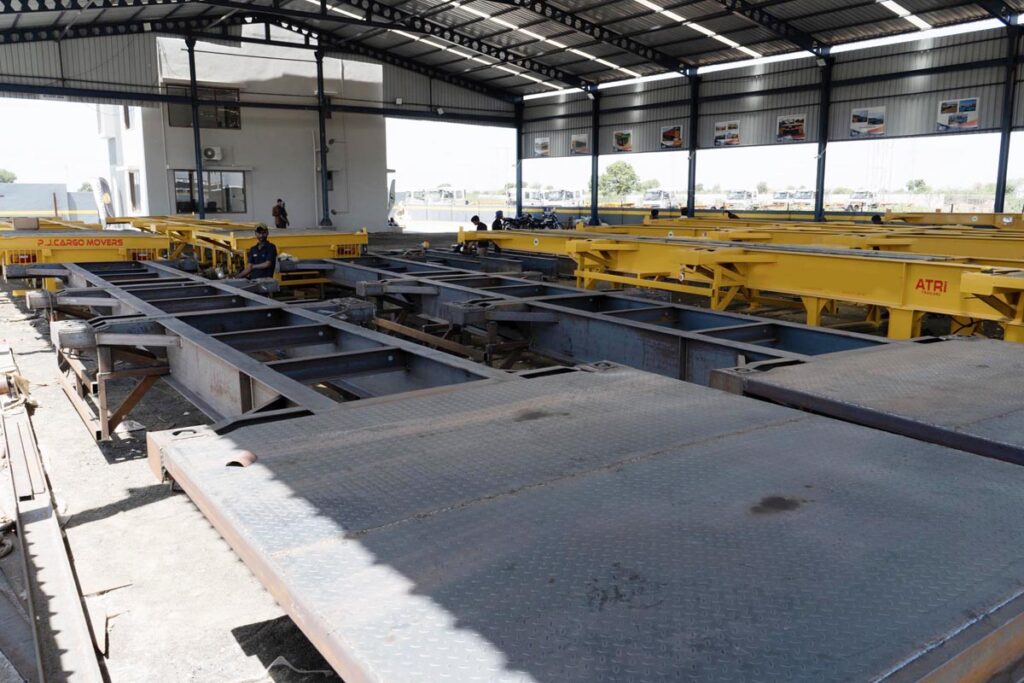
Safety has also become an increasingly important focus area. The company has secured approvals for trailer configurations ranging from 20-foot units to 45-foot trailers and has developed design enhancements aimed at improving stability and load security. Particular attention has been paid to skeletal trailer designs, where additional structural supports and container-lock arrangements help improve safety during container transportation.
Customer-Centric Design and After-Sales Support
While standard trailer products continue to account for a large share of demand, Atri Trailers has also developed solutions tailored to specific applications. Different load profiles require different engineering approaches, especially in sectors such as steel, cement, construction and heavy cargo transportation.
According to Akash, understanding customer operating conditions plays a crucial role in product development. The company regularly interacts with transporters to understand challenges related to payload, durability, road conditions and maintenance requirements before implementing design improvements. “Customization is not only about building a different trailer. It is about understanding the application and ensuring that the product performs reliably for many years,” he said.
A key differentiator for the company is its focus on after-sales support. Atri Trailers offers a two-year structural guarantee against manufacturing defects. In case of a genuine manufacturing issue, the company commits to replacement rather than merely carrying out repairs.
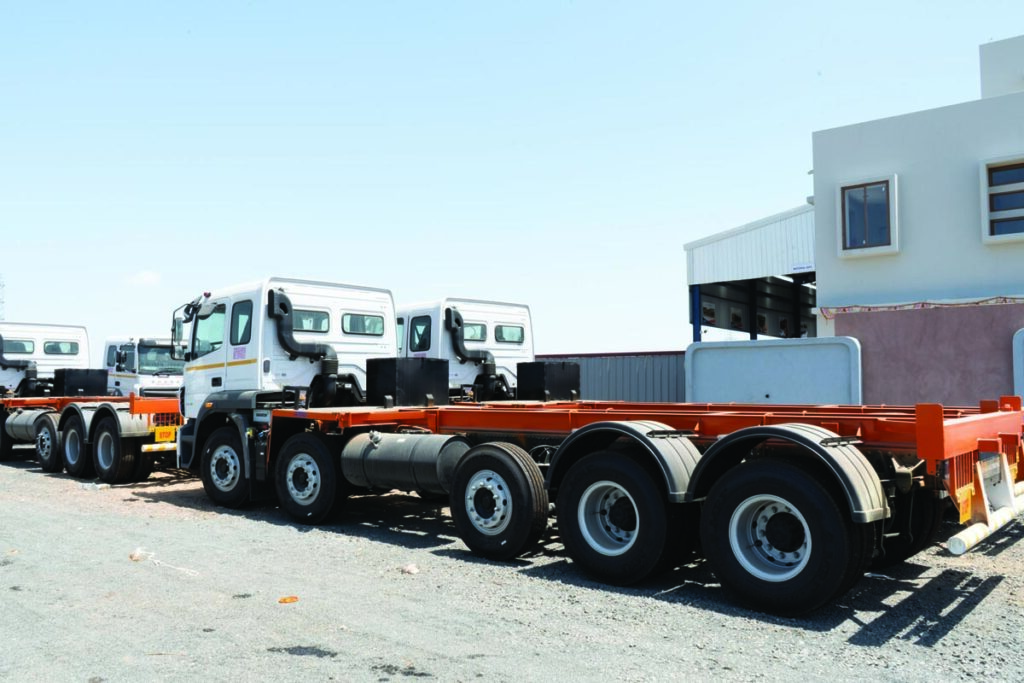
The company has also worked on reducing turnaround times for customers. Recognising that every hour of vehicle downtime affects transporter earnings, the team has adopted a more responsive service approach, often assisting customers without requiring them to bring the trailer back to the factory wherever feasible. “The transporter’s business depends on vehicle uptime. Fast support and quick resolution are just as important as building a good trailer,” Akash observed.
This commitment has helped the company build a strong base of repeat customers. Today, Atri Trailers enjoys an estimated 60 to 70 percent market share within the Kutch region, a reflection of the trust it has built over several decades.
Building an Organised and Sustainable Industry
Beyond his own company, Akash also spoke about the need to further formalise India’s trailer manufacturing sector. He believes organised manufacturers invest significantly in design approvals, quality systems and compliance requirements, and that these efforts should be supported through stronger implementation of regulations.
The introduction of trailer approval norms has been a positive development, but he feels continued monitoring and enforcement are necessary to ensure a level playing field across the industry. “If a policy has been introduced, it should also be implemented consistently. That will encourage quality, improve safety and ultimately benefit customers,” he said.
Akash also highlighted the importance of skilled manpower development. While Kutch has traditionally attracted workers from different parts of India, he believes the industry needs more structured skill-development initiatives that combine classroom education with practical training.
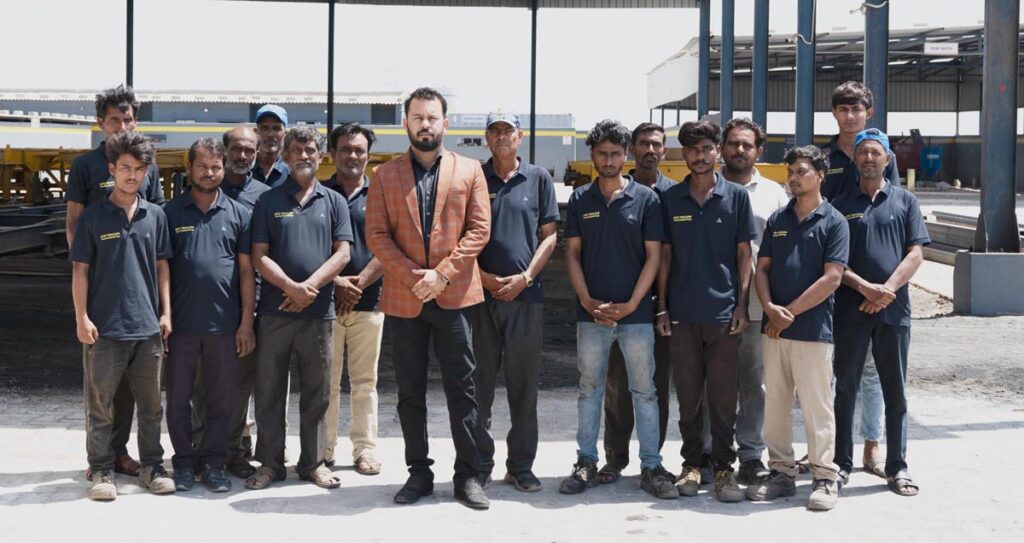
Looking ahead, the company’s immediate focus remains on maximizing the capabilities of its new Ajapar facility and further enhancing product quality. Given the continued growth of container traffic through ports such as Mundra, Kandla and Tuna, demand for skeletal trailers, flatbeds and related products remains strong.
As Atri Trailers enters its fourth decade, the company appears committed to balancing tradition with modernization. The new plant is more than a capacity expansion; it is a statement of intent. With stronger manufacturing capabilities, a focus on quality and a customer-first approach, Atri Trailers is positioning itself to serve a larger market while staying true to the values that helped build its reputation over the last 30 years.
“Our aim is simple; build products that last, support customers when they need us, and continue creating a legacy that future generations can take forward with pride,” Akash concluded.