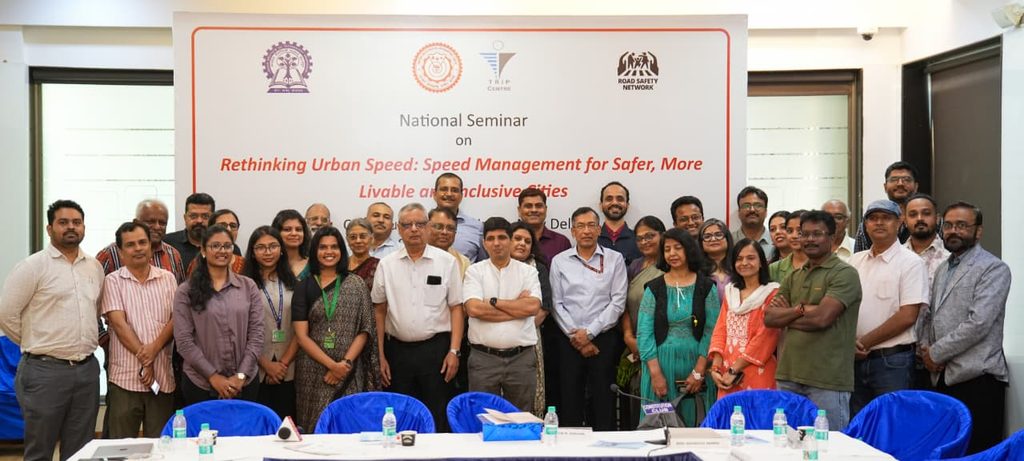
Speed management in Indian cities needs to move beyond setting speed limits and focus on the interaction between road design, enforcement, local conditions, and road user behaviour, experts said at the National Seminar on “Rethinking Urban Speed: Speed Management for Safer, More Livable and Inclusive Cities,” held yesterday at the Constitution Club of India, New Delhi.
Organised by the Road Safety Network (RSN) in collaboration with IIT Delhi’s Transportation Research and Injury Prevention Centre (TRIP Centre) and IIT Kharagpur, the seminar brought together policymakers, researchers, public health experts, and road safety practitioners. Participants included Dr. Nitin R. Gokarn, Chairman, National Road Safety Board; Mr. Mahmood Ahmed, Additional Secretary, Ministry of Road Transport and Highways; Prof. Geetam Tiwari, Emeritus Professor, TRIPC, IIT Delhi; Prof. Bhargab Maitra, IIT Kharagpur and Member, Road Safety Network; Dr. Gautham M. Sukumar, NIMHANS, Bengaluru; Dr. Mohammed Asheel B, WHO India; Mr. Ranjit Gadgil, Programme Director, Parisar; Dr. Reenu Aneja, Transport Specialist, World Bank; and Mr. Ashim Sanyal, Managing Trustee, Consumer Voice, among others.
The discussions highlighted the need for consistency among design speed, posted speed, and actual operating speed, taking into account a road’s function, surrounding land use, and the presence of vulnerable road users. Experts emphasised that speed management must be supported by proper engineering and enforcement, rather than relying solely on awareness or signage.
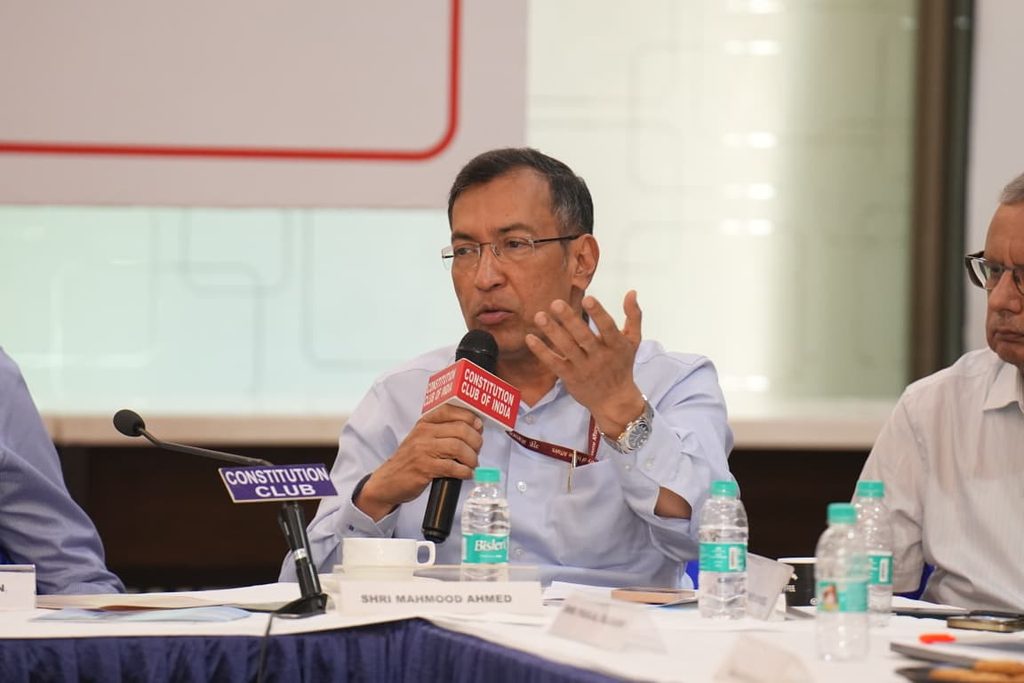
Mr. Mahmood Ahmed said one of the biggest challenges is convincing people that higher speeds don’t necessarily reduce travel time but can increase the risk and severity of fatalities, even as pressure grows to raise speeds on highways and expressways for economic competitiveness. He said urban areas face added complexity due to multiple authorities, requiring locally suited interventions, stronger enforcement including electronic enforcement, and greater certainty of punishment.
Dr. Nitin R. Gokarn said road safety requires looking at the entire road environment rather than vehicles in isolation, noting that pedestrians and two-wheeler users remain highly exposed to unsafe speeds. He called for better data on two-wheeler crashes, stronger attention to pedestrian infrastructure, and effective implementation of safety measures, adding that the National Road Safety Board looks forward to working with stakeholders like the Road Safety Network.
The seminar also discussed the Safe System Approach, which recognises that road users can make mistakes and that road environments must be designed to prevent such mistakes from resulting in death or serious injury, with safe speeds, safe streets, safe vehicles, safe behaviour, and effective post-crash response identified as key pillars.
The vulnerability of pedestrians and two-wheeler users emerged as a key concern, with experts noting that mixed-traffic environments and large speed differentials increase risks. Discussions called for greater attention to pedestrian infrastructure, accessible footpaths, safe crossings, traffic-calming measures, and complete streets.
Prof. Bhargab Maitra said speed management is doable, implementable, and workable in the short term, requiring the right combination of engineering, enforcement, and context-based speed regulation, while prioritising pedestrians, cyclists, and two-wheeler users.
The seminar also examined safer school zones, the need for better crash and speed data, and the importance of integrating road safety with urban planning and public transport, with experts stressing that vehicle-centric infrastructure can marginalise pedestrians and cyclists, calling for greater adoption of people-centred, context-sensitive road design.
The seminar concluded with a call for data-driven, locally relevant, and people-centred speed management, with engineering, enforcement, and policy working together to build safer, more accessible, and more inclusive urban environments for all road users.