India’s mobility transformation is not just an industrial shift; it is a national mission, says, Mr. K.P. Singh, MD India & Head – Asia Pacific, Eberspaecher Suetrak India.
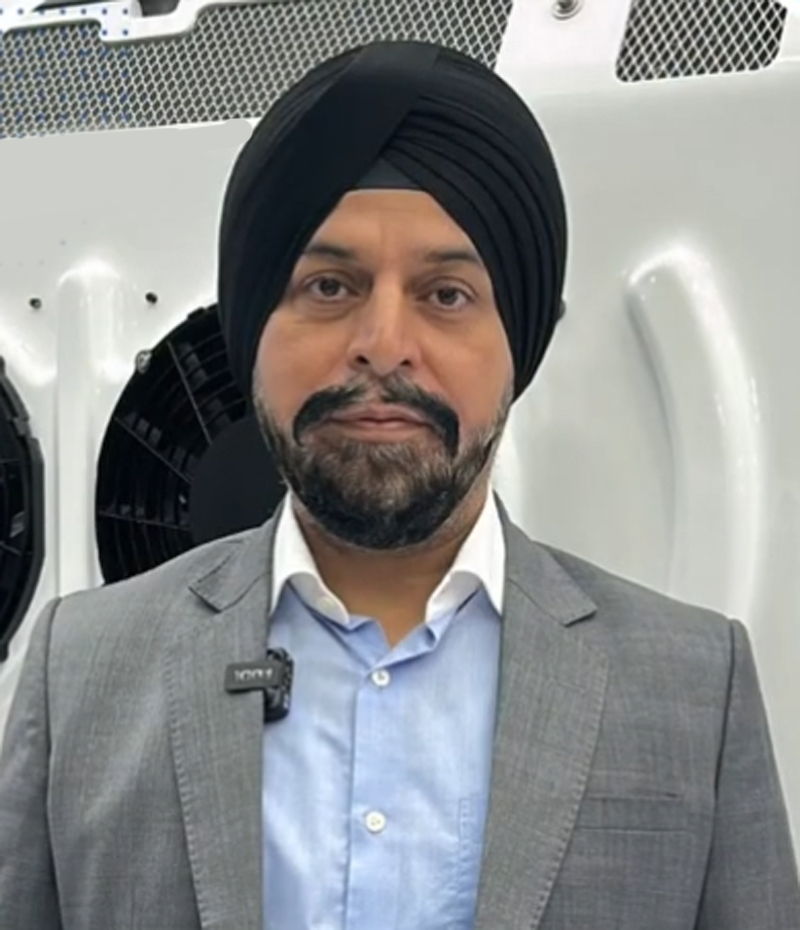
From a Bus AC manufacturer’s standpoint, the road to 2030 is defined by three transformative forces: electrification, digitalisation, and sustainability—all unfolding against a backdrop of geopolitical realignment and supply chain recalibration.
Immediate-Term Outlook (2026–2028)
India’s EV policies are driving unprecedented demand for thermal management across both conventional and electric platforms, requiring HVAC suppliers to rapidly adapt for the dual powertrain transition.
Long-Term Outlook (2028–2030)
By 2030, 40% of India’s bus fleet is projected to be battery-electric, creating exponential demand for integrated thermal systems managing both cabin climate and battery temperatures. HVAC manufacturers investing in AI-driven predictive maintenance, IoT-enabled fleet management, and carbon-neutral production will lead the market. Hydrogen fuel cell buses will gain traction globally, requiring new HVAC architectures. Sustainability will become a baseline requirement, with Scope 1, 2, and 3 carbon reporting mandatories across value chains by 2030, Mr. Singh mentioned.
Mission 2030
Eberspächer’s climate control system division for Bus & Coach is preparing for this future through a four-pillar strategy:
Product Innovation for Electrification: The AC135 AE platform — built for battery-electric and hybrid buses — is already in production in Bengaluru, with the majority of India’s portfolio transitioning to electric and hybrid thermal management solutions, including heat pumps, battery cooling modules, and hydrogen-compatible HVAC systems, by 2030.
Digital Transformation: The company’s Connected IoT platform enables real-time diagnostics, predictive maintenance, and fleet optimisation, targeting majority digital connectivity across all products by 2030 — reducing fleet downtime by 30% and improving total cost of ownership.
Sustainability Leadership: Eberspächer targets carbon-neutral production by 2030. The Bengaluru facility is transitioning to renewable energy, zero-waste manufacturing, and circular economy principles — recovering refrigerants, metals, and plastics while adopting natural refrigerants like R290.
Market Leadership & Export Growth: The goal is to be India’s preferred bus climate control supplier, expand exports to global markets, and continuously scale production capacity to meet growing demand.
“India’s mobility transformation is not just an industrial shift; it is a national mission. Eberspächer is proud to be an enabler of this journey, delivering comfort, safety, and sustainability to millions of passengers every day,” Mr. Singh added.
“Geopolitical tensions and tariff uncertainties are compelling OEMs and Tier-1 suppliers to localise and diversify supply chains. India is emerging as a preferred manufacturing hub. “China+1″ strategies are creating export opportunities to ASEAN, Middle East, and Africa.”