Through multi-process casting, complex tooling, and sustainable manufacturing, the Aluminium Division of the company is built to deliver high-precision, lightweight components for global and domestic partners well beyond 2030, say Mr. Srivardhan Krishnakumar, COO (Auto Aluminium division) and Mr. Srinivasan Ravi, CMD, Craftsman Automation Ltd.
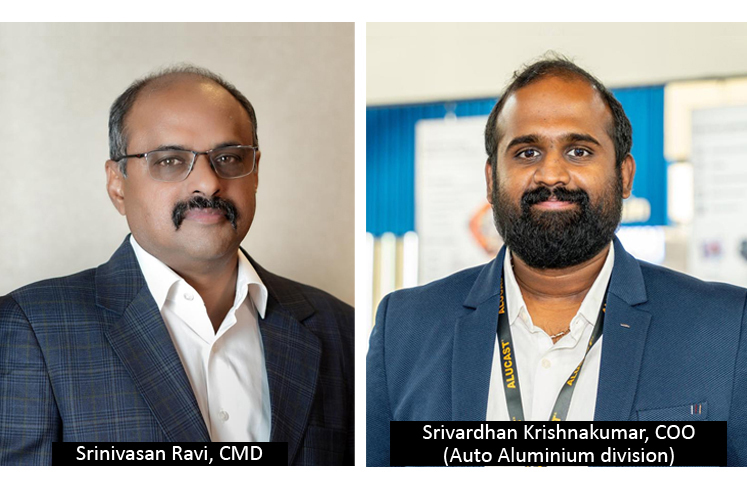
“As global automotive and industrial sectors navigate supply chain realignments, regulatory mandates, and platform transformations, light weighting through high-precision aluminium die casting has evolved from a design preference to a core strategic imperative.
On the immediate-term outlook for 2026 and 2027, three themes stood out. First, geopolitical realignment — ongoing global friction and supply chain de-risking are accelerating the China-plus-one shift, with global OEMs increasingly turning to India as a resilient export hub for precision components.
Second, aggressive lightweighting — near-term emissions regulations including CAFE and BS-VI standards are driving higher aluminium content per vehicle across ICE, hybrid, and commercial platforms.
Third, integrated value chains — in-house end-to-end capabilities spanning tool design, casting across HPDC, LPDC, GDC, and sand-casting processes, and precision machining remain critical to navigating global volatility effectively, they said.
On the long-term outlook, two transformations will define the landscape. As EV adoption scales, demand is shifting toward complex, thin-walled, high-integrity aluminium components — battery enclosures, motor housings, and integrated structural parts — requiring a fundamentally different level of casting precision and engineering capability. Alongside this, sustainability is moving from aspiration to competitive necessity. OEMs are prioritising Scope 3 decarbonisation, and the industry’s transition towards secondary recycled aluminium and energy-efficient foundry practices will increasingly determine which suppliers remain relevant and which fall behind.
Building for Tomorrow
Looking ahead to 2030, Craftsman Automation’s aluminium growth will be driven by increasing business per vehicle through larger, more complex, and fully machined components; expanding into EV, hybrid, structural, and thermal-management applications; and cross-selling casting and machining capabilities across the combined customer base of Craftsman, DR Axion, and Sunbeam.
According to them, the company will selectively invest in higher-tonnage die-casting machines, automation, and advanced process technologies, while increasing participation in global sourcing programmes as OEMs diversify their supply chains. Improving asset utilisation and operating efficiencies across the enlarged manufacturing network, alongside developing lower-carbon and more resource-efficient manufacturing processes, will complete the picture. Through sustainable operations, technical precision, and robust engineering, Craftsman Automation’s Aluminium Division is positioning itself to power the next generation of lightweighting and global mobility, they added.”
“At Craftsman Automation, our Aluminium Division stands at the forefront of material innovation and clean mobility solutions.”