ZENSOMY is positioning itself at the intersection of intelligent autonomy and real-world industrial application, with a clear focus on solving high-impact operational challenges across sectors. Founded by Dr. Ganesh Nageswaran, Co-founder and CEO, and Gurunathan Subramaniyan, Co-founder and COO, the company is building a robust autonomy platform tailored for environments where conventional systems struggle to perform.


At its core, ZENSOMY’s vision is rooted in addressing structural inefficiencies and risks prevalent across industries such as agriculture, mining, construction, and industrial operations. As Ganesh explains, “Our vision is to build safe, scalable autonomous solutions that can be deployed across diverse industries and geographies.” He points to a convergence of challenges – labour shortages in agriculture, hazardous working conditions in mining and construction, and inefficiencies in warehouses and manufacturing – all of which demand a new approach centred on intelligent autonomy.
What differentiates ZENSOMY from many players in the autonomy space is its deliberate departure from traditional road-centric frameworks. Instead of adapting ADAS-based systems designed for structured environments, the company is developing an autonomy stack specifically engineered for unstructured, high-variability conditions. “We build autonomy for environments where structure doesn’t exist,” notes Ganesh. “Unlike ADAS, which relies on lanes, maps, and road symbols, our platform is designed to handle uncertainty – with robust perception, advanced sensor fusion, and precise localisation even in GPS-denied conditions.”
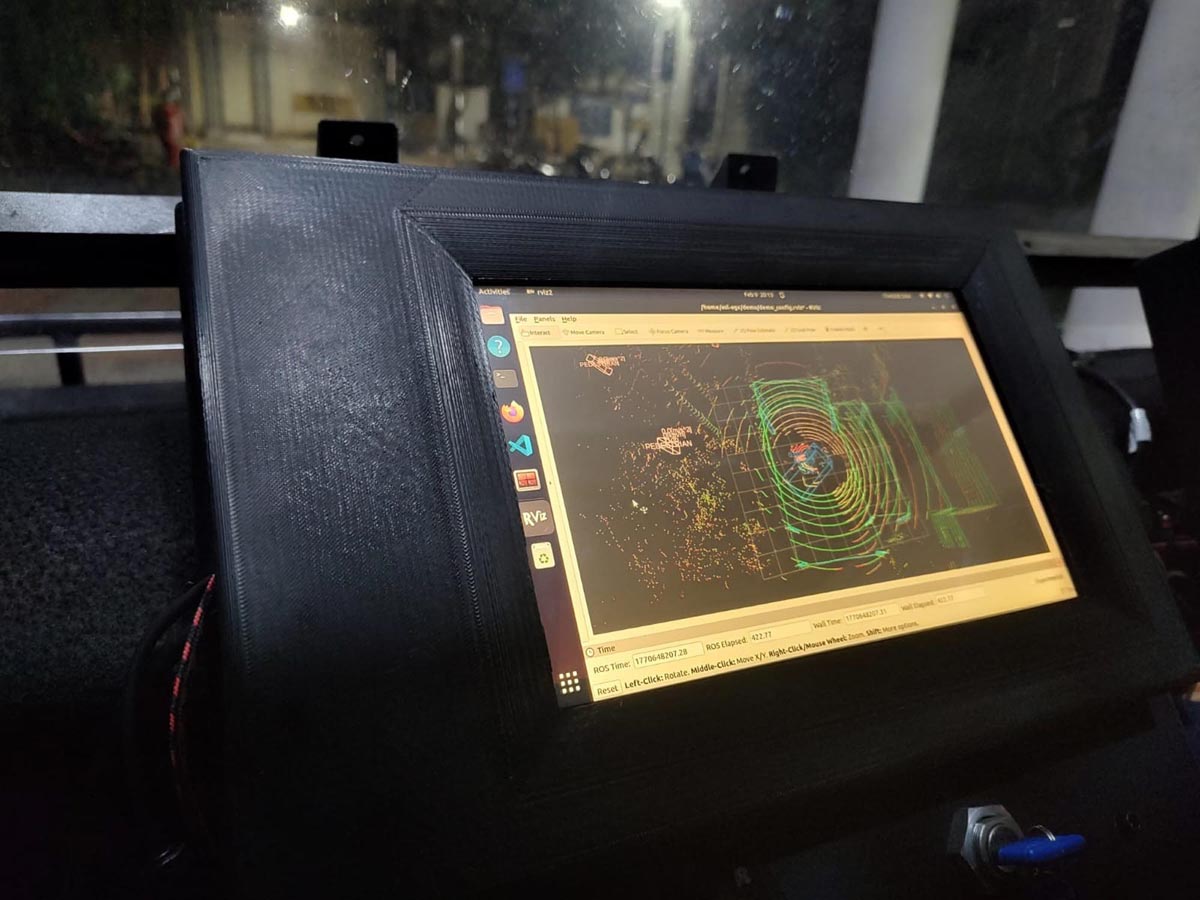
This capability is particularly relevant in off-road and industrial scenarios, where unpredictability is the norm rather than the exception. By focusing on adaptability and resilience, ZENSOMY aims to bridge a critical gap in the autonomy landscape – one where scalability, reliability, and real-time performance must coexist without compromise.
From an operational standpoint, Gurunathan Subramaniyan underscores the importance of building a flexible and modular architecture that can scale across diverse use cases. “The key is to separate what is common across domains from what is application-specific,” he explains. “Our core autonomy platform handles fundamental capabilities like perception, sensor fusion, localisation, and navigation, while modular adaptation layers allow us to tailor the system for specific applications such as agriculture, mining, or mobility.”
This layered approach enables ZENSOMY to maintain a consistent technology backbone while accommodating variations in machine configurations, sensor setups, and task requirements. More importantly, it eliminates the need for extensive redesign when entering new sectors, significantly improving scalability and time-to-market.
In terms of market positioning, the company is strategically targeting OEMs and fleet operators as its primary customers. These stakeholders stand to gain the most from autonomy in terms of productivity, safety, and operational efficiency. Gurunathan elaborates, “We position ourselves as a technology partner, offering a modular autonomy platform that can be integrated into both existing and new machine platforms. In certain cases, we also collaborate with solution integrators to accelerate deployment.”
Looking ahead, ZENSOMY aims to evolve beyond a pure technology provider into a full-stack autonomy platform company. This would involve not just enabling autonomous capabilities at the machine level, but also delivering higher-order functionalities such as fleet management, remote operations, and continuous system optimisation through data-driven insights.
Currently, the company is in the early stages of commercialisation, with a strong emphasis on pilot deployments and real-world validation. “Our immediate focus is on demonstrating the system in live environments across multiple use cases, particularly in off-road and industrial settings,” says Ganesh. He adds that the market response has been encouraging, with growing interest from sectors grappling with labour shortages and safety concerns.
The roadmap ahead is both ambitious and pragmatic. On the technology front, ZENSOMY is prioritising robustness and performance in unstructured environments, while simultaneously working towards making its platform more modular and hardware-agnostic. This will enable seamless deployment across a wider range of machines and applications.
From a sectoral perspective, agriculture remains the immediate focus due to its pressing need for automation. However, the company is actively preparing to expand into adjacent domains such as construction, mining, and ports – industries that share similar operational complexities and demand high levels of autonomy.
Partnerships will play a pivotal role in this growth trajectory. “We are working closely with early adopters to validate use cases and demonstrate clear ROI,” Gurunathan notes. “At the same time, we are engaging with OEMs to explore deeper integration of autonomy into machine platforms from the ground up.”
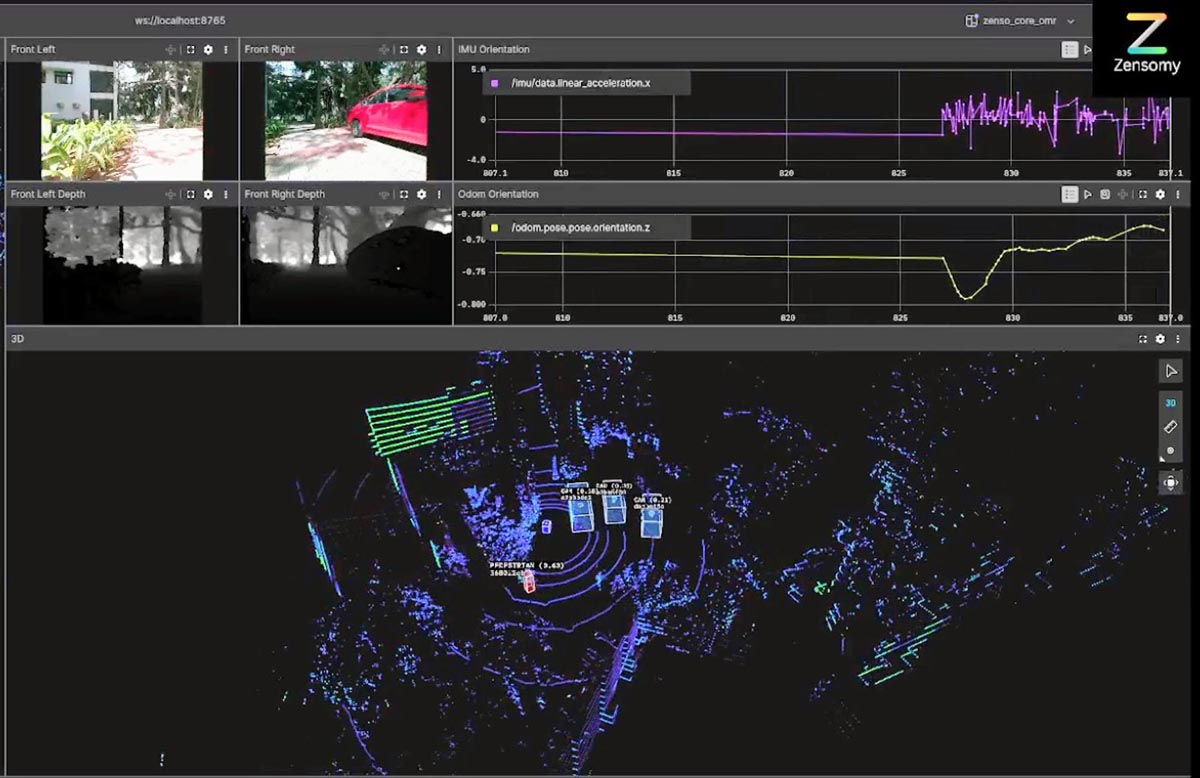
In a landscape where autonomy is often associated with urban mobility and robotaxis, ZENSOMY is carving out a differentiated space by focusing on industrial and off-road applications. By aligning deep technical expertise with a clear understanding of market needs, the company is building a scalable, future-ready platform that has the potential to redefine how machines operate in some of the most demanding environments.
As Ganesh succinctly puts it, “We are not just extending existing autonomy solutions to new domains – we are building systems that are inherently designed for variability, adaptability, and real-world deployment.”