By Ramesh Kumar
Rahul Singh of Noida, my regular Uber driver, earns a net income of ₹1,000 daily. He owns his sedan and has paid off the loan. Being debt-free is a massive relief for him. Working 25 days a month, he chooses his own hours, driving through traffic for roughly 12 to 14 hours daily. He lives in a rented apartment with his parents and two sisters.
Is he happy? Well, yes and no.
Yes, because given his educational background, he never imagined earning more than the statutory minimum wage of ₹16,868 in his current domicile of Gautam Buddha Nagar. Plus, he returns home every night to his family after carting passengers across multiple destinations in an air-conditioned vehicle. No, because like Oliver Twist, he desires more. That is understandable, but his growth is limited by the massive fleets of Ubers, Olas, Rapidos, and Refex cars competing for the same passengers. Despite this intense competition, he consistently takes home ₹25,000 every month.
On the other hand, consider Shailendra Kumar, a long-haul truck driver with SWIFT Road Link, a niche car-carrier operator. Shailendra ferries mint-fresh passenger vehicles from automobile giants such as Tata Motors, Hyundai, Kia, Mahindra, Renault, Nissan, and Maruti Suzuki to their nationwide dealer networks. He covers approximately 7,000 to 8,000 kilometres over 20 days each month. He chooses not to work all 30 days, partly because load availability can be limited.
Mind you, he is not a salaried employee on the payroll of any fleet-owning company. His earnings come directly from the kilometres he runs and the residual fuel left at the end of every trip. Can you guess his monthly compensation? He takes home at least ₹50,000. Unbelievable? Not at all. Occasionally, his earnings climb even higher.
Setting aside his monthly income for a moment, his true living standards became clear during my recent visit to his hometown in Etawah, Uttar Pradesh. He owns a multi-room brick-and-mortar home for his family, a few buffaloes, a motorcycle, and a sizeable landholding to feed his large household. In his mid-thirties, with kids enrolled in private schools, Shailendra has been driving long-haul routes for over a decade despite not finishing school.
Yet, look at his pay. Even a long-haul truck driver with just a year of experience earns at least ₹30,000 per month—a starting salary many fresh MBA graduates struggle to secure. Crucially, no minimum educational qualification is required to enter the driving profession. Despite this open doorway, the financial returns are remarkably robust. As I have crisscrossed the nation since 2010, interacting with drivers of over 150,000 long-haul trucks to study their working and living conditions, I have not come across a single long-haul driver earning less than ₹30,000. Getting them to reveal their actual earnings is another matter entirely. Elementary, my dear Watson! Given the challenges of working away from home for long stretches, confronting a corrupt highway bureaucracy, and enduring a lack of wayside amenities, their compensation naturally outweighs that of city cab drivers.
Vedmani, another veteran long-haulier with over 20 years of experience, lives in Basti, Uttar Pradesh, on his massive property. His farmland extends in all directions, making the boundaries hard to spot. His daughter is a graduate who teaches at a local school. He also owns a few last-mile delivery vehicles, which his family manages while he is busy driving on the highways.
As the primary breadwinner, this driver successfully supports a large parivar (family). His homestead includes land, cattle, and a large house. The produce from his land meets the family’s consumption needs, and the surplus is sold in the market. The cattle provide milk, curd, and paneer, while goats and chickens meet the family’s protein needs. Because his agricultural income is non-taxable, he avoids the tax net legally. I have come across very few tax-paying truck drivers—not because they do not earn enough, but because a sizeable chunk of their highway income is handled in cash, supplemented by tax-free agricultural revenue. His home boasts every modern convenience found in city apartments: sofas, elegant curtains, refrigerators, air conditioners, and multiple personal vehicles, including SUVs. The children and women wear modern, metro-style garments.
During a driver outreach programme for CJ Darcl in 2015, I went on a road trip to meet, greet, and distribute gifts to drivers’ families in remote villages across Bihar, Jharkhand, Uttar Pradesh, and Haryana. While shopping for sarees for the drivers’ spouses in Barhi, Jharkhand, local shopkeepers recommended we opt for higher-quality options. They warned us that sarees priced under ₹300 would simply be used to mop the floor. Why? Because these drivers procure the finest sarees for their wives as they crisscross the country. We watched as the women carefully felt the weight and texture of the fabric before accepting our gifts.
A majority of truck drivers from North India come from agricultural backgrounds. Due to the MGNREGA initiative, fewer farmhands are available for hire during the sowing and harvesting seasons. Consequently, drivers frequently return home to attend to these chores, taking themselves off the road for two to three months each year.
Despite these strong earnings, drivers remain absolutely clear about one thing: they do not want their sons to enter this profession. This resistance stems from systemic apathy and a glaring lack of respect from service seekers. As a result, the driver supply is shrinking even as cargo demand grows. The government concedes that India faces at least a 22% driver shortage—a crisis that is universal, not unique to India.
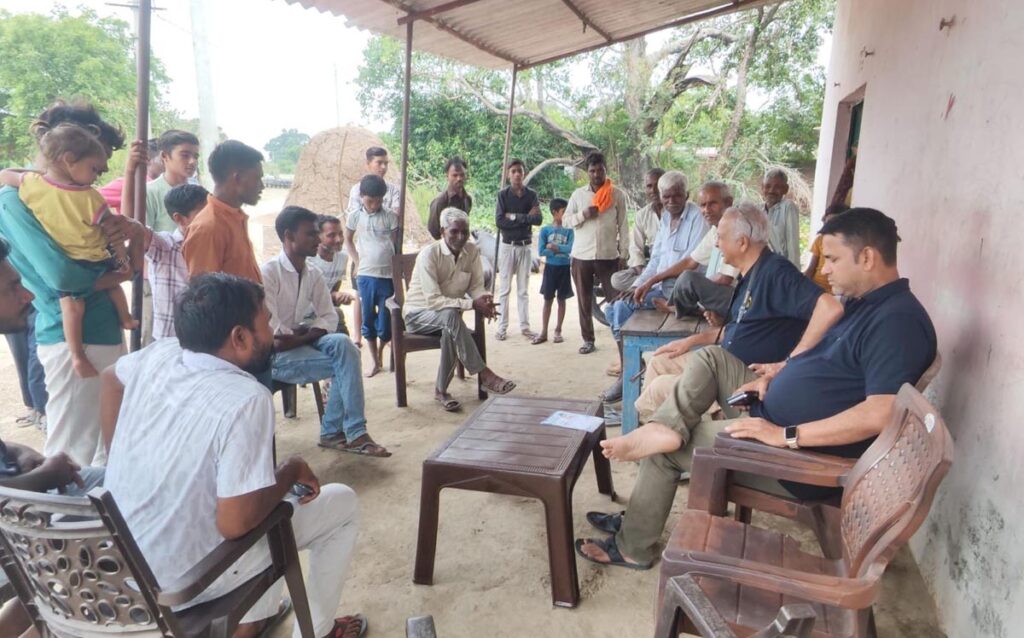
Drivers channel their hard-earned money into their children’s education and their parents’ healthcare. Their sons and daughters are pursuing college degrees and securing white-collar jobs. All of this requires significant capital. Where is the money coming from? The answer is crystal clear: trucking. It truly is a passport to prosperity.
While Indian roads have improved significantly, they still have a long way to go to match global standards. Modern commercial vehicles are excellent and heavily infused with new technology. However, improving the working and living conditions of drivers themselves has received far less attention. Post-COVID-19, the government has woken up to this reality and is blueprinting wayside amenities, though progress remains slow.
Fleet owners (motor maliks) have also become wiser. Driven by self-interest, they have stopped ill-treating their drivers (sarathis). Good roads and high-tech vehicles mean nothing without a reliable driver at the wheel. To retain drivers, owners must pay well and invest in safety training, because the security of both cargo and equipment ultimately hinges on the driver.
What should we make of the frequent, loud complaints exchanged between fleet owners and drivers? Cribbing is simply part of their DNA, but their mutual dependence is undeniable.
All things considered, India’s $5-trillion economic dream through ‘Make in India’—which aims to increase manufacturing’s contribution to GDP to 25%—is entirely achievable, provided the nation secures the buy-in of its truck drivers. Multimodal transport systems are excellent, but freight trains and cargo ships cannot deliver goods directly to the doorsteps of shippers and end-users.
It is time for the government to focus on making trucking a respectable and appealing career. With air-conditioned cabins now mandatory, high-tech dashboards being rolled out, and unemployment remaining high, trucking offers an excellent career path. It promises strong financial returns, a sustainable livelihood, and a touch of adventure through a free Bharat Darshan on the open road.
The author has travelled 300,000 kilometres on Indian highways, including 30,000 kilometres as a driver’s assistant (chalasi/kalasi) since 2010. He has authored five books, edits ‘Drivers Duniya’ (an English quarterly magazine), and runs the Centre for Driver Relationship Management (CDRM), which offers driver behaviour therapy sessions. He can be reached at ramesh@cdrm.in.