At Busworld Southeast Asia 2026 in Jakarta, Telma signalled a significant step in its global growth strategy by formally strengthening its presence in Indonesia through a new local partnership and its first successful vehicle deployment in the market. The move reflects the company’s growing focus on Southeast Asia, where rising demand for safer and more efficient commercial vehicle operations is creating new opportunities for advanced braking technologies.
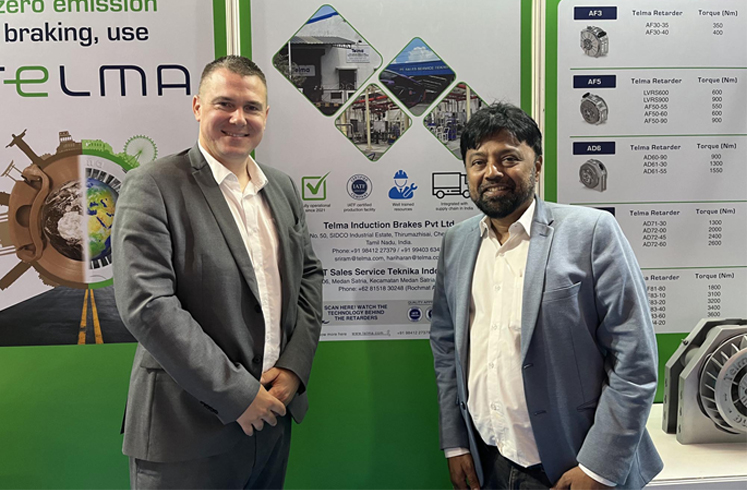
Speaking exclusively to MOTORINDIA at the event, Mr. Marc Blanzé, Managing Director of Telma S.A.S, and Mr. Sriram Muralidharan, Director General of Telma Induction Brakes (P) Limited, outlined the company’s plans for Indonesia, highlighted the positive results from its initial installations, and shared their outlook for the broader ASEAN region.
“For 80 years, Telma has been a worldwide leader in braking systems,” said Marc. “We supply some of the largest OEMs globally and have built an extensive support network. Being present in Indonesia is an important milestone for us because we see tremendous potential here, particularly in improving vehicle safety.”
Building the foundation
A major breakthrough for Telma has been the appointment of PT Sales Service Teknika Indonesia as its local partner in region. According to the company, establishing a strong local presence was essential for addressing language, technical and customer support requirements in the market.
“The best part is that we found the right dealer,” noted Sriram. “They have worked very closely with us and have successfully overcome many of the initial challenges, including interface and communication issues. That has helped us engage effectively with customers and operators.”
The partnership has already yielded tangible results. Earlier this year, Telma completed its first installation in Indonesia on a Mercedes-Benz OF 1623 bus operated by U-Trans. The vehicle has since accumulated more than 35,000 km in service, providing encouraging feedback regarding operational performance.
“The operator is already seeing the benefits in terms of brake lining life and tyre wear,” said Sriram. “They have also reported a slight fuel economy advantage. These are important validations for us as we establish ourselves in this market.”
Safety at the forefront
While operational savings are an attractive proposition, both executives emphasised that safety remains Telma’s primary value proposition.
“The first benefit of using a Telma retarder is safety,” stated Marc. “Many discussions during Busworld centred around accidents caused by inadequate maintenance practices. Telma can play an important role in improving vehicle safety and supporting fleets and OEMs in their efforts to reduce accidents.”
Indonesia’s bus industry, like several other developing markets, often faces challenges related to delayed brake maintenance and extended brake lining usage.
“There is still limited awareness about preventive maintenance in some segments,” explained Sriram. “Operators tend to use brake linings until the very end of their life cycle. This creates safety concerns. Telma significantly reduces dependence on foundation brakes and helps address this issue.”
Beyond safety, the company believes operators can achieve substantial lifecycle savings through reduced brake wear and maintenance costs.
“While the retarder may initially be viewed as an additional cost, it ultimately becomes a source of savings,” said Marc. “When the Telma retarder is working, the foundation brakes are not being used. Over two or three years, operators can recover their investment through lower maintenance expenses.”
Expanding beyond buses
Although buses represent the immediate focus in Indonesia, Telma sees substantial opportunities across a variety of applications.
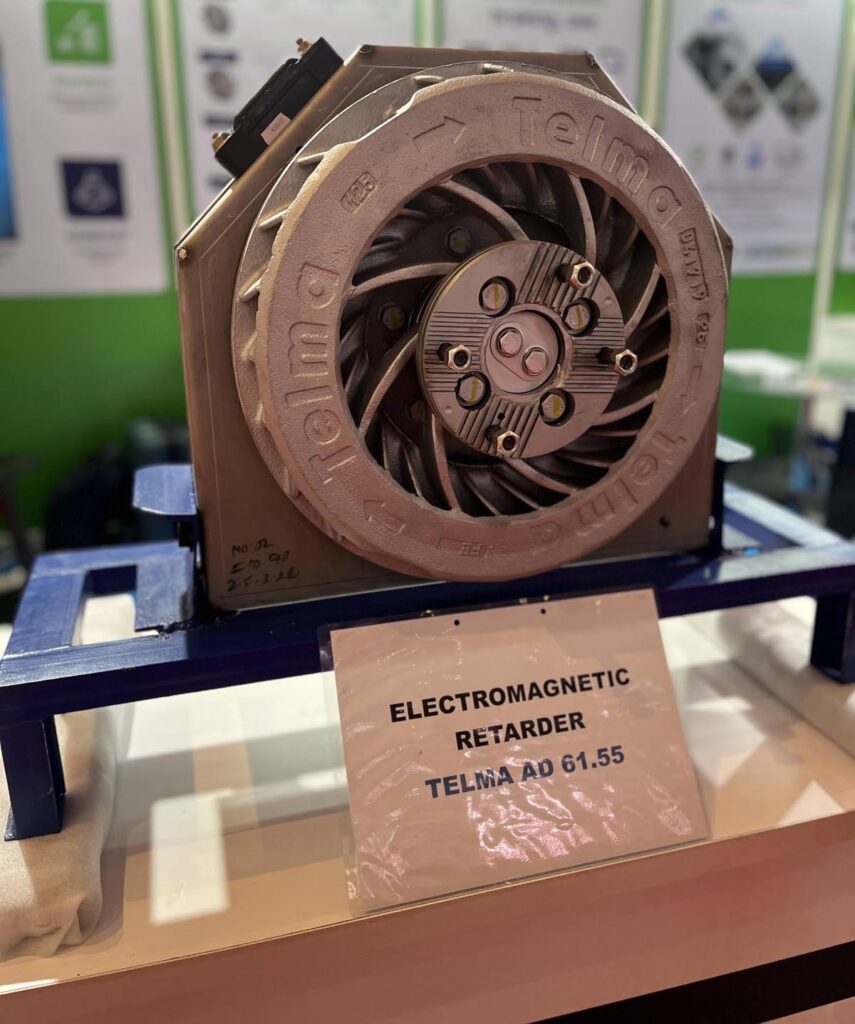
“We offer a complete range of retarders covering vehicles from 3.5 tonnes to over 200 tonnes,” said Marc. “Passenger transport is only the beginning. Indonesia has strong potential in mining, off-road operations, heavy-duty transportation and several specialised applications.”
Sriram pointed specifically to the country’s growing nickel and mining sectors.
“Indonesia is a huge market for nickel transportation and mining applications,” he observed. “In these segments, operational excellence often becomes more important than acquisition cost. That’s where Telma can create significant value.”
The company also sees opportunities in military vehicles, hazardous goods transport, emergency vehicles and other specialised sectors where braking performance and safety are critical.
Marc added that Telma’s strong relationships with global OEMs would help support its growth plans in the region.
“We already work closely with OEMs across Europe, South America, the United States and India,” he said. “Many of these players have a presence in Southeast Asia. Together with our local partner, we will progressively build these relationships in Indonesia as well.”
Innovation beyond conventional braking
The company is also looking ahead to the evolving mobility landscape, including electrification and hybrid technologies.
Marc highlighted Telma’s Hybrid Induction Brake (HIB) system, developed as a transitional solution between conventional diesel vehicles and fully electric platforms.
“We are convinced there is an important step between diesel vehicles and battery-electric vehicles,” he explained. “With our Hybrid Induction Brake system, we can convert a diesel vehicle into a plug-in hybrid vehicle. Tests have already demonstrated fuel consumption reductions of between 16% and 25%, which is a very significant improvement.”
Telma has already completed projects with leading European OEMs and is currently engaged in discussions with another major manufacturer regarding future programmes.