Seven months after the launch of its next-generation truck range, MOTORINDIA goes back to the fleet owners to see whether higher payload, better fuel efficiency and stronger earnings are translating into real-world gains.
For a fleet owner, profitability is not a line in a brochure. It is the calculation made at the end of every trip: what the load earned against what it cost to move. Freight rates are largely dictated by the market and fuel prices rarely fall, so the margin on every trip is determined by two factors that the operator can influence – how much the truck carries and how much fuel it consumes. Cost per tonne-kilometre is where the two meet, and it has become one of the key numbers transporters watch.
Tata Motors has built its next-generation range around precisely this equation. Launched in January 2026, the portfolio of 17 trucks spans 7 to 55 tonnes and includes significant upgrades to its heavy-truck platforms, the new Azura series and the Tata Trucks.ev range. The clearest test of whether the range delivers, however, is not the specification sheet. It is the operators who have been running these trucks over the past seven months – and who have invested their own money in them. Several agreed to share what has changed in their operations and, more importantly, on their books.
What the New Range Promises
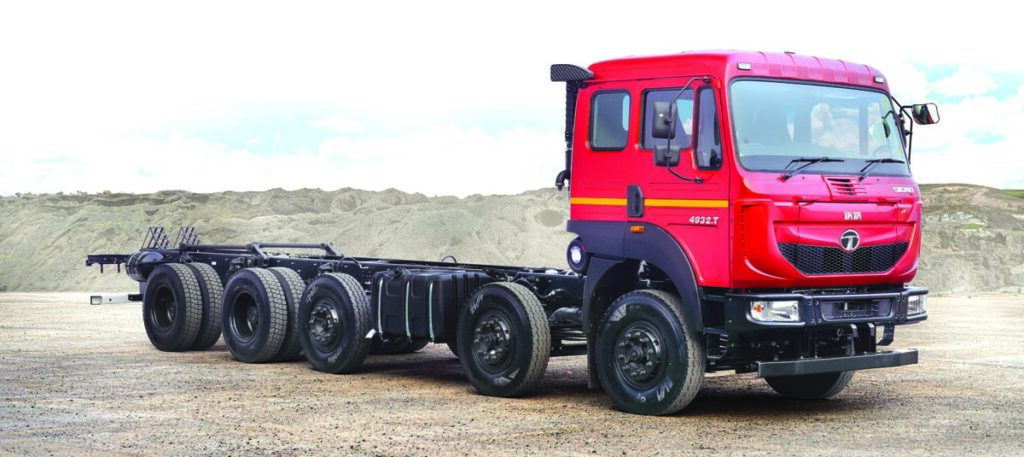
One of the key segments for cargo operators is the multi-axle truck category, spanning 30-tonne, 37-tonne, 44-tonne and 49-tonne configurations. Across these models, engineering enhancements have increased payload capacity by up to 1.8 tonnes. Since revenue in most cargo applications is closely linked to tonnage, carrying more on the same trip can translate directly into higher margins.
The additional payload has been achieved through re-engineering rather than a heavier frame. Tata Motors’ enhanced tandem suspension system enables an additional 1.8-tonne load without compromising durability or performance.
Payload, however, is only one part of the equation. On long-haul corridors, a tractor often returns empty or part-loaded. That leg generates little or no revenue while still consuming diesel. To address this, the Signa 5532.S is offered in a 6×2 configuration with a lift axle. When the truck is running light, the axle lifts, reducing rolling resistance and fuel consumption while also reducing tyre wear. When the load is back on, the axle lowers to distribute the weight and enable the truck to carry its full 55-tonne capacity.
The other side of the equation is fuel. The range has been developed for operators dealing with rising fuel costs and tight freight economics, while still demanding dependable performance across real-world duty cycles. Working with its partners and vendors, Tata Motors has enhanced the Cummins 6.7-litre diesel engine for improved reliability and fuel efficiency, based on customer feedback. The company claims fuel-efficiency gains of up to 7%.
With fuel accounting for close to 60% of a transporter’s operating cost, an improvement of that magnitude, if consistently achieved across routes and applications, can make a meaningful difference to cost per tonne-kilometre.
Safety is another factor in the profitability equation. The entire range is built to meet the ECE R29.03 crash standard. Tata Motors is the only Indian manufacturer certified to the standard and offers up to 23 active safety technologies, including adaptive cruise control, lane departure warning and collision mitigation.
For an operator, however, the value of safety is not the certificate itself but what it prevents. A driver who returns safely and a truck that avoids an incident is a truck that is not sitting idle in a workshop or off the road while a replacement is arranged. In a business operating on tight margins, a trip lost to a breakdown or accident can hurt profitability just as much as an additional tonne of payload can improve it.
That is what the range promises on paper. The more important question is what the operators who paid for these trucks say they have experienced.

SM Logistics: The Driver’s Preference
Mr. Harpreet Singh has been building SM Logistics since 1992 and now operates a fleet of more than 200 Tata trucks in long-haul logistics, serving customers across sectors including steel, textiles and electronics. The company’s reputation is built around timely deliveries, cost-effectiveness and a skilled workforce, while its latest additions include trucks from Tata Motors’ new range. With a fleet of this size, Singh relies on Fleet Edge, Tata Motors’ connected-vehicle platform, to keep track of vehicle location, performance and maintenance.
“Fuel efficiency is good, and the trucks handle varied terrains without trouble – no issues on any gradient. On the loads we run at 40 to 42 tonnes of payload, we are already earning an additional Rs 8,000 to Rs 10,000 on each trip due to the enhanced payload capacity of 1.8 tonne. A lot of the efficiency comes down to drivability, and the drivers tell me the cabin is comfortable enough that they come back from difficult routes well before time and less tired. When I assign a truck to a driver, they ask only for a Tata. The recent fleet genuinely takes us farther on every drop of fuel,” said Mr. Harpreet Singh.
Managing a fleet of this size, he adds, is also where connected-vehicle technology becomes valuable. “With a fleet this size, Fleet Edge gives me one view of everything – where each truck is, how it is being driven and which one needs attention before it stops. Catching a problem early instead of after a breakdown is what keeps my trucks earning rather than standing, and it has helped me bring down fuel consumption and improve driving behaviour across the fleet.”

Gomati Roadlines: Lower Cost per Tonne-Kilometre
Mr. Rajendra Prasad Tiwari has been running Gomati Roadlines for 38 years and operates 60 trucks on all-India freight, including lubricant and chemical transportation. He has purchased two high-payload trucks from the new range.
“The moment I bought them, I was confident I had invested for higher profits. Earlier we carried 34 tonnes; on the Signa 4932, we now carry 36. That is more profit per trip – more load, less cost, which means a lower cost per tonne-kilometre, and our margins have improved. The drivers are happy, and their productivity has gone up, so they manage more shifts and we earn more. They prefer the Tata high-payload series over anything else. And with the ECE R29.03-compliant cabin, safety is assured at all times,” said Mr. Rajendra Prasad Tiwari, Owner, Gomati Roadlines.

Dayaexpress Logistics: Faster Across Hilly Terrain
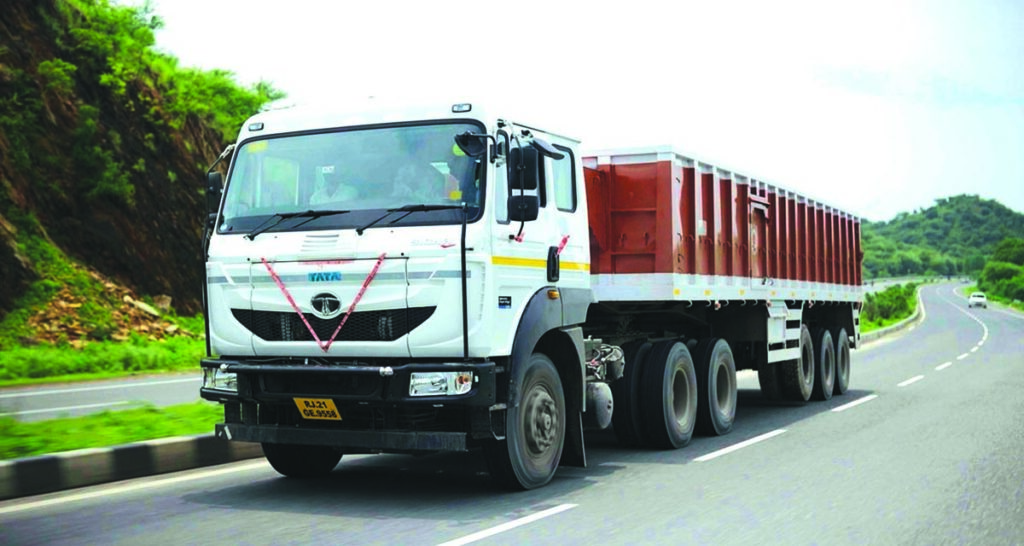
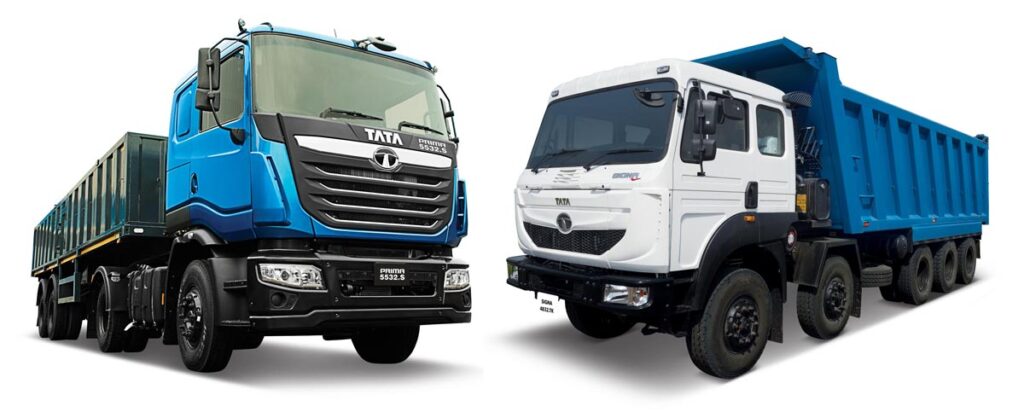
Mr. Panchnarayan Sahu, Owner of Dayaexpress Logistics Pvt Ltd, is a long-standing Tata commercial vehicle customer whose fleet includes the Prima 5532 and Signa 5532.
“These trucks perform well over hilly terrain, with far less gear shifting, and we are able to load up to 1.8 tonnes more,” said Mr. Sahu. “A route like Mumbai to Nagpur used to take us 48 hours, and with the Signa 5532.S, the travel time has come down. The Cummins engine performs well. For us, Tata means the best income, the best savings, strong service and great safety.”

Daman Mandeep Roadlines: More Load, Same Diesel
Daman Mandeep Roadlines is a well-known road transport operator from Rajnandgaon, Chhattisgarh, moving paddy and rice, iron and steel, cement and aggregates, general cargo and tanker loads on a 24×7 pan-India basis. The company has inducted 11 Signa 5532.S trucks from the new range.
“The technology in these trucks has made our fleet more efficient, and the performance has been unmatched for us,” said Mr. Damanjot Singh, Managing Director, Daman Mandeep Roadlines. “This is the best fuel efficiency we have recorded so far, and the Cummins engine gives us durable, dependable performance. For our operation, it is clearly more profitable than the earlier Signa trucks. Same routes, but more comes back into the business at the end of the month.”

The View from Tata Motors
The man heading the trucks business at Tata Motors frames the proposition in much the same way as the operators do – around what the truck earns.
“A fleet owner does not merely buy a truck. He buys an asset that must earn more than it costs to run,” said Mr. Rajesh Kaul, who heads the trucks business at Tata Motors Ltd. “A customer buys a truck that makes him money, and if it does not show up in his P&L at the end of the year, we have not done our job. So, when we talk about more payload or better fuel efficiency, we are really talking about one thing: profits. On this range, we are confident that number pays him back faster than anything we have built before.”
Safety and Support as Part of the Return
Two things recur across the operators. The first is safety — it is not just a feature, but a way to earn more. As their own experience shows, a fatigue-free driver is a more productive one.
The other half is the network behind the truck. Under Sampoorna Seva 2.0, Tata Motors provides 24×7 support, assured parts availability, annual maintenance contracts with driver training and fleet financing, and the portfolio is backed by Fleet Edge, the connected vehicle platform with over a million connected commercial vehicles The predictive maintenance feature ensures the truck is diagnosed beforehand. In essence, both these factors enable higher uptime and earning potential.
The Case the Operators Make
Across different cargoes, routes and operating conditions, the operators are not simply describing a better truck. They are describing tangible changes in the economics of running one.
They are carrying one to two tonnes more on the same trip, reporting lower diesel consumption on the same routes and, in at least one case, putting an additional Rs 8,000 to Rs 10,000 per trip on the books. More than one operator independently cited the same range of additional earnings from the higher payload.
The drivers’ response is another recurring theme. Their preference for the trucks is not merely a matter of comfort; for fleet owners, a truck that drivers want to operate can mean better driver retention, productivity and utilisation.
Ultimately, these are the metrics that matter to a fleet owner. Payload, fuel efficiency, uptime, safety and driver productivity all feed into the same equation – how much the truck earns against what it costs to operate.
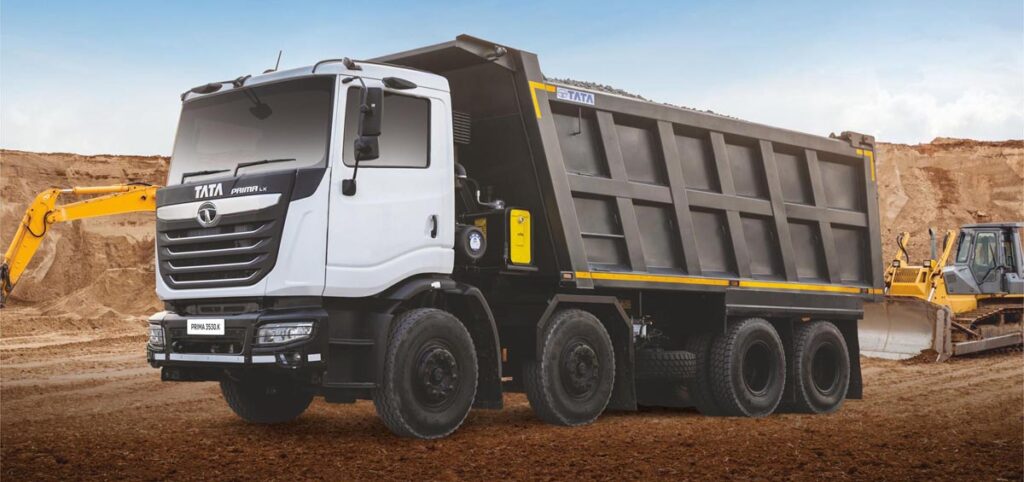
That brings us back to the question with which we started. Tata Motors promised higher profitability with its next-generation truck range. Seven months into the programme, the operators running the trucks – and doing the sums with their own money – say the proposition is holding up in the real world.