I opened the fireside chat at the SDV conference with a theme: Digital Cockpit Summit, Powering the Future of Indian Mobility through Software, organised by Aayera in Pune. But what does it actually mean for a vehicle to be powered by software?
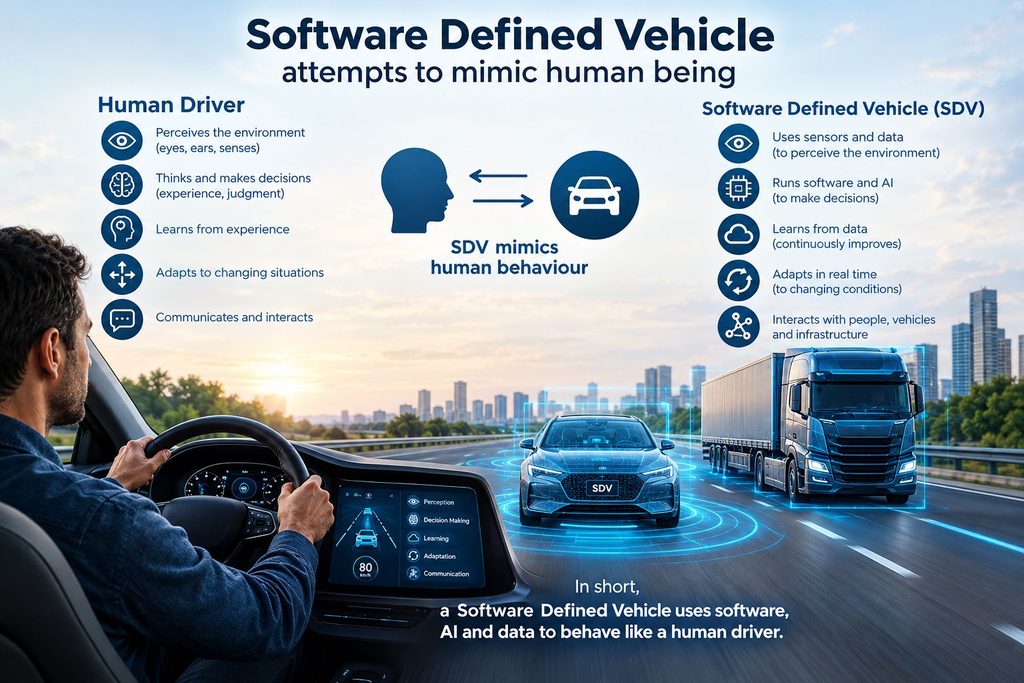
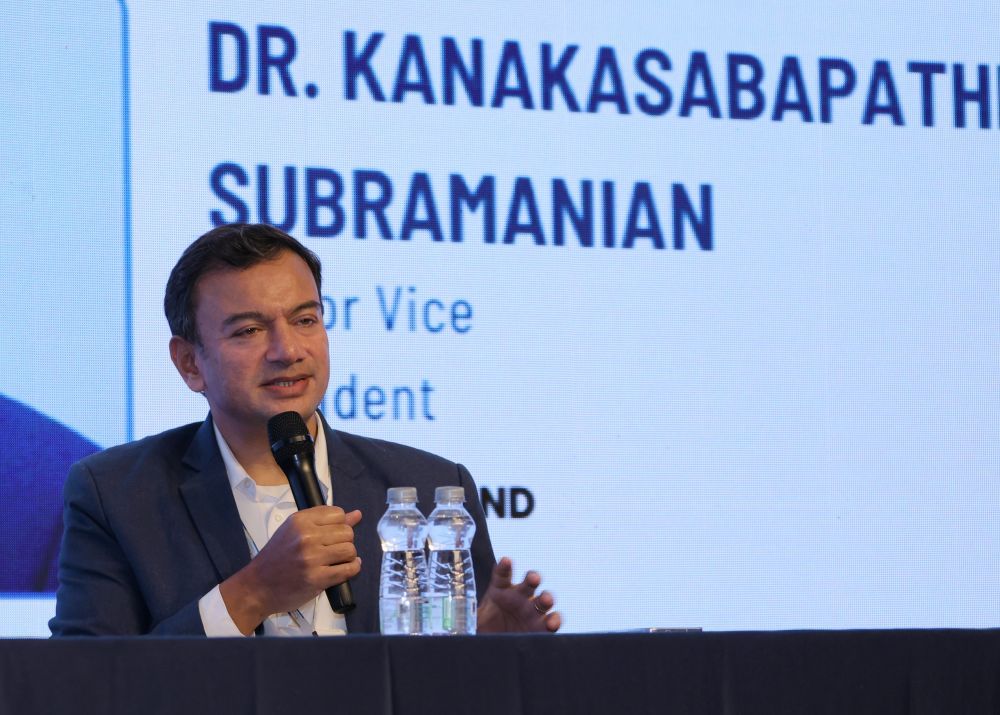
Imagine buying a car that wakes up one morning a little smarter than it was the night before. That is the promise of the software-defined vehicle (SDV) – a vehicle that behaves less like a machine and more like a smartphone on wheels. It is an exciting idea, but also a slippery one. Ask ten people what an SDV is and you may get ten different answers. So, when Dr. Kanakasabapathi Subramanian, Senior Vice President, Ashok Leyland, joined me on stage, my first question was the most basic one: what exactly is an SDV?
“The whole world is trying to figure it out,” he said. What followed over the next hour was one of the most thoughtful, and often amusing, conversations I have had on the subject.
We Are All Software-Defined
Dr. Subramanian began not with vehicles, but with us. All human beings, he pointed out, run on almost identical hardware. We have similar brains, the same set of sensors, two eyes and two ears, and roughly the same processing power. So, what makes each of us so different? The software.
Every baby is born with basic “firmware,” the instinct to cry and to feed. On top of that, we load software from our parents, from friends, schools and workplaces, and from our own experiences and conclusions. We even have different “calibration maps,” behaving one way with family, another at work and yet another with friends.
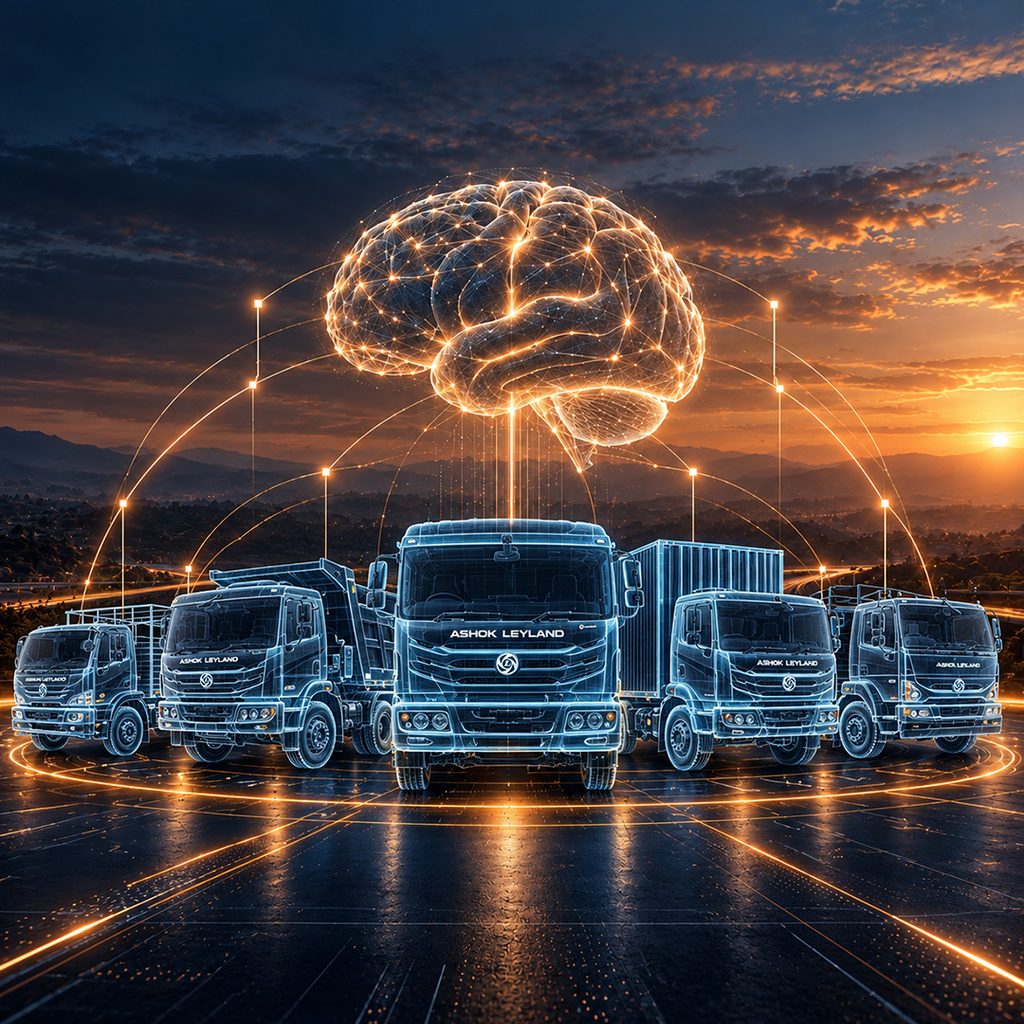
A vehicle is heading the same way, he said, with one important gap: it doesn’t yet have anything close to a human brain. The starting point for an SDV is to give it one, a powerful computer with strong sensors to feed it data. Once that brain is in place, the software and learning built on top of it will create things “we can’t even begin to imagine.”
From Depreciating Asset to Appreciating One
Then came the idea that, for me, was the heart of the conversation. We all know the old saying that a car loses value the moment it leaves the showroom. The SDV, Dr. Subramanian believes, will change that. Just as people grow more valuable as they learn and gain experience, an SDV will keep improving through new apps from the vehicle makers and outside developers, and through its own Artificial Intelligence (AI). Instead of depreciating, the vehicle becomes an appreciating asset, at least until the hardware reaches the end of its life. “Every sentence needs a full stop,” he said with a smile.
He compared it to the first smartphones. Twenty years ago, people thought they would use them for email and a little browsing. Today, we use them for everything, even singing. In the same way, he said, it is almost impossible to imagine everything a vehicle will do once it has a brain. That’s why he deliberately kept his definition of an SDV “intentionally vague.”
Living with the Risks
When asked what risks people should be aware of, Dr. Subramanian reminded the audience that people had been afraid of electricity when it was first introduced, and with good reason. Even the fuel tank in every car is a hazard. Yet we built safety systems around both, and they became part of everyday life.
The SDV will bring its own risks, from cybersecurity to the more unusual question of how much of a “personality” an AI-driven vehicle might develop on its own. The answer, he said, is to put the right guardrails in place, much like raising a child. You can’t control a child completely, but you can guide them to become a good citizen.
A Digital Twin, Samosas Included
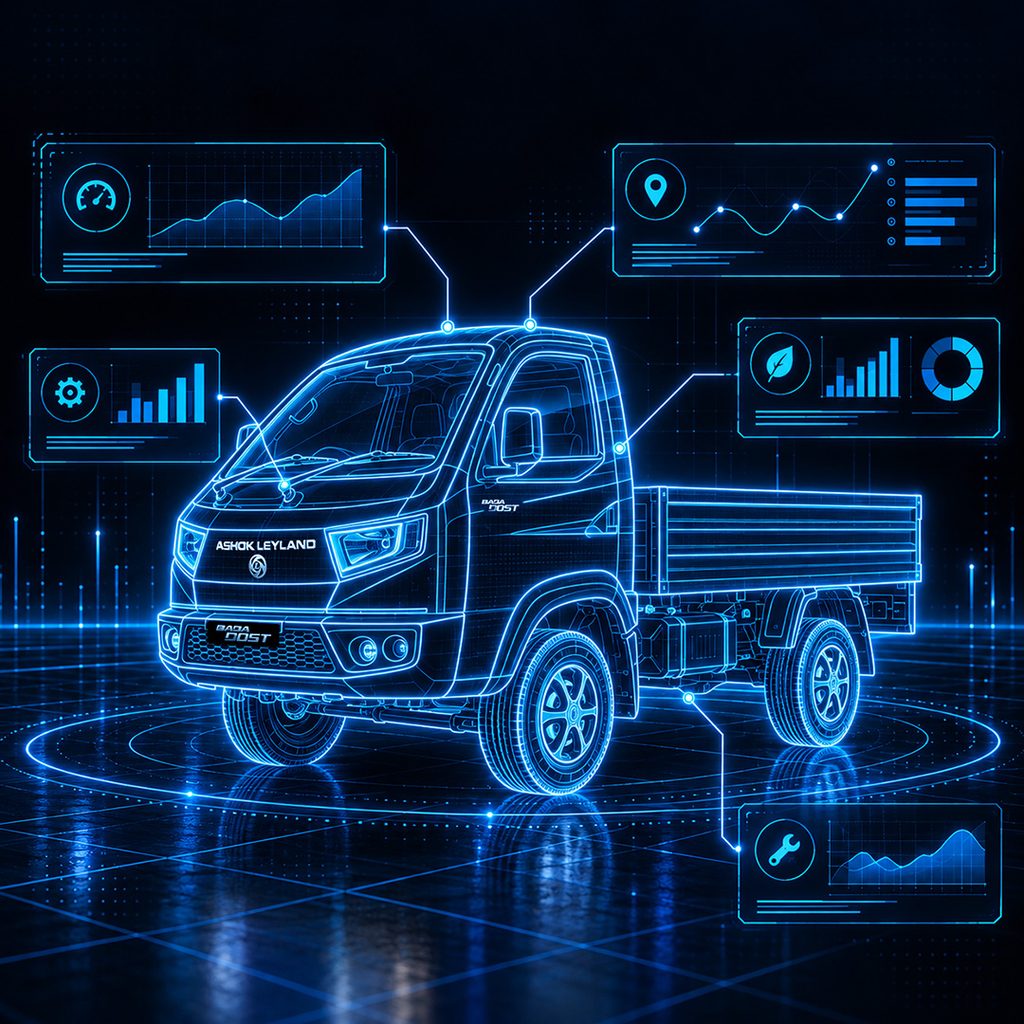
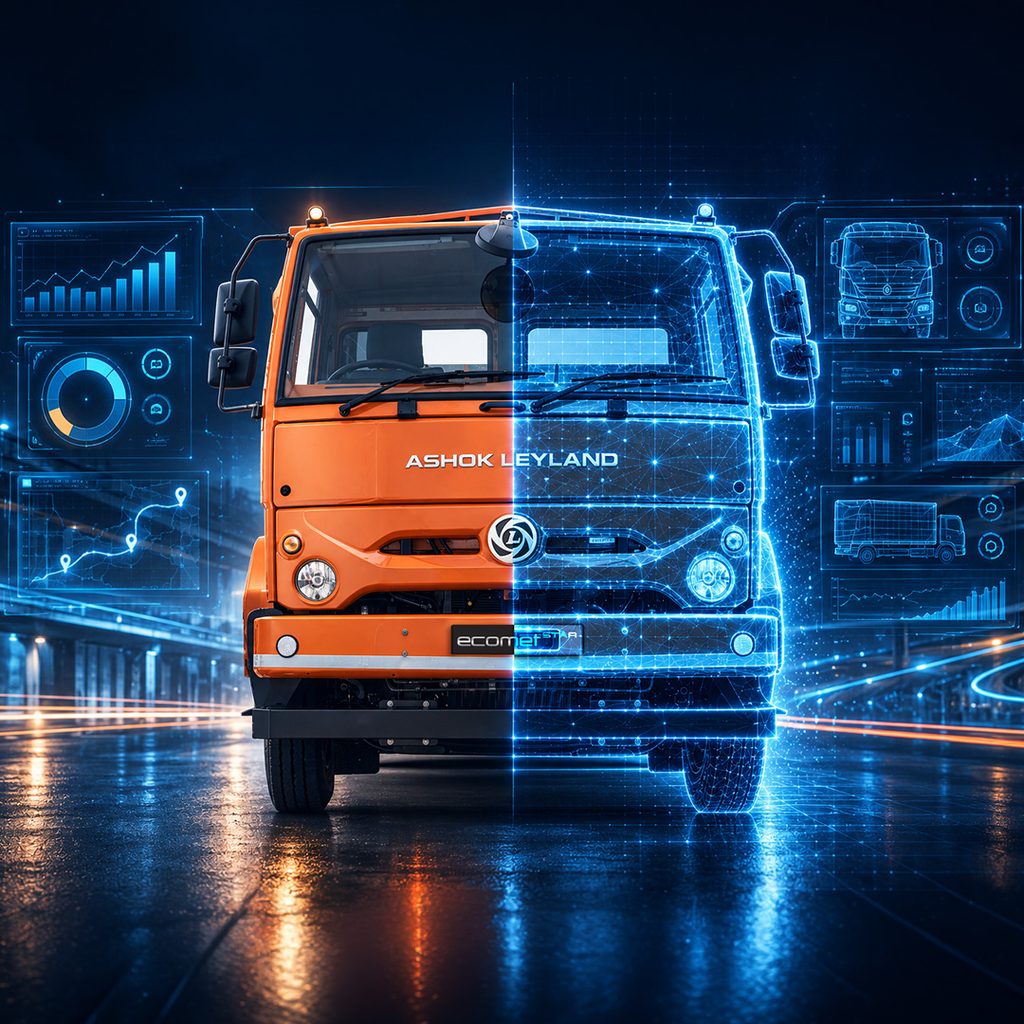
When we moved to digital twins, Dr. Subramanian explained the idea simply. A digital twin is a real-time simulation that mirrors exactly what is happening to a vehicle, second by second, using live data from its sensors. A full digital twin of an entire vehicle is still a “holy grail,” since it needs enormous computing power. For now, engineers are starting with individual components, such as the battery etc.
SDVs will make this easier, because the computing power will sit on the vehicle itself. Then came the line that had the audience laughing. Imagine a digital twin of yourself, he said. If you eat a samosa in the evening, your twin should eat a digital samosa. If you sleep late, so should your twin. And the next morning, it could warn you that you’re likely to wake up with acidity.
On a more serious note, he compared it to astronaut training. Astronauts can’t practise in space, so they train in a replica of space on Earth. In the same way, a digital twin lets engineers test new software, especially safety-critical features, before it reaches the road. “You can have a million crashes in your digital twin environment, but you can’t afford one crash in the real environment,” he said. Cutting real-world testing in this way, he agreed, can significantly reduce the time it takes to bring a vehicle to market.
Privacy, Trust and an Immune System
On balancing data privacy with the need for diagnostics and security, Dr. Subramanian again turned to everyday life. We share our secrets only with people we trust, and vehicles can build trust in the same way, through digital keys and certificates. Our bodies have an immune system that constantly watches for anything foreign, and vehicles need similar monitoring to spot cyber threats. When we catch a cold, it doesn’t reach the brain, and in the same way, critical vehicle systems must be kept isolated and protected.
Privacy, he added, has two sides. We willingly share our health data with a doctor, and anonymised data can help other patients around the world. Vehicle data can work the same way. Camera footage from driver assistance systems, for instance, can be shared with faces blurred, keeping the data useful while protecting privacy.
Rather than every carmaker spending heavily to solve cybersecurity on its own, he suggested that competitors could come together through a common body, such as ARAI, to tackle shared problems. India, he believes, has a chance to build “born SDVs,” designed from scratch at home.
India’s Role
When I asked where India fits into the SDV supply chain, Dr. Subramanian was optimistic. India has strengths across the chain. The semiconductor mission may be a few years from full output, but it has started, and software is “a no-brainer.” The real gap, he said, is people who understand both software and vehicles. Taking physics and data analytics together can crack several problems. “Innovation happens at the intersection of disciplines,” he said.
Reskilling, the Fusion Way
How should the industry build those skills? There is no magic bullet, he said. At college, he encourages students to do their final-year projects with a partner from a completely different discipline. At work, the approach can be more direct; the change can’t be a gentle nudge anymore. He compared it to the success of restaurants that serve fusion cuisine.
One Brain, with Reflexes
Should Indian OEMs follow a common SDV framework? In theory, Dr. Subramanian said, an SDV shouldn’t need one at all. Just as any Android app runs on any Android phone, regardless of brand, an SDV is meant to make the hardware underneath irrelevant. In practice, though, a standard platform would save a great deal of money and time, and could help solve shared problems such as cybersecurity. There would still be plenty of room to stand out at the app level, just as two laptops running the same Windows can look completely different.
On the debate between zonal and central computing, he was clear about where he stands. “I’m not a big fan of zonal at all,” he said. Again, he drew on the human body. We have one brain, not a separate one for each organ, but we also have a spinal cord that handles reflexes and emergencies. The ideal SDV, he believes, will have one powerful central computer, with only safety-critical functions handled locally and backed by built-in redundancies, much like the systems that let aircraft fly on autopilot.
Commercial Vehicles: Same Brain, Different Apps
For commercial vehicles, he said, the brain and sensors stay the same, but the apps change. Fleet owners will look for value in total cost of ownership, accident prevention and fuel efficiency. Passenger cars may already be ahead, but in commercial vehicles, the field is still open. India, he believes, has everything it needs to lead. It is simply “a question of will and time.” He even floated the idea of India building an open SDV platform that anyone could use.
Taking a question from the audience on whether cost-conscious Indian buyers would accept high-performance computers, he pointed out that India has a habit of skipping generations. We jumped straight from limited landlines to mobile phones. High-performance computers, he said, are not as expensive as people think.
Companies today are starting to realise the inevitability of SDV. It is no longer about building a business case. With ready-made chips and software stacks now available, the barrier to entry is low, and commercial vehicle SDVs could arrive within a year or two. What is needed, he said, is “a little bit of psychological leap of faith.”
A Little Bit of Magic
As our conversation drew to a close, Dr. Subramanian left us with a thought that stayed with me long after the session. The SDV, he said, is not just a cool technology for better infotainment. It is “the dawn of a new breed of creatures with a stronger brain.”
Borrowing from the old saying that any sufficiently advanced technology looks like magic, he made a promise: “I guarantee you this, 10 years later when we’re talking about this, it’ll look like magic.”
I had begun the session by inviting the audience to treat it as an over-the-air update for our minds from Dr. Subramanian. By the end, I think we had all downloaded the latest version.