Having grown alongside India’s rapidly expanding automobile industry, SDH Logistics and MMM Logistics today serves nearly 90% of the country’s leading passenger vehicle manufacturers through a fleet of over 1,100 commercial vehicles. In an exclusive interview with MOTORINDIA, Owner & Managing Director Mr. Manjeet Singh shares how a trusted partnership with Eicher, built on reliability, technology and superior uptime, has played a pivotal role in the company’s remarkable growth journey.
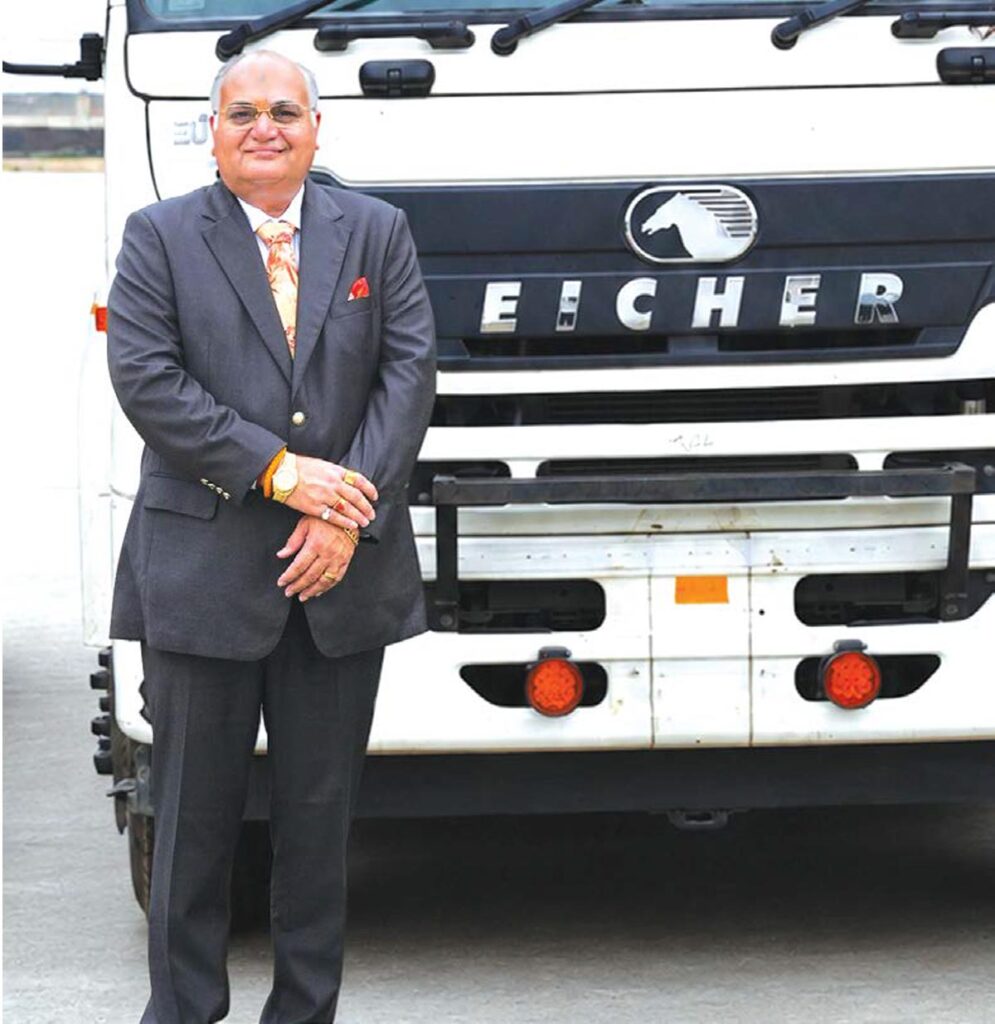
In the fast-paced world of automotive logistics, where every delivery schedule is closely monitored and every minute of downtime carries a cost, operational reliability has become the defining benchmark for success. For SDH Logistics, one of India’s leading automotive logistics companies, and MMM Logistics, a frontrunner in auto parts logistics, the formula has remained remarkably consistent over the years – deliver on time, ensure zero damage and keep customers satisfied.
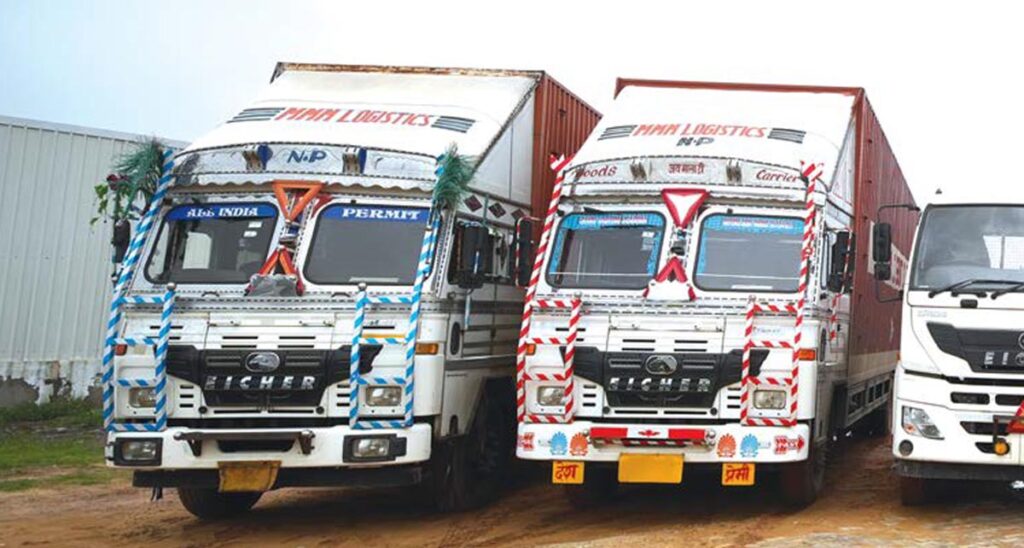
Having grown alongside the Indian automobile industry, the company today serves nearly 90% of the country’s leading passenger vehicle manufacturers, supported by a fleet of over 1,100 commercial vehicles operating across the length and breadth of the country. At the heart of this growth story has been a long-standing partnership with Eicher, whose vehicles, service network and technology have enabled the company to consistently achieve an impressive uptime of around 99%.
“Our business is built on three pillars – on-time delivery, damage-free delivery and customer satisfaction,” says Mr. Manjeet Singh, Owner & Managing Director, SDH-MMM. “If you can consistently deliver on these three aspects, success naturally follows.”
Growing with India’s Automobile Industry
The journey of SDH-MMM mirrors the rapid evolution of India’s automotive sector.
The company began its operations by partnering with Maruti, transporting automotive components through contracts with both the OEM and its vendor ecosystem. As the Indian automobile market expanded, so did the company’s customer base, gradually adding several leading passenger vehicle manufacturers to its portfolio.
Today, the organisation works with almost 90% of the country’s major automobile OEMs, making it one of the most established names in automotive logistics.
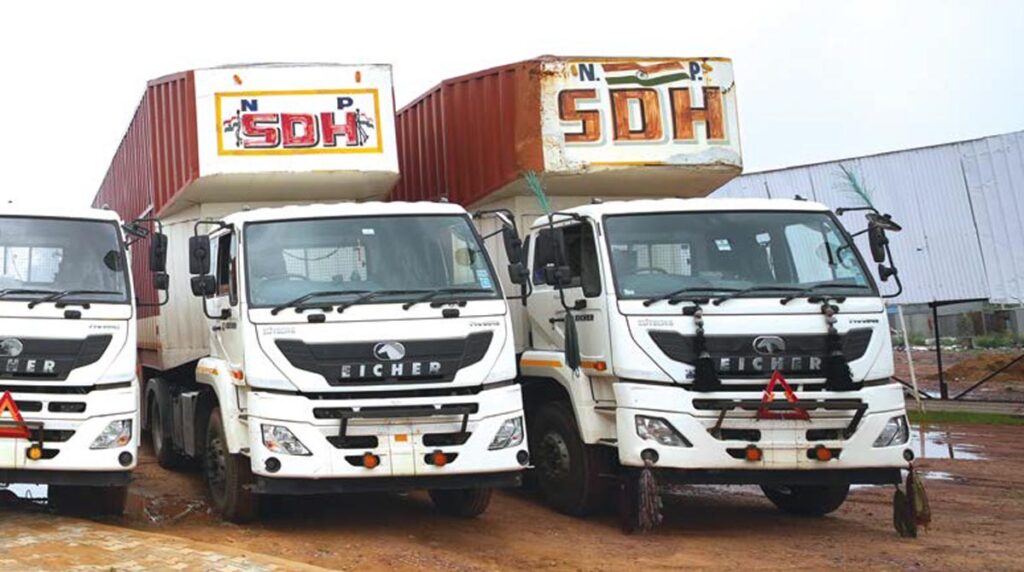
Recognising the need for greater operational focus, the business underwent restructuring in 2017 with the formation of MMM Logistics. While SDH Logistics focuses on finished vehicle transportation, moving passenger cars from manufacturing plants to dealerships across India, MMM Logistics handles automotive parts transportation. Together, the two businesses operate a diverse fleet of more than 1,100 vehicles, comprising 20-ft and 32-ft trucks, multi-axle vehicles and tractor (horse) units catering to different logistics requirements.
Building a Partnership Based on Trust
For Manjeet, Eicher has been an integral part of the company’s journey almost from the beginning.
“In the early years, almost our entire fleet comprised Eicher vehicles, and we’ve always been very satisfied with them,” he recalls.
As the company’s operations diversified, there was a period when suitable products were unavailable in the tractor segment. However, once Eicher entered the segment with products that met the company’s operational requirements, SDH-MMM gradually transitioned those vehicles as well.
Today, Eicher vehicles are deployed across virtually every fleet category, including 14-ft, 17-ft, 20-ft, 22-ft, 24-ft and 32-ft trucks, single-axle and multi-axle vehicles, as well as tractor units.
Even more significantly, nearly 90% of the company’s current fleet now consists of Eicher vehicles – reflecting not only confidence in the products but also in the ecosystem supporting them.

Delivering an Extraordinary 99% Uptime
For any transporter, uptime directly impacts profitability. Every hour a vehicle remains off the road translates into delayed deliveries, higher operating costs and dissatisfied customers.
For SDH-MMM, maintaining an uptime of around 99% has therefore become one of its biggest competitive advantages.
“Our experience with Eicher has been excellent. We’ve never faced any major issues from their side,” says Manjeet.
He attributes this achievement not only to product reliability but equally to the strong support extended by both Eicher and its dealer partner, Shree Motors.
“I would especially like to appreciate Ashish ji and the entire Shree Motors team. We’ve received tremendous support from both Shree Motors and Eicher. When both the manufacturer and dealer stand behind you, you naturally achieve the best results.”
According to him, continuous product improvements over the years have substantially reduced breakdowns, while the company’s expanding service footprint has ensured quick assistance whenever required.
“Eicher has continuously upgraded its vehicles with better technology, resulting in far fewer breakdowns. Their workshops are available every 50 to 100 kilometres across many regions, making support readily accessible. As India grows rapidly, companies also need to grow at the same pace, and Eicher has played a significant role in supporting our growth.”
Lower Operating Costs, Higher Productivity
Beyond uptime, operating economics remain equally important for fleet operators. According to Manjeet, fuel efficiency has consistently remained one of Eicher’s strongest advantages. “In terms of mileage, Eicher is the best,” he says.
Equally important has been the durability of the vehicles. “The maintenance costs are low, spare parts have excellent life, and even today we’re operating many Eicher vehicles that are 10 to 12 years old without any major problems. That speaks volumes about the quality of the vehicles and their components.” These factors collectively contribute to lower total cost of ownership while ensuring uninterrupted fleet availability.
Nationwide Support Driving Operational Confidence
Managing a fleet operating across India requires far more than reliable vehicles. It demands an equally dependable support network.
To strengthen fleet availability, SDH-MMM has established its own operational support hubs approximately every 300 to 400 kilometres across major transport corridors. Whenever additional assistance is required, the company seamlessly integrates support from Eicher’s nationwide service network. “Today, Eicher provides 24-hour support, which is a huge advantage for transporters,” says Manjeet.
Reflecting on the industry’s transformation over the last decade, he adds: “Before 2016-17, workshop availability, road infrastructure and service support were nowhere close to today’s standards. Over the last seven to eight years, Eicher has made tremendous improvements in its workshop network and service support, which has greatly benefited transporters.”
Technology Making Fleets Smarter
Digitalisation has fundamentally transformed fleet management, enabling transporters to monitor vehicles in real time while improving operational efficiency.
SDH-MMM extensively uses telematics and connected vehicle technologies to strengthen fleet control. “We immediately receive GPS alerts if a vehicle deviates from its assigned route, overspeeds or if someone attempts to tamper with the vehicle,” explains Manjeet. He believes newer BS VI vehicles have also significantly reduced unauthorised mechanical interventions that were once common.
“Earlier, drivers sometimes altered injectors or clutch settings believing it would improve mileage. With today’s technology, such practices are no longer effective. Technology has helped transporters tremendously.”
Among the features he values most is Eicher’s Uptime Centre, which uses predictive diagnostics to identify potential issues before they develop into breakdowns.
“It’s an outstanding initiative. If the vehicle detects a potential issue, the team contacts the driver even before a breakdown occurs and advises immediate corrective action. No matter how much we praise this feature, it would still be less than what it deserves.”
The MyEicher App further complements fleet management by providing detailed operational insights covering fuel economy, route performance, gear usage, clutch operation, neutral running and driver behaviour. “These insights help transporters monitor vehicle performance much more effectively”, he says.
Putting Drivers First
While technology continues to advance, Manjeet firmly believes that people remain the biggest differentiator in logistics. “Drivers are the backbone of this business. If drivers aren’t happy, operations suffer.” He appreciates Eicher’s initiatives towards driver welfare through regular training programmes, health camps and motivational sessions that encourage better driving practices while reinforcing the company’s commitment towards drivers.
He also highlights the improvements in cabin ergonomics and seating comfort. “Eicher has paid great attention to driver comfort by introducing comfortable cabins and highly adjustable seats. Drivers can comfortably drive 400 to 500 kilometres without excessive fatigue.”
Opportunities and Challenges Ahead
Looking ahead, Manjeet remains highly optimistic about the Indian automotive market. According to him, monthly passenger vehicle sales, currently around 3.5 lakh units, have the potential to reach 7 to 8 lakh units over the next four to five years. “India is only beginning its growth journey. The country is young, consumption is increasing and the passenger vehicle market has tremendous potential.”
While rail logistics will continue gaining momentum because of its environmental advantages, he believes both road and rail transport will grow together as the market expands. The biggest challenge, however, remains the growing shortage of skilled drivers. “Vehicle technology continues to improve, but finding good drivers is becoming increasingly difficult. Young people no longer want to enter this profession. Drivers deserve far greater respect, better facilities and stronger support from society.”
He also credits the government’s continued investment in highway infrastructure for significantly improving transport efficiency across the country. “For transporters, good roads are the biggest requirement. India’s highways have improved tremendously over the years, and that has transformed the logistics industry.”
On alternative fuels, he believes electric and CNG trucks will eventually become mainstream, although charging and refuelling infrastructure for long-haul applications still requires considerable development. Hydrogen, too, could emerge as an important future solution as the industry transitions towards cleaner mobility.
Looking Ahead
SDH-MMM currently records an annual turnover exceeding ₹300 crore and has set an ambitious target of reaching ₹500 crore by FY2027-28. The company also plans to further strengthen its fleet by adding around 400 to 500 vehicles as business volumes continue to grow.
Supporting this next phase of expansion is the active involvement of Manjeet’s three children – daughter Dr. Parul, elder son Abhijit and younger son Ninjal – all of whom now play key roles across different business verticals.
“My children are passionate about this industry. I share my experience with them, while they bring new ideas and technologies into the business. Having four family members actively managing the company has doubled our strength.”
Confident of sustaining the company’s growth momentum, Manjeet believes the expanding automobile industry, rising customer expectations and stronger logistics infrastructure will continue creating new opportunities.
“We’re confident of achieving ₹500 crore turnover within the next two financial years. This year itself we expect to reach around ₹340 crore, and with continued market growth we’ll achieve our target.”
For him, one factor will continue to remain central to this journey – a trusted partnership built on reliability, service excellence and exceptional uptime.
“Finally, I’d like to thank Eicher and Shree Motors once again. Their continuous support has played a major role in helping us grow our business. Whatever our requests were, they always stood by us and supported us. That’s the kind of partnership that builds long-term success.”