At Prawaas 5.0, SAFEX Fire Services demonstrated how detection, suppression and driver alerts need to work as an integrated system – while highlighting the growing focus among bus operators on real-world fire safety.
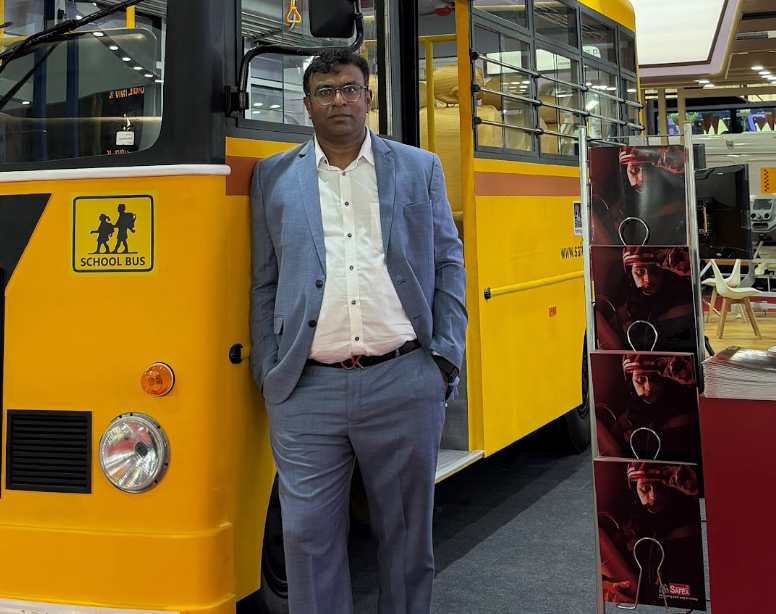
Prawaas 5.0 provided SAFEX Fire Services Ltd. with an opportunity to engage directly with the people responsible for operating buses and coaches, while also reaching a wider audience of bus body builders. According to Mr. Rishit Shah, Director, SAFEX Fire Services Ltd., the event stood out for the quality of conversations rather than simply the number of enquiries generated.
“It was a good three days. Prawaas is one of the few shows where we meet the people who actually run the buses, not just the people who build them,” said Shah. “A lot of the people who came to the booth are people we have worked with for years, and some brought their newer team members along to meet us. That matters to us more than the enquiry count.”
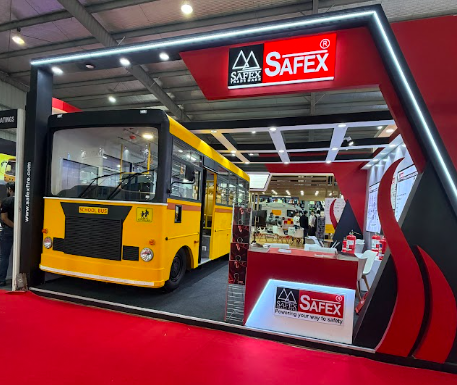
The company’s focus at the show was to demonstrate that fire safety on a bus needs to be viewed as an integrated system rather than as a collection of individual products. To make this point tangible, SAFEX created a bus mock-up and installed its fire safety solutions on it in the same manner as they would be fitted on an actual vehicle.
“For bus body builders, products laid out on a table do not say much. Fire safety on a bus is a system, not a single product – detection, suppression, and the panel the driver actually reads, all working together,” Shah explained. “Once people could see the systems fitted on the mock-up, they stopped asking what the system does and started asking how it would work on their bus.”
From Products to Integrated Protection
At the event, SAFEX showcased its complete range of fire safety solutions for buses and coaches. This included fire extinguishers as well as its engineered systems – Fire Detection and Alarm System (FDAS), Fire Detection and Suppression System (FDSS) for engine compartments, and Fire Alarm and Protection System (FAPS) for occupant areas.
The physical demonstration helped move discussions beyond product features towards practical implementation. Visitors wanted to understand where the systems would be installed, how the driver would respond to an alarm and what would be involved during servicing.
According to Shah, these are precisely the questions that determine whether a fire safety system will deliver in real-world operating conditions.
“With the body builders it went further – they were asking about mounting and routing at the build stage, which is exactly where those decisions belong rather than as a retrofit afterwards,” he said.
The approach also reflected SAFEX’s emphasis on integrating fire safety into the vehicle architecture at the design and build stage, rather than treating it as an additional system to be fitted later.
Awareness Moving Beyond Compliance
One of the more significant changes Shah observed at the show was the nature of the conversations around fire safety. While earlier discussions were often centred on regulatory compliance and certification, operators are increasingly looking at what happens when a fire actually occurs in service.
“The biggest shift is why people are asking. A few years ago, conversations started and ended with the certificate – what is mandated, what do I need to pass,” Shah noted. “This time, operators came to us talking about their passengers. What happens at two in the morning on a sleeper coach? How early can we detect and suppress a fire in the engine bay? That is a much better question.”
He believes the improvement in awareness has been supported by regulatory changes and the growing integration of fire safety into vehicle design by OEMs. Standards governing bus fire safety in India, he added, now compare well with international practices, while operators are becoming more discerning about the quality and effectiveness of the systems they deploy.
However, Shah believes the industry’s biggest opportunity lies beyond the point of sale. For SAFEX, delivering fire safety does not end with supplying and installing the equipment.
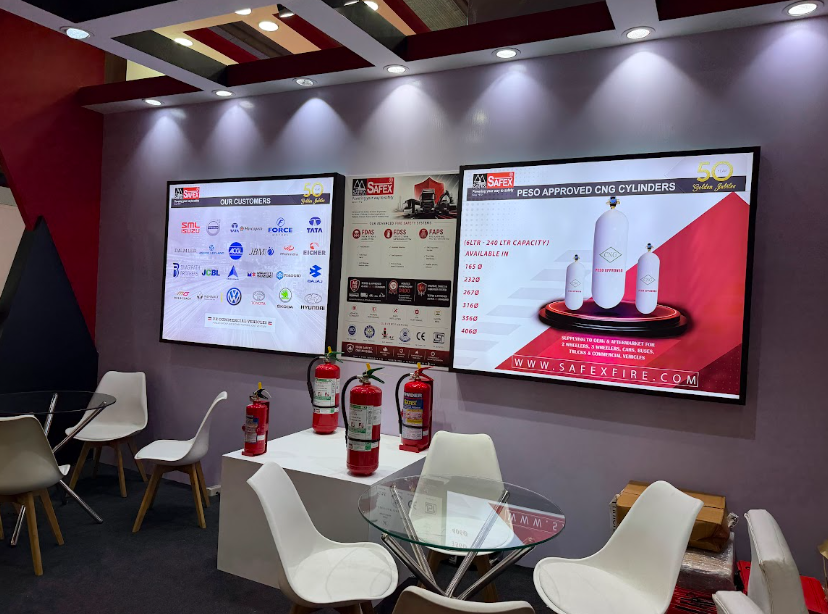
“Supplying a system is not the same as delivering safety. The way we look at it, our job does not end at the invoice,” he said. “It means training the driver and the workshop staff properly at handover, so the people on the vehicle actually know what the system does and what to do when it activates.”
This emphasis extends through the operating life of the vehicle, with access to spares, technical support and service being equally important to the initial installation. Shah also stressed the importance of build quality, particularly for commercial vehicles that remain in operation for several years.
“The system has to still be reliable in year six, not only on the day it is fitted,” he said.
According to Shah, bus operators are increasingly willing to invest in quality fire safety solutions when they understand the value they provide. The next step, therefore, is for the industry to ensure that the same level of attention is maintained across installation, training, servicing and long-term support.