By Ravichandran Srinivasan
In an increasingly competitive automotive landscape, the key to sustained success for car dealerships lies in optimizing both sales and after-sales operations. While attracting new customers remains vital, the real profitability often hinges on how effectively dealerships manage their service departments and after-sales services.
The ability to streamline processes, enhance customer satisfaction, and drive repeat business can transform a dealership from merely a sales outlet into a comprehensive mobility solutions provider. This article explores strategic approaches to elevating productivity and efficiency across dealership operations, with a focus on after-sales and sales functions.
The Foundation of Dealership Performance: Core Metrics
Successful dealerships leverage a set of core performance metrics—often referred to as the S-S-S (Sales-Service-Spares)—to guide decision-making and continuous improvement. These metrics encompass various parameters that, when monitored diligently, help identify bottlenecks, optimize resource allocation, and improve overall profitability.

In the workshop, key parameters include growth in service and body shop load, labor and parts revenue, timely delivery of vehicles, and customer satisfaction indices. Monitoring these metrics on a daily, weekly, and monthly basis provides actionable insights, enabling dealerships to adapt quickly to changing market conditions and customer expectations.
Elevating After-Sales Efficiency-Enhancing Service Load
A well-managed service department is the backbone of a profitable dealership. To bolster service load, many dealerships are adopting customer-centric initiatives such as:
Pickup and Drop-off Services: Offering convenient vehicle collection and return options reduces customer effort and increases service appointment bookings.
Mobile Service Units: Bringing maintenance and minor repairs directly to customers’ homes or offices enhances convenience and builds loyalty.
Extended Operating Hours:Opening on Sundays or late evenings caters to busy schedules, increasing service throughput.
These measures not only improve customer satisfaction but also contribute to higher workshop utilization rates and revenue growth.
Optimizing Workshop Productivity
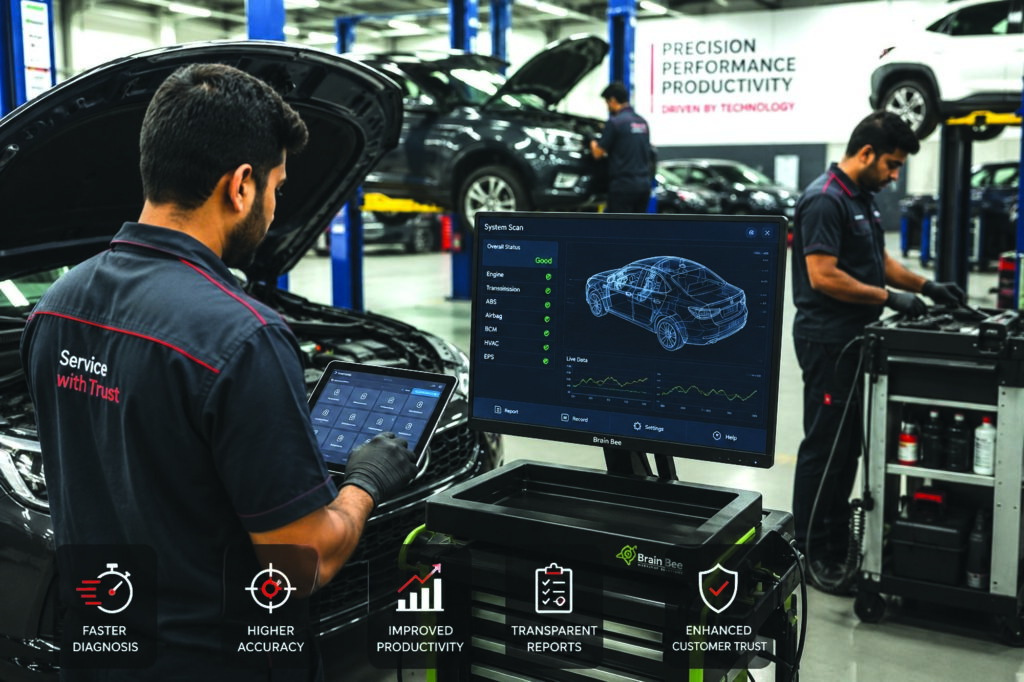
Workshop efficiency is driven by bay and technician productivity. Key performance indicators include first-time right work—completing repairs correctly on the first attempt—and minimizing repeat jobs. Implementing standardized work procedures, investing in technician training, and utilizing digital diagnostic tools can significantly boost productivity.
Quality Control and Customer Satisfaction
Maintaining high service quality ensures customer retention and positive word-of-mouth. Regular feedback collection and prompt resolution of issues foster trust and encourage repeat visits. Satisfied customers are more likely to opt for additional services, creating a cycle of increased revenue.
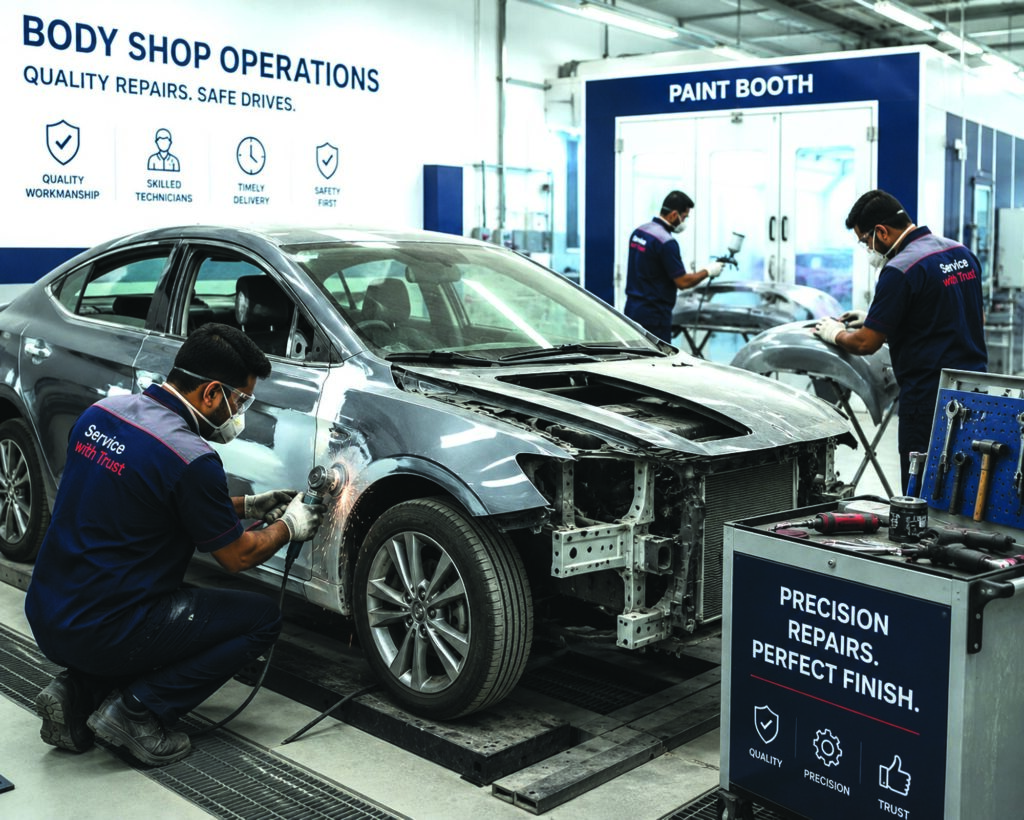
Strengthening Body Shop Operations Referral Networks and Strategic Partnerships
A high-performing body shop depends on a steady inflow of referrals. Satisfied customers, towing companies, police stations, and highway patrol units can be valuable sources of new business. Establishing formal referral partnerships and maintaining excellent service standards encourage word-of-mouth promotion.
Conversion of Service Customers
Transforming regular service customers into body shop clients can significantly boost revenue. Offering convenient estimates, transparent pricing, and efficient repair processes encourage customer loyalty and repeat business.
Inventory Management
Efficient parts inventory management is critical for reducing costs and ensuring quick turnaround times. Fast-moving (high turnover) and medium-moving parts should be readily available to prevent delays and avoid interest costs associated with excess inventory.
Accelerating Sales in the Showroom-Monitoring Inquiry and Conversion Metrics
Sales teams thrive on data. Tracking inquiry sources—from online channels, walk-ins, or referrals—and analyzing conversion rates enables dealerships to identify the most effective lead generation strategies. Regular review meetings help sales managers set realistic targets and strategize accordingly.
Streamlining the Sales and Delivery Process
A seamless customer journey from initial inquiry to vehicle delivery enhances satisfaction and fosters repeat business. Training sales staff in consultative selling, transparent pricing, and efficient paperwork processing reduces delays and enhances the overall experience.
Focusing on Ancillary Revenue Streams
Beyond vehicle sales, dealerships can significantly increase profitability by promoting ancillary services such as insurance, extended warranties, financing options, loyalty programs, and accessories. Cross-selling these products at the right moment boosts margins and deepens customer relationships.
Strategic Planning and Goal Setting
Effective dealerships set monthly targets aligned with their financial goals. Continuous planning, monitoring, and adjusting strategies ensure that both sales and after-sales departments contribute to the overall profitability. Leadership involvement and staff motivation are essential components of this ongoing process.
Embracing Technology for Continuous Improvement
Adopting modern dealership management systems (DMS), customer relationship management (CRM) tools, and diagnostic technologies enables real-time tracking of performance metrics. Automation reduces manual errors, accelerates workflows, and provides actionable insights for smarter decision-making.
Conclusion
Achieving excellence in automotive dealership operations requires a balanced focus on sales and after-sales productivity. By implementing customer-centric service initiatives, optimizing workshop and body shop processes, and leveraging data-driven sales strategies, dealerships can foster an environment of continuous growth and profitability. The future of successful dealerships hinges on their ability to adapt swiftly, innovate relentlessly, and prioritize customer satisfaction at every touchpoint.
Here are commonly used formulas for calculating various dealership productivity metrics:

1.   Technician Productivity
     Technician Productivity} = (Billable Hours)/(Available Hours) X 100
2.   Bay Productivity
    (Bay Productivity) = (Total Repair Orders (RO) or Labor Hours in a Period \ Number of Bays} X (Number of Operating Hours)
    OR
    {Average Hours per Bay} = {Total Workshop Hours}}/ Number of Bays}
3.  Service Advisor (SA) Productivity
    {SA Productivity} = {Number of Repair Orders (RO) Closed}} / {Number of Service Advisors}}
     OR
    {Revenue per SA} = {Total Service Department Revenue}} \ {Number of Service Advisors}}
    {RO per Day per SA} = {Total RO in Period}} \ Number of SAs} \ {Number of Days}}
4.  Sales Consultant Productivity
    {Sales per Consultant} = {Number of Vehicles Sold}} \ {Number of Sales Consultants}
About the Author
With over four decades of experience across India and overseas markets, including a significant stint in Oman, Mr. Ravichandran Srinivasan brings deep expertise in process excellence, leadership, and team development. He has held senior roles at Maruti Suzuki Limited, culminating as General Manager, and has led large automotive dealership operations as COO/CEO, overseeing Sales, Service, Parts, and Used Car businesses. He also worked as Head of Logistics & Distribution Division in Saud Bahwan Group, Oman and Maruti Udyog Ltd, Gurgaon (presently MSIL). His international exposure and hands-on leadership across OEMs, distributors, and dealerships provide a comprehensive, results-driven perspective on the automotive ecosystem.