AI should assist human creativity and productivity, not replace engineering understanding completely.
For years, engineers using Matlab and Simulink worked in a world built around precision, trust and stability. Code written many years ago could still run smoothly today, and that reliability became one of MathWorks’ biggest strengths. Even as Artificial Intelligence (AI) begins to reshape engineering software, the company is careful not to disturb that foundation.
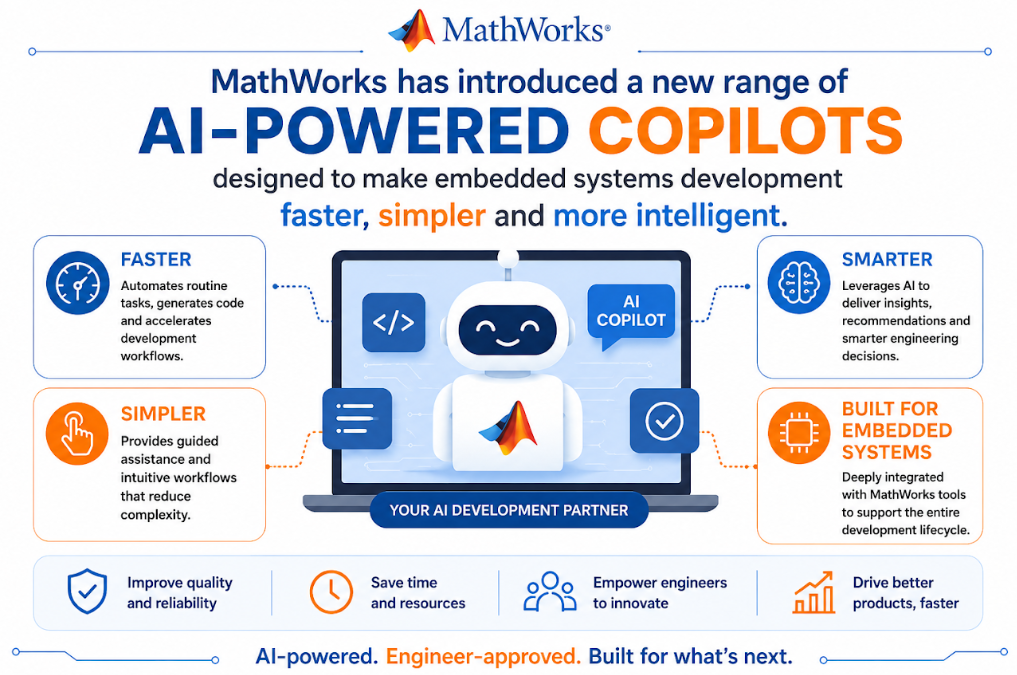
But the experience inside Matlab and Simulink is now changing in a major way. With the launch of Release 2026a (R2026a), MathWorks has introduced a new range of AI-powered copilots designed to make embedded systems development faster, simpler and more intelligent.
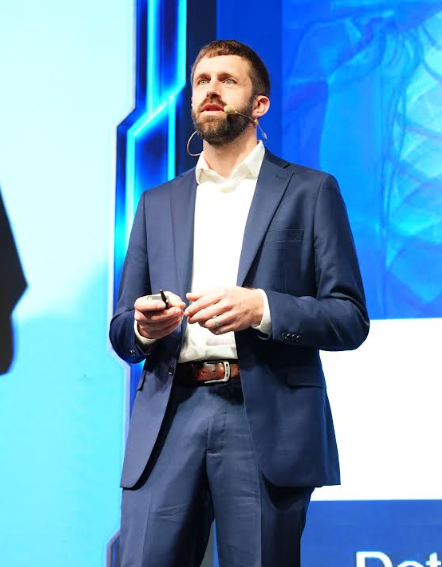
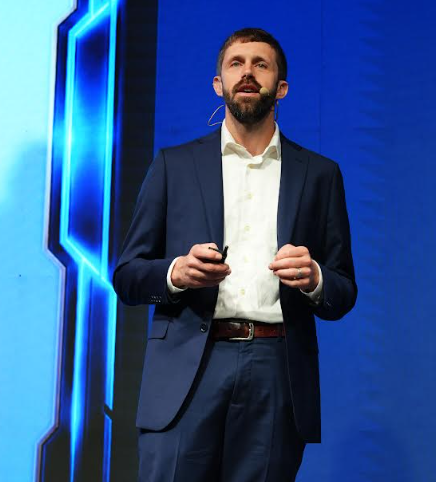
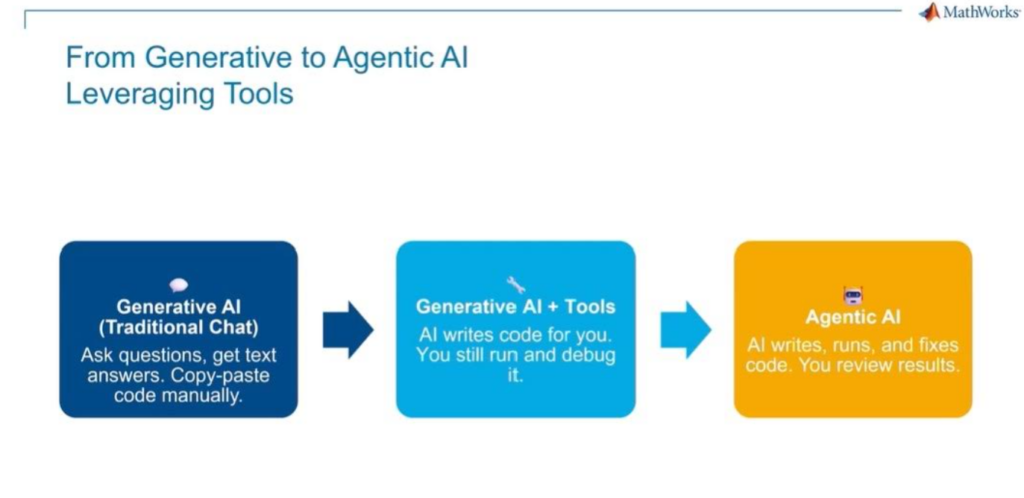
Talking to the publication on the sidelines of MATLAB EXPO 2026, held in Bengaluru, Mr. Seth DeLand, GenAI Product Manager, MathWorks, said, instead of spending hours searching through code or trying to understand a complex model, engineers can now simply ask questions to an AI assistant. A few clicks can generate code suggestions, explain difficult lines of programming or even help identify where changes are needed inside a large Simulink model.
What once took days of manual effort can now happen in minutes. For engineers inheriting massive legacy models from other teams, this AI-powered assistance could become a game changer. The software is no longer just a tool for writing code — it is slowly becoming a collaborative engineering companion that can guide, explain and accelerate development work in real time, he said.
At the same time, MathWorks is also recognising that not every customer is ready for AI adoption. Industries with strict security or regulatory requirements can still continue using Matlab and Simulink in the traditional way, without generative AI features.
Driving AI Adoption
Mr. DeLand said the push towards AI is coming from both sides — customers as well as the company itself. Engineering teams across industries are under growing pressure to work faster, improve productivity and use generative AI as part of their development process. At the same time, MathWorks is also learning from its own internal use of AI and using those experiences to shape future products and features.
Balancing Trust Carefully
Even as AI becomes more powerful, MathWorks believes trust and reliability cannot be compromised. The company points out that AI models can sometimes generate different answers for the same question, making them fast and powerful, but not always fully dependable on their own. This is where Matlab and Simulink continue to play a critical role, with the company building its AI capabilities on top of a trusted engineering foundation created through years of testing, validation and proven libraries. The idea is not to replace engineers, but to give them intelligent tools that can help them work faster while still allowing them to verify, understand and trust the final results.
Faster Together Always
Even in the AI era, engineering is not becoming a one-person activity. Mr. DeLand believes that teamwork will remain critical because different engineers bring different areas of expertise to a project. While AI can accelerate coding and model development, verification and validation still need experienced teams to carefully review, test and validate every part of the system. What is changing, however, is the speed of development. With AI helping engineers move much faster, having a common set of tools and a single source of truth across teams is becoming more important than ever before.
Trust Remains Central
According to Mr. DeLand reliability and safety cannot be compromised, especially in industries like automotive and embedded systems where even small errors can create serious risks. This is why testing, certification and code validation tools continue to play a major role alongside AI-assisted development. The company’s Polyspace tools, which use deterministic analysis to detect coding issues, are becoming even more valuable in an age where AI can generate large volumes of code within seconds. AI can help engineers create faster, but trusted tools are still needed to ensure the final output is safe and dependable.
Cloud Meets Edge
MathWorks also sees cloud and edge AI becoming key pillars of future automotive development. On the vehicle side, edge AI is helping automakers do more with existing hardware by running advanced software and AI models directly inside vehicles. At the same time, cloud computing is transforming simulation and validation processes. Engineers can now run thousands of simulations in parallel on the cloud, helping them explore more design possibilities, validate systems faster and build more robust products in far less time than before.
Protecting Customer Trust
As AI becomes deeply integrated into engineering workflows, concerns around data security and intellectual property are also growing rapidly. He admitted that the risks are real, especially in commercial engineering environments where sensitive product development data is involved. However, for MathWorks protecting customer information remains a top priority, with policies that ensure customer data is neither stored nor used for training AI models.
Even as AI tools become smarter, he insisted that engineers must not lose touch with the fundamentals. AI should assist human creativity and productivity, not replace engineering understanding completely. Young engineers are still encouraged to understand how code works, why systems behave in certain ways and how problems are solved at the core level.
Smarter Through Software
For vehicle manufacturers, AI is now helping solve problems that once required expensive hardware solutions. Sharing a case study, he said that at Mercedes-Benz, engineers were working to improve cabin comfort inside the vehicle. One of the key challenges was measuring the airflow entering the cabin, something that normally requires expensive sensors. Instead of adding new hardware, engineers used AI to predict airflow using data from sensors already available in the vehicle. The AI model was not only more cost-effective, but also more accurate than traditional physics-based models. This helped improve cabin comfort while reducing hardware complexity and assembly time on the production line.
The idea reflects a larger shift happening across the automotive industry, where software is increasingly replacing hardware wherever possible. With software-defined vehicles becoming more common, automakers can now improve features over time through software updates and even offer certain functions as subscription-based services.
A similar approach is also being used in the commercial vehicle space. An Indian truck and bus manufacturer used AI to estimate vehicle payload without adding extra sensors. By understanding how heavily the vehicle is loaded, the engine can optimise torque delivery more efficiently, helping improve fuel economy and lower operating costs for fleet operators, he explained.
Balancing Low-Code Tools
Mr. DeLand also indicated that low-code and no-code platforms are not replacements for engineers, but bridges that help humans understand complex systems more easily. Instead of forcing engineers to read massive amounts of code, graphical interfaces can visually explain what the AI has done and allow users to make changes, test ideas and build their own intuition.
Handling large engineering projects is another major challenge for modern AI systems. Instead of loading an entire codebase or complex model into memory, MathWorks has built AI tools that intelligently pull only the relevant information needed for a particular task. The system can then request more details only when necessary, making the workflow faster, smarter and more efficient.
The company is also developing specialised AI “skills” that activate only when needed — whether for debugging code, testing software or improving development quality. This approach is helping AI become more focused, practical and engineering-friendly rather than simply generating large amounts of generic output, he signed off.