Trust, not technology, has always been the biggest barrier in Indian trucking. TrucksUp found a way around it.
TrucksUp, a leading digital platform designed to simplify online transport booking operations, is looking at introducing a ‘spot legal support service’ for drivers who find themselves in unfamiliar States dealing with accidents, court appearances, and police requirements far from home.
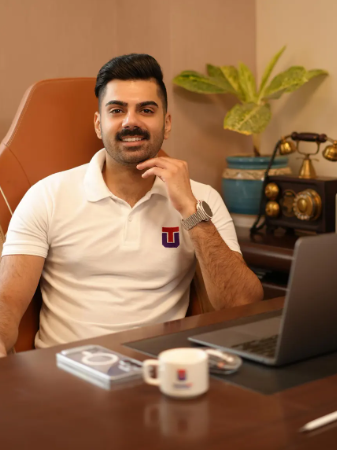
The company, which currently has about six lakh trucks, three lakh truck owners, and 60,000 to 80,000 shippers on its platform, has built a comprehensive ecosystem of services around the truck owner’s life — making it a one-stop solution for truck owners across India. Growing that base comes down to one thing, which is getting people to try it. A ground team of 700 to 800 people fans out daily across truck hubs and logistics points across India, asking for nothing more than five minutes of attention.
Features like ‘My Truck Is Here,’ which lets a driver pre-book a return load before even reaching his destination — and SIM-based tracking that falls back on FASTag toll data when a driver goes off-grid, have all been built from real feedback, on the ground, one conversation at a time. Speaking to this publication, Mr. Sarthak Elwadhi, Co-founder, TrucksUp, stated that the company’s vision is to become the one platform every truck owner in India cannot imagine working without.
An Unsolved Problem
India has millions of trucks and billions of rupees in freight moving every day — yet there is still no Uber for trucking. Not because nobody has tried, and not because the money is not there. The reason is something far more stubborn, which is trust. Around 80% to 85% of all trucks on Indian roads are owned by people who run fewer than 10 vehicles — small operators who run their businesses on phone contacts, word of mouth, and personal relationships built over years. Asking them to route a transaction worth several lakh rupees through an app was a non-starter till TrucksUp came into being.
Information, Not Logistics
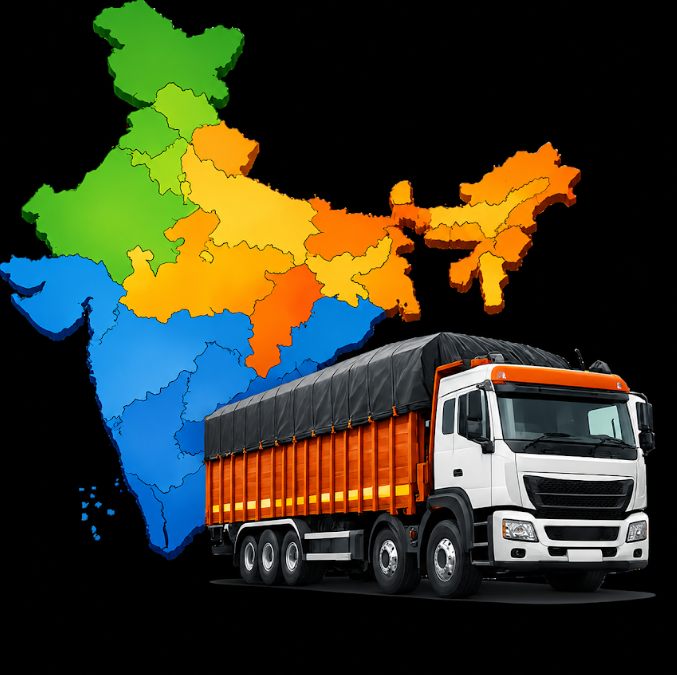
TrucksUp’s answer to this problem is deliberately simple. It is neither a logistics company nor handle payments. It is an information platform, like MagicBricks, but for freight. Every day, 6,000 to 8,000 loads are posted on the platform. Truck owners search, connect with shippers, and negotiate entirely on their own terms. TrucksUp steps back the moment a match is made. The only thing it asks for is a monthly subscription of ₹700 to ₹1,000 — a fee that pays for itself the moment a driver finds a load even 12 hours sooner than he otherwise would have. That 12-hour difference, when calculated against a truck’s EMI and maintenance costs, can save an owner ₹3,000 to ₹6,000 in a single transaction. “For premium users, asset utilisation has climbed from a typical 35% to 40% all the way to 60% to 70%. The truck that used to sit idle for half the month is now on the road — and earning,” he mentioned.
Empowerment Through Information
Perhaps the most powerful thing TrucksUp does is show a driver that the straight route between A and B is rarely the most profitable. For instance, a driver heading back from Chennai to north India might not know that a detour through Gujarat could earn him significantly more. TrucksUp does is and it calls this a “movement of empowerment. Its tagline is Ab Apni Chalao — drive it yourself. The information is yours. The decision is yours. TrucksUp is just making sure you have what you need to make it well,” Mr. Elwadhi said.
More Options, Better Outcomes
One of the most common concerns about any matching platform is what happens when a load gets rejected. However, for TrucksUp, rejection is not a problem — it is a natural part of the process. “Before TrucksUp, a truck owner had one, maybe two options when looking for a load. A rejection meant the truck sat idle for a day, two days, sometimes even a week in bad weather. Now, with five to ten options available at any given time, a rejection simply means moving to the next one. More options on both sides — for the truck owner and the shipper — means the right match happens faster, and the best price is reached sooner,” he explained.
Intelligence Behind the Match
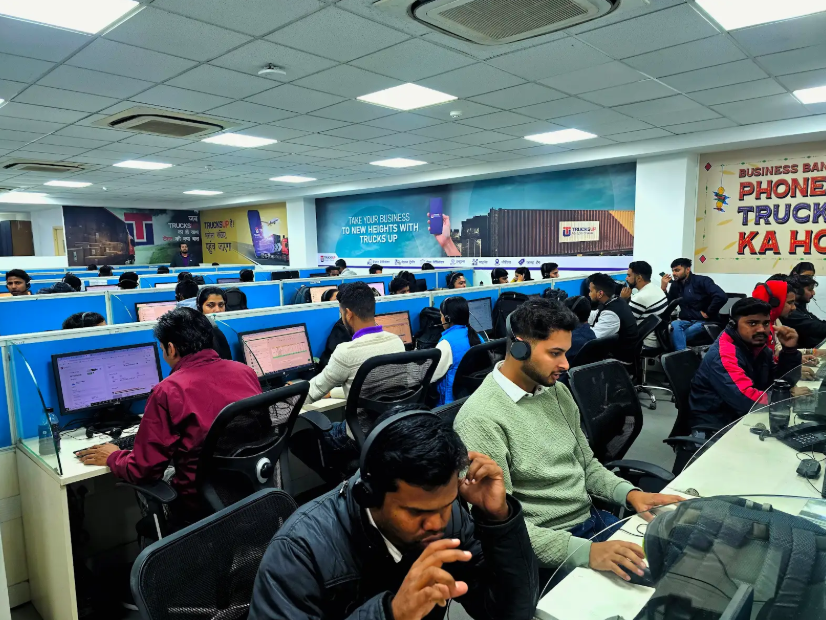
What makes this work at scale is not just the volume of loads on the platform but the technology quietly working behind the scenes. Every truck owner who signs up is required to register at least one vehicle, complete with a Registration Certificate document photograph. This is not just a security measure — though it is that too — it is also the starting point for the platform’s matching intelligence. Once TrucksUp knows the type and size of a truck, it can match it to the right loads on the right routes. On a busy day, the platform handles 8,000 loads and 50,000 searches simultaneously. No human team could manage that. AI does, not by replacing human judgement, but by doing what it does best, which is processing large amounts of data quickly and delivering specific, relevant results to the right person at the right time, he highlighted.
Full Truck, Long Route
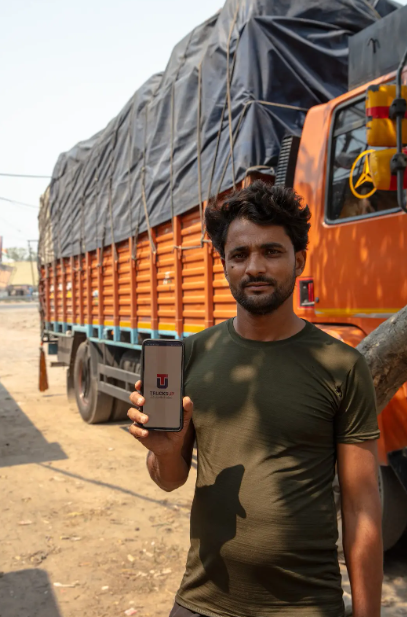
TrucksUp focuses almost entirely on full truckload freight — the movement of goods from factory to factory, or from factory to a large distribution warehouse on the outskirts of a city. This is where the bulk of India’s commercial trucking value lies. Capital goods moving between industrial hubs in many States including Gujarat, Maharashtra, and Haryana; finished goods travelling from a large factory in south India to a warehouse near Delhi. These are long-distance, high-value movements — and they are exactly the kind of work where having access to a larger pool of trucks and loads makes the biggest difference.
Where the Big Companies Come In
Large manufacturers do not deal directly with individual truck owners. The volumes are too large and the complexity too high. Instead, they work through logistics companies and transporters who win contracts through tenders and negotiations. Here is the key insight: even the largest fleet owner in India has only around 3,500 to 4,000 trucks. A transporter with a turnover of several hundred crore rupees might need to book 300 to 600 trucks a day — far more than any single fleet can provide. In practice, only about 20% of bookings are fulfilled by a transporter’s own fleet. The rest comes from the open market. That open market is exactly where TrucksUp operates, giving transporters access to lakhs of trucks they would never have been able to reach on their own, and giving small truck owners access to loads they never knew existed.
The Power of Being Together
There is one thing a small truck owner will never have on his own, which is bargaining power. “A fuel company does not call small truck owner. A bank does not offer preferential rates. A FASTag vendor does not come knocking. These conversations only happen when the fleet operator has 100 trucks or more. TrucksUp changes that. When lakhs of trucks come together on a single platform, the arithmetic flips. India’s largest fleet owner has around 4,000 trucks while TrucksUp has lakhs. That scale unlocks deals on fuel cards, FASTag, insurance, and financing that no individual small operator could ever negotiate alone; and every discount gets passed directly to the truck owner,” he said.
A One-Stop Shop for Truck Owners
Beyond load matching, TrucksUp has built a full ecosystem around the truck owner’s life. It starts with buying a truck — first-hand from a manufacturer or second-hand through the platform’s own listings. Financing comes next, with running accounts with HDFC, AU Finance, and Shriram Finance etc., ensuring better rates that get passed on to the customer. There are also verification services — from one screen, a truck owner can check whether the vehicle’s insurance and fitness certificate are current, and verify a driver’s licence against live government data. For someone managing a small fleet across multiple States, having all of this in one place saves time, reduces risk, and adds confidence to every trip. For the truck owners with limited number of vehicles, TrucksUp is not just an app that finds loads. It is the infrastructure that large fleet operators have always had — now available to everyone, Mr. Elwadhi signed off.