Blazo i-TRK launch highlights product evolution, AI-led efficiency and application-based services
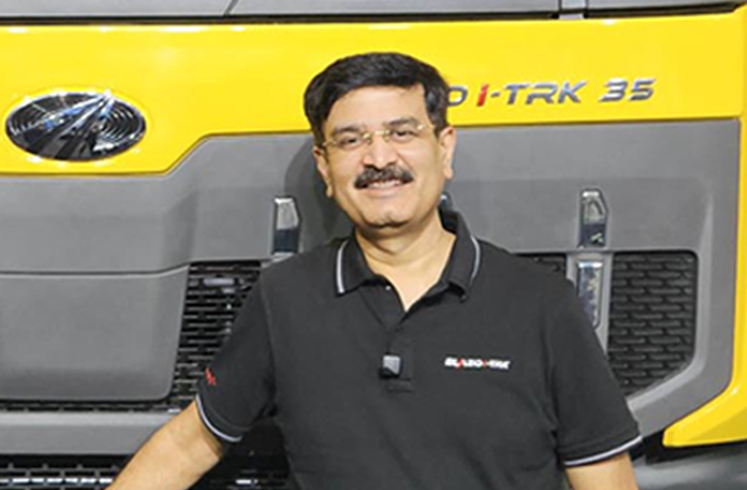
At the launch of the Blazo i-TRK, Mr. Vinod Sahay, President MTB and Executive Chairman, SML Mahindra, outlined the company’s roadmap for growth, product evolution and technology-led efficiency. With the integration of SML Mahindra, the company is targeting an increase in overall CV market share from around 6% currently to 12% by FY31 and 20% by FY36, alongside a revenue ambition of ₹12,500 crore net of GST.
Faster Product Evolution Through Integration
The integration with SML Mahindra is expected to accelerate product development through common platforms, shared powertrains, sourcing synergies and value engineering. While both brands and their existing sub-brands will continue, cross-badging will be used where one brand has products that the other does not. The company is also working on integrated LCV and ICV platforms. “We are combining the best of both and we’ll give a range which will not only be most fuel efficient, it will be most reliable.”
The product pipeline is already moving, with Blazo 4.0 under development and refreshes across the portfolio expected to start appearing during the current financial year. The company has also introduced the SML Mahindra AASAI MX and AASAI bus for specific applications in southern markets.
AI, Alternative Fuels and Smarter After-Sales
The new Blazo i-TRK also reflects a growing focus on data-led efficiency. FuelSmart technology, telematics, AI and machine learning use route, load, road and driver inputs to optimise vehicle performance. The company is drawing on data from around 80,000 Blazo trucks across applications to understand fuel efficiency, reliability and maintenance patterns. “We are now going to give people AMC which is customised for his or her application.”
This data-led approach is also being extended to application-based AMC pricing, where route, load, driver behaviour and predicted maintenance costs can influence the service price. Sahay indicated that such pricing could vary significantly between applications, particularly where vehicle usage and operating behaviour differ.
Alternative powertrains remain part of the roadmap. CNG products are already available, while work is underway on an electric bus and initial electric truck development. The company has also completed a hydrogen truck pilot. However, Sahay noted that heavy-truck electrification will depend on application, range, battery weight, payload and charging infrastructure, making shorter-haul operations more suitable in the near term.
Alongside the product and technology roadmap, network integration and after-sales support remain key priorities, with the combined network expected to create greater reach and operating synergies.
We are combining the best of both to create a range that is not only fuel efficient, but also highly reliable.