For the small industries, training should become part of the organisation; collaborating with competent institutions is absolutely essential to accomplish the need, says, Mr. K.Ramasamy, Chairman, Roots Group of Companies.
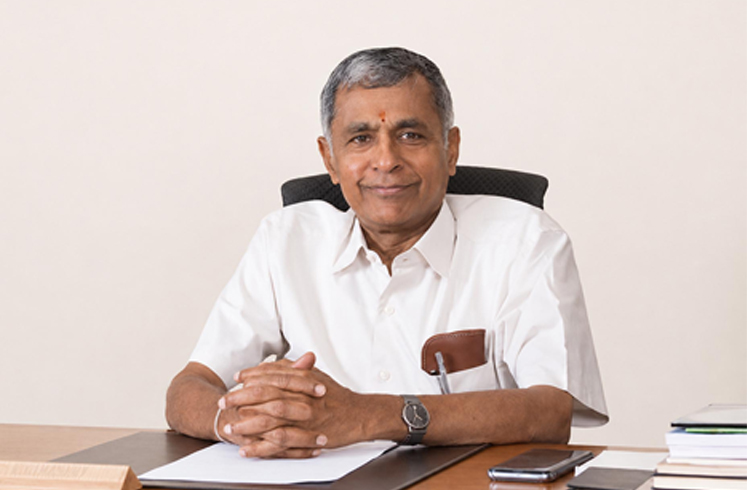
Automobile industry across the world is transforming rapidly towards electrification, hybrid and hydrogen fuelled vehicles. This has also become essential, not only because of the global geopolitical environment but also, considering the environmental pollution. Therefore, component manufacturers have to change and adapt to the changing environment, Mr. Ramasamy indicated.
The demand for IC engines, automatic and manual transmission would come down. Industry has to relook to diversify due to the drop in demands. More and more aluminium and magnesium will replace steel parts, the industry should keep this in mind and set the vision. Since more and more electric vehicles would come into the market, all the required subsystems are to be developed by Indian industry, which are mostly catered by the Chinese industry.
Industry should focus on being competitive with the Chinese manufacturers. This can be done with the vision of becoming a global supplier. Industry should also gear up to increase R&D expenditure manifold compared to what is being spent presently by the Indian companies.
The industry should focus more on skill development and competency building to achieve these goals. Small industries cannot afford to treat training as an afterthought or a one-time event. It needs to be woven into the fabric of the organisation — a continuous, structured commitment rather than a response to an immediate need. But no small industry can do this alone. The knowledge, infrastructure, and expertise required to build genuinely capable workforces demands collaboration with institutions that have the depth and credibility to deliver it. Partnering with the right training and educational bodies is not optional — it is the most practical and cost-effective path to building the skilled talent that small industries need to grow, compete, and sustain themselves in a rapidly changing environment.
“AI and automation have to be given top priority to improve innovation, speed and quality. Digitization has to be given topmost priority to reduce operation costs and to meet customer expectations in terms of delivery, quality and performance of the product. Both local and central governments should form a separate task force and come out with monetary assistance to help the small industry towards the above journey,” Mr. Ramasamy added.
Digitization has to be given topmost priority to reduce operation costs and to meet customer expectations in terms of delivery, quality and performance of the product.