Epsilon Advanced Materials Pvt. Ltd. has announced the launch of its Hard Carbon Anode material designed specifically for Sodium-Ion (Na-ion) batteries targeting grid-scale Energy Storage Systems (ESS). Developed entirely through in-house research and development, the new material is aimed at providing battery manufacturers with a low-cost, graphite-free and more sustainable alternative as sodium-ion battery technology gains global momentum.
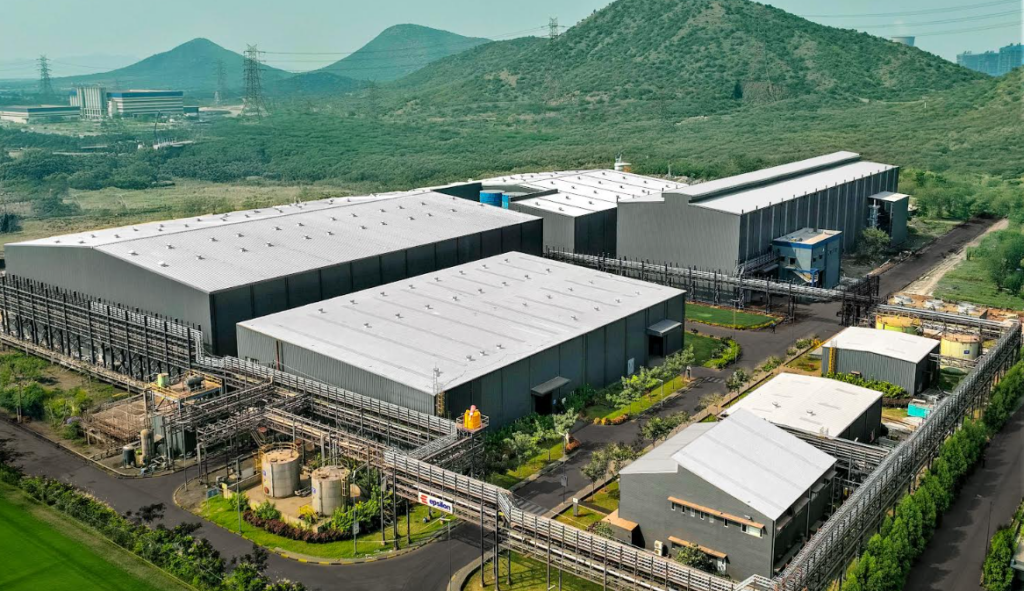
The company said sodium-ion batteries are increasingly emerging as a preferred solution for large-scale energy storage applications due to sodium’s widespread availability and lower environmental footprint compared to lithium-ion batteries that rely on lithium mining and geopolitically sensitive supply chains. Global battery major CATL has already made significant investments in sodium-ion cell production, while manufacturers across Asia and India are actively evaluating the chemistry for future storage applications.
Epsilon’s Hard Carbon Anode material has been engineered to deliver high reversibility, long cycle life and fast charging capability — all critical requirements for grid-scale energy storage systems that must operate reliably over thousands of charge cycles. The company said the material’s unique disordered carbon structure and nanopore architecture make it particularly suitable for sodium-ion storage applications.
Mr. Vikram Handa, Managing Director of Epsilon Group, said the clean energy transition requires battery materials that are affordable, scalable and sustainable. He added that sodium-ion technology represents a strong long-term solution for energy storage, while hard carbon anodes can help deliver the required performance for real-world applications.
A key highlight of the development is the company’s use of coconut shell waste as the primary raw material for producing the hard carbon anode. Through controlled pyrolysis and high-temperature carbonisation, the agricultural waste is converted into a specialised carbon structure suitable for sodium-ion batteries. According to the company, this bio-based manufacturing route eliminates dependence on graphite and can reduce carbon dioxide emissions by nearly 50 percent compared to conventional graphite anode production processes.
The launch forms part of Epsilon Group’s broader strategy to strengthen its presence across the battery materials value chain, including silicon-graphite anode materials and Gen III LFP cathode active materials for lithium-ion batteries, alongside hard carbon anodes for sodium-ion applications. The company said its long-term objective is to position India as a global developer and exporter of advanced battery materials for future electric mobility and energy storage systems.