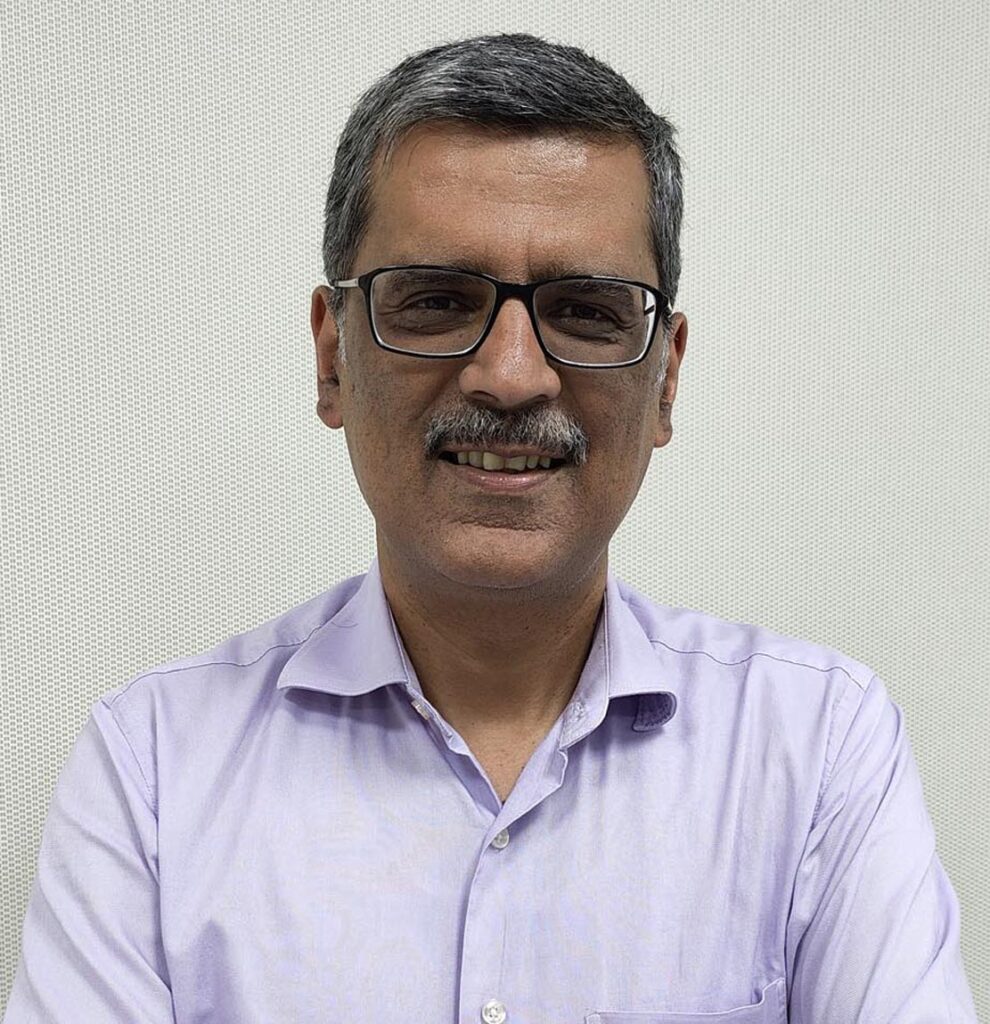
In an industry being reshaped by technology, geopolitics, and sustainability, the most powerful competitive advantage a company can build isn’t a new machine or a smarter process — it’s the people behind them, says Mr. Amit Sood, Sr. Executive Director – Sales & Marketing, Asahi India Glass (AIS).
The automotive world is in the middle of one of its biggest shake-ups in decades, and the forces driving that change go well beyond what happens on the road. Electrification and autonomous driving are reshaping what vehicles look and feel like. Software, Artificial Intelligence, and connected systems are quietly becoming just as important as steel, glass and rubber. And then there’s a shift that everyone in the industry is watching closely — the growing unease around depending too heavily on any single country for parts, materials, or technology.
Geopolitical tensions, supply chain shocks, and trade uncertainties have made that dependence feel far riskier than it once did. Semiconductors were the wake-up call. When that supply dried up, production lines got impacted. The lesson the industry took away was clear: you cannot afford to rely entirely on outside support when the world around you is this unpredictable. Deep localisation — building capability at home, diversifying where you source from, and reducing vulnerability — has moved from a nice-to-have to a strategic necessity.
At the same time, the pressure to move faster has never been greater. Chinese automakers can take a vehicle from design to the start of production in roughly 22 months. In India, that number has come down from 48 months to around 36 for some manufacturers, but the benchmark keeps moving. Closing that gap isn’t possible without digital simulations, advanced robotics, digital twins, and AI-driven quality systems that compress time and improve output without cutting corners.
The Road Ahead
Against this backdrop, AIS’ response is built around several clear priorities. Volume growth comes first, backed by capacity expansions across its manufacturing facilities. But growth alone isn’t enough — premiumisation matters just as much, which means developing new technologies that offer customers better products with higher value – sucj as solar-control glazing and coated glass that reduces heat load and improves fuel efficiency/vehicle range, AR-HUD windscreens for safety, laminated side glass that makes car cabin remarkably quiet, large sized laminated panoramic sunroofs etc, he added.
“Several plants of AIS are already running at close to 65% renewable energy, and targets around carbon neutrality and zero liquid discharge are being actively pursued in line with what OEM partners are demanding.”