As vehicles grow more complex, so do the challenges — and that’s exactly where Witzenmann thrives, turning heat, movement and uncertainty into reliable engineering solutions.
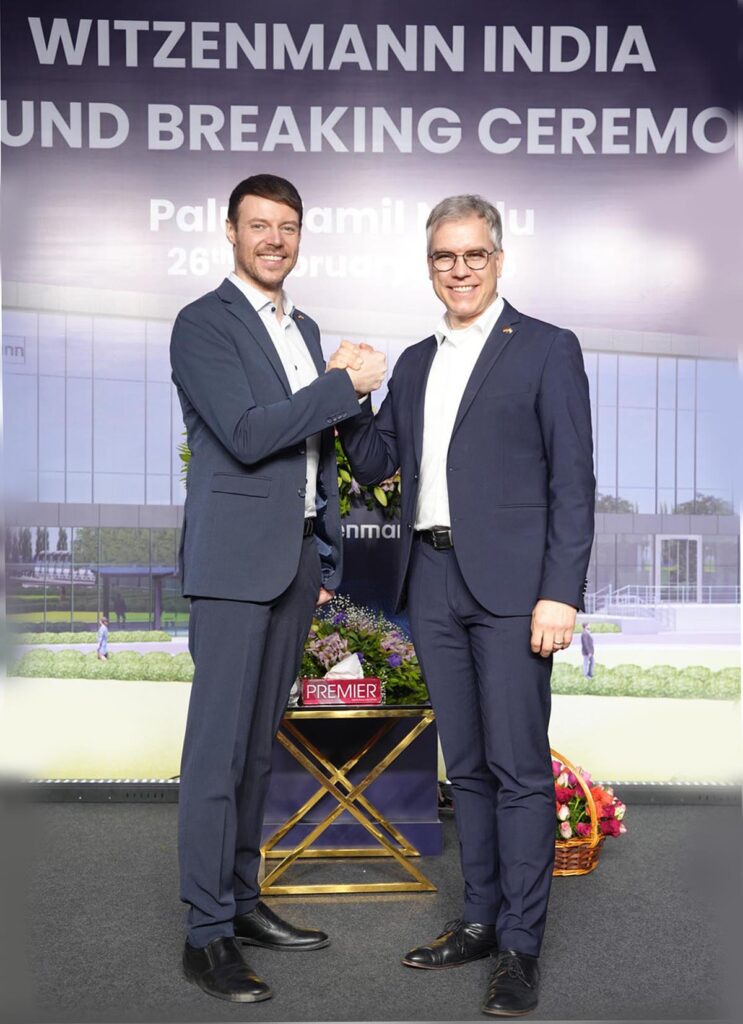
Witzenmann’s story in India began more than 25 years ago with a modest facility on a 4.5-acre site in Chromepet, Chennai. What started as a small but strategically positioned operation has now outgrown its walls. With orders increasing, products becoming larger and more complex, and India emerging as one of the world’s most important mobility and industrial markets, the company knew it was time to take its biggest step, said, the fifth-generation member of the founding family – Mr. Philip Paschen, who is also the Chief Operations Officer & Deputy Chairman of the Management Board of Witzenmann.
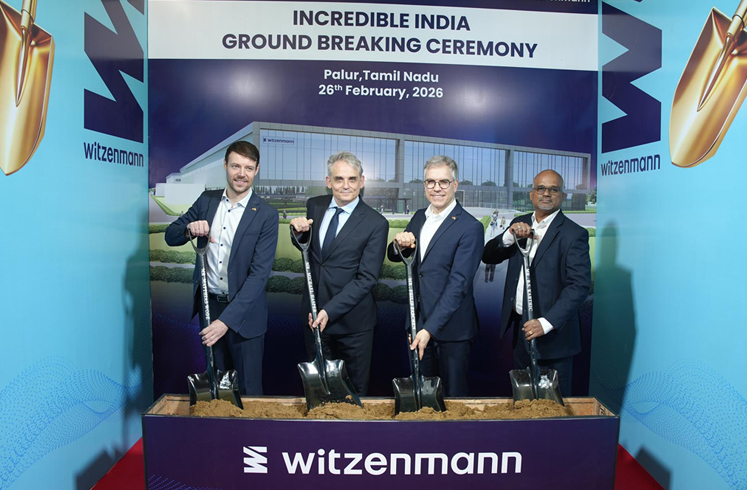
Speaking to this publication, Mr. Paschen said, in a move that signals both confidence and long-term commitment, Witzenmann is investing over €10 million to set up a brand-new manufacturing plant in Chennai—about 35 km from its current site. Construction will take around 17 months, with a full transition planned by late 2027. The first made-in-Chennai parts are expected to roll out in 2028, carrying forward the legacy of a factory that has served India for more than two decades.
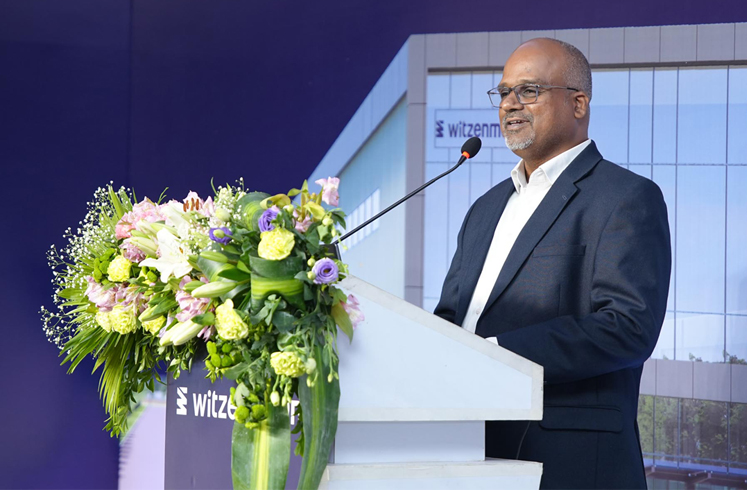
Mr. B.S. Karthic, Managing Director, Witzenmann India, said, as the company prepares for its new Chennai facility, the focus is clearly on expanding both scale and scope. From exhaust decouplers for passenger cars to components for commercial vehicles, railways and engines, the plant will cater to a wide range of automotive needs. At the same time, the company is strengthening its presence in industrial sectors such as steel, oil and gas, and even semiconductor manufacturing, where it supplies specialised bellows and hoses.
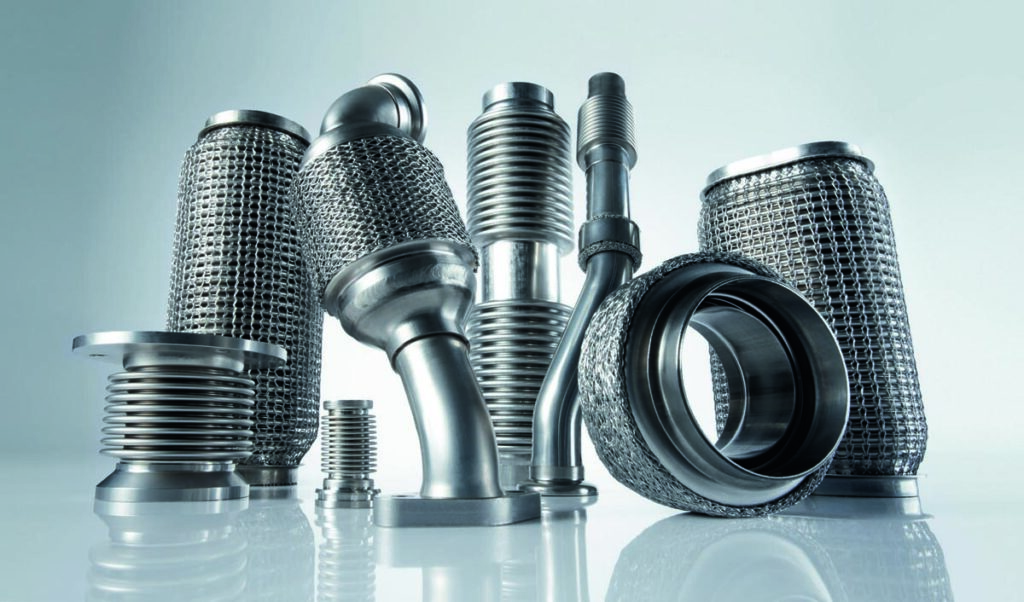
The need for relocation is straightforward as the old plant simply can’t keep up. From small passenger-car decouplers to massive 4-6 meter diameter expansion joints for refineries and steel plants, Witzenmann’s product mix has outgrown the physical limits of its existing space. The new facility gives the company the breathing room it needs—not just to expand, but to build for the future, he said.
The product range spans from palm-sized parts to huge industrial joints taller than the average room. This diversity explains why Witzenmann today commands nearly half the Indian market in key automotive categories—about 50% share in passenger-car decouplers and approximately 49% in commercial vehicles.
Witzenmann’s key strength is its diversification across multiple sectors. In a market like India, where growth is uneven, this helps the company stay resilient. While passenger cars may see slower growth, other segments continue to offer opportunities, allowing it to remain stable and continue growing.
Global Opportunities
The global market, as Mr. Paschen sees it, is not moving in one direction — it is moving at different speeds across regions. “In the Americas, combustion engine vehicles continue to stay strong, and the company is expanding its presence there, especially through its growing Mexico plant. Europe, on the other hand, is shifting faster towards electric, hybrids and new technologies, pushing it to adapt its portfolio accordingly.
India presents a different picture. Electrification in passenger cars is still evolving, so the focus remains on its core products like decouplers and components for conventional vehicles and stationary applications. Meanwhile, China is changing rapidly, with new EV players emerging, and Witzenmann is working to align itself with these new-age brands,” he mentioned.
With operations spread across 21 locations globally, and a balanced revenue mix across Europe, the Americas and Asia, the company is following a region-specific approach rather than a single global strategy — adapting to each market to stay relevant and grow.
Engineering Reliability from Complexity
For Witzenmann, stricter emission norms like Euro-7 are not a challenge — they are an opportunity, Mr. Paschen said adding that “the company has been working on exhaust technologies since 1990, building strong R&D capabilities around heat resistance, durability and long-term reliability. As regulations become stricter, exhaust systems need to handle higher temperatures and remain completely gas-tight — and this is exactly where Witzenmann’s strength lies.”
In the past, markets like India relied on simpler, less engineered components. But with tighter emission rules coming in, the need for advanced, high-performance parts is growing. For the company, this shift works in its favour, as it specialises in precisely this complex, engineered solutions.
As vehicles become more complex — with hybrids, advanced trucks and sensor-heavy exhaust systems — the engineering challenges are also increasing. Temperatures fluctuate, loads become irregular, and systems need to stay stable under constantly changing conditions. For Witzenmann, this is exactly the kind of problem it is built to solve, he mentioned. The company works closely with almost all major passenger car and commercial vehicle makers globally, designing components that can handle extreme heat, movement and stress.
With strong R&D capabilities, it focuses on making its systems both flexible and durable. In simple terms, when the problem gets more complicated, that’s where Witzenmann steps in — turning complexity into reliable, working solutions.
Witzenmann has already taken its first step in India by setting up a Global Capability Centre in Chennai, starting with a small team focused on IT. But this is “just the beginning.” With access to a strong pool of skilled engineers, the company now plans to gradually move more R&D and higher-value work to India, making Chennai an important part of its global innovation network.
Multiple Fuel Technologies
Witzenmann sees the future as a mix of fuels and technologies, and positions itself as a development partner for OEMs across this journey — whether it is hydrogen, hybrids, or alternative fuels. While traditional exhaust business may slowly decline over time, especially after 2030 in some regions including Europe, the company is already preparing for what comes next.
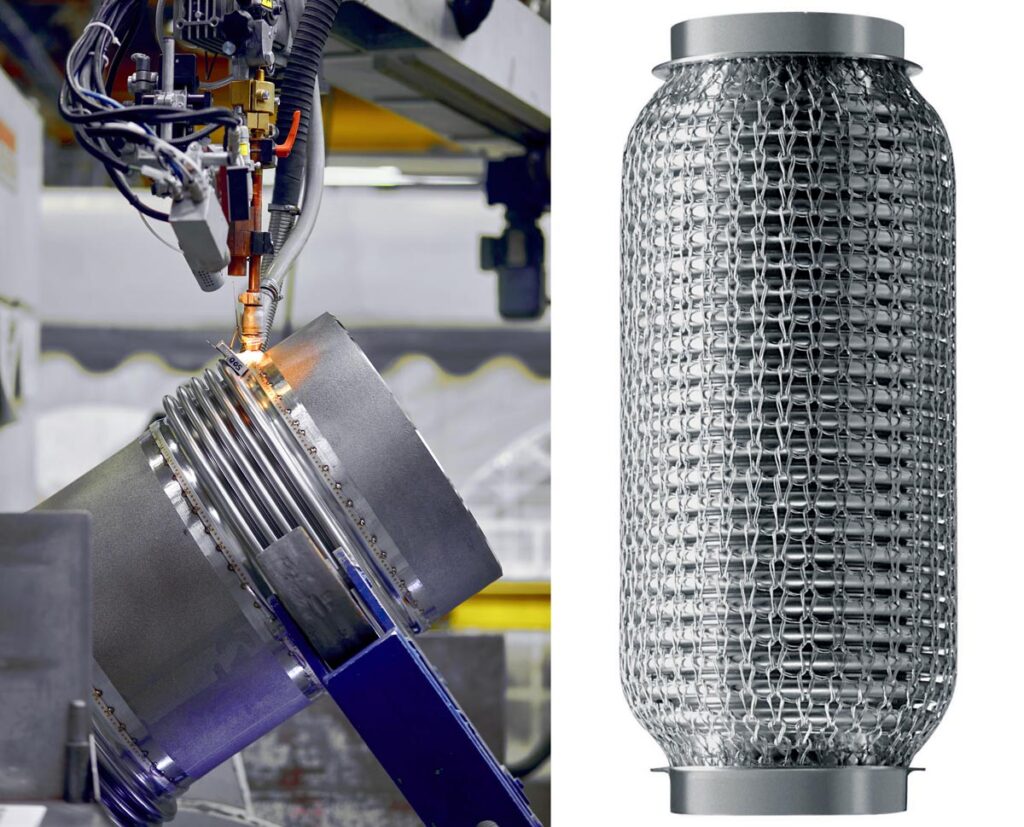
With deep technology expertise and new developments like smart, connected components to monitor performance, the company is balancing today’s business while investing in future solutions — turning change into an opportunity rather than a challenge, he explained.
The global company is now going beyond just components by adding a digital layer to its products. With its new “SMART.WI,” the company can monitor performance, detect leaks and even predict failures — something critical, especially in large industrial setups like oil and chemical plants, where any failure can turn into a serious environmental risk. While still early for passenger vehicles, this technology is opening new opportunities, with growing customer interest and even plans to scale it further as a dedicated solution, he mentioned.
The company sees India not just as a manufacturing base, but as a strong future sourcing hub. The company believes India’s supplier ecosystem is still underutilised, with significant potential to grow and support global operations. With its new plant and a focused sourcing strategy, the company plans to deepen local supplier engagement — creating opportunities not just for itself, but also for Indian vendors to become part of a larger global supply chain.

For Witzenmann, the new Chennai plant is more than an expansion—it is the foundation for the next 25 years. With modern infrastructure, space to grow, and one of the youngest workforces (with the average age of 25 years) in its global network, the company sees India not as a support location but as a flagship of the future.
This investment highlights a bigger change – when a global engineering specialist looks at India today, it sees possibility, scale and momentum—and Witzenmann is ready to build right at the centre of it.
Witzenmann has been working on exhaust technologies since 1990, building strong R&D capabilities around heat resistance, durability and long-term reliability. As regulations become stricter, exhaust systems need to handle higher temperatures and remain completely gas-tight — and this is exactly where Witzenmann’s strength lies.
-Philip Paschen, COO & Deputy Chairman of the Management Board of Witzenmann
As Witzenmann prepares for its new Chennai facility, the focus is clearly on expanding both scale and scope. From exhaust decouplers for passenger cars to components for commercial vehicles, railways and engines, the plant will cater to a wide range of automotive needs.
-Karthic Balasubramanian, MD, Witzenmann India