As India’s supply chains become increasingly complex, logistics providers are expected to deliver far more than transportation. Customers are looking for integrated, technology-driven solutions that combine multiple modes of transport, warehousing and supply chain visibility while delivering cost efficiency and sustainability.

In an interaction with MOTORINDIA, Mr. Nikhil Agarwal, President, CJ Darcl Logistics Ltd., shared his views on the changing logistics landscape, the growing role of multimodal transportation, digital transformation, sustainability and the company’s strategic roadmap.
Changing Expectations
According to Nikhil, the logistics industry is witnessing a clear shift in customer expectations, with transportation no longer viewed as an isolated activity.
“Our customers have stopped thinking about transportation as a standalone activity. What they want now is a partner who can improve how their entire network performs – lower inventory holding, more predictable movement of goods, and tighter control over cost across the supply chain,” he said.
As manufacturing expands into newer regions and distribution networks become increasingly sophisticated, customers are looking for integrated frameworks that combine transportation, warehousing and distribution rather than managing multiple service providers.
Visibility has also become a key differentiator. “Customers expect to see where their cargo is in real time, to be told quickly when something goes wrong, and to have the means to act on it,” Nikhil noted, adding that for sectors such as automotive, metals, cement, chemicals and FMCG, logistics has emerged as a critical competitive advantage.
Multimodal Advantage
Highlighting the benefits of multimodal transportation, Nikhil said integrating road and rail enables customers to optimise both costs and operational efficiency.
“Rail carries the long haul at a far lower cost per tonne-kilometre, while road handles first-mile and last-mile connectivity and provides the flexibility that rail alone cannot,” he explained.
He added that working with a single logistics partner simplifies planning, documentation, tracking and modal transfers. “The combination of scheduled rail and responsive road keeps deliveries on time without customers having to stitch the two together themselves.”
Digital Backbone
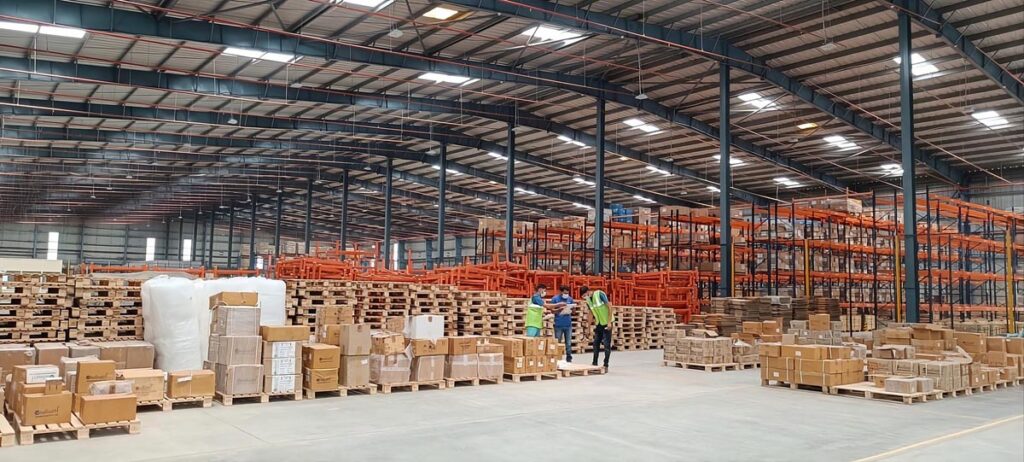
Technology forms the backbone of CJ Darcl’s operations. The company has developed its proprietary digital platform, MoveX, to manage the complete transportation lifecycle.
“MoveX runs everything from lead management and order creation to shipment tracking, invoicing and payment settlement. It connects customers, finance, fleet, warehousing and transportation instead of operating them as separate systems,” Nikhil said.
Supported by GPS devices, FASTag integration and SIM-based tracking, the platform provides real-time visibility across operations. The company also leverages operational data for load planning, route optimisation, fleet utilisation and capacity management, while its warehouse management system offers complete inbound and outbound visibility through EDI integration with customers.
“The objective is practical – faster responses, tighter planning and a more reliable customer experience,” he said.
Infrastructure Boost
Nikhil believes government initiatives such as PM Gati Shakti and the Dedicated Freight Corridors (DFCs) will significantly strengthen India’s logistics ecosystem.
“These initiatives are connecting industrial clusters, ports, logistics parks and consumption centres into one coherent network. As connectivity improves, customers will naturally look for partners who can move freight seamlessly across modes rather than manage each leg separately,” he observed.
With capabilities spanning road, rail, coastal shipping, warehousing, freight forwarding and distribution, CJ Darcl is well positioned to help customers redesign their supply chains as infrastructure bottlenecks reduce and transit reliability improves.
Driving Sustainability
Modal optimisation remains central to both lowering logistics costs and reducing environmental impact.
“Shifting primary movement from road to rail directly reduces transportation costs because rail economics are significantly lower per tonne-kilometre. Increasingly, customers are moving from road-only arrangements to multimodal contracts that allow them to choose the most efficient mode for every stage of the supply chain,” Nikhil said.
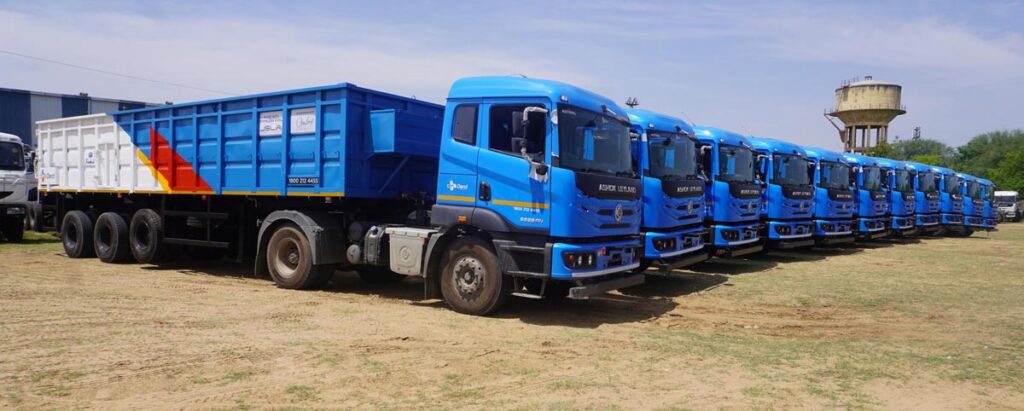
He added that CJ Darcl is also adopting alternative fuels, including electric, LNG and CNG vehicles, with EVs particularly suited for last-mile and intra-city operations.
The company has integrated the Global Logistics Emissions Council (GLEC) framework into its carbon management system to accurately measure Scope 1, 2 and 3 emissions.
“In our experience, lower cost and lower emissions are usually the same decision, not competing ones,” he remarked.
Beyond Price
While acknowledging that pricing remains important in India’s highly competitive logistics market, Nikhil believes long-term partnerships are built on execution capability rather than freight rates alone.
“When a large business chooses a logistics partner, what they are really buying is the confidence that the work will get done – reliability, execution capability at scale, network reach and a partner who continues to develop the relationship,” he said.
He pointed to CJ Darcl’s comprehensive service portfolio – spanning multimodal transportation, warehousing, freight forwarding, project logistics, coastal shipping and distribution – as a major differentiator. The company’s sector-specific expertise across industries including automotive, metals, cement, chemicals, FMCG and infrastructure has also helped several transportation assignments evolve into long-term supply chain partnerships.
Looking Ahead
Looking ahead, Nikhil said CJ Darcl will continue to strengthen its integrated service portfolio while investing further in technology and sustainability.
“Our priorities are centred on building a smarter and more integrated logistics business that keeps pace with evolving supply chains. We are expanding our transportation, warehousing, freight forwarding and value-added services while continuing to improve operational efficiency and visibility through MoveX,” he said.
Sustainability, he added, is treated as an operational discipline rather than a corporate statement, supported by responsible practices and efficient freight movement.
“Together with the global capabilities of CJ Logistics and our strong understanding of the Indian market, our objective is to deliver supply chain solutions that are efficient, scalable and ready for the future,” Nikhil concluded.