The MD & CEO of the company Mr. Girish Wagh credited the quarter’s growth to a strong product portfolio, sharp execution, and discipline, while highlighting EV momentum.
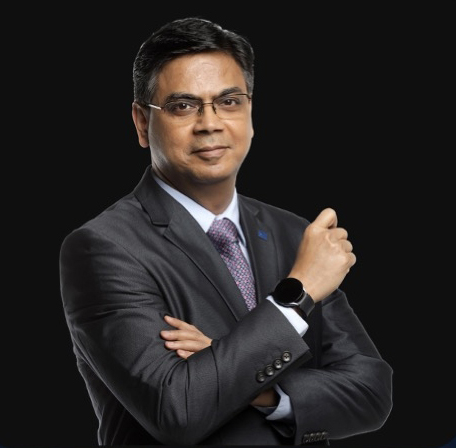
At its Q1FY27 earnings call held last evening, Mr. Wagh gave an indication of how the company managed rising costs while betting big on both electric vehicles and its international ambitions. He said the company managed the quarter well “not because things were easy, but because it handled challenges carefully.” Standalone revenue, mainly from India operations, rose 23% to ₹19,300 crore, driven by higher vehicle sales — total wholesales grew 26%, with domestic volumes up 26% and exports up 35%, signalling resilient demand for commercial vehicles.
On exports, which grew 35% during the quarter, he said Indonesia was a strong contributor — having shipped around 2,600 vehicles by the end of Q1, with more than 3,000 additional units added by late July — but growth wasn’t limited to one market. Several countries in the SAARC region and Sub-Saharan Africa also performed well. The Middle East, however, remains a soft spot, largely due to shipping and logistics disruptions rather than weak demand itself, he highlighted.
Cost Pressure
Selling more doesn’t always mean earning more. Raw material costs, especially metals, rose sharply during the quarter, threatening to eat into profits. Despite this, EBITDA rose 17% to ₹2,300 crore, though margin dipped slightly by 0.6 percentage points to 11.7%, reflecting disciplined pricing and cost control, he pointed out.
Mr. Wagh confirmed that the company raised prices twice this year — by 2% in April and 2.5% in July — as a direct response to rising commodity costs, which added up to a 3.8% hit in the first quarter alone. And there’s more pain expected. He said commodity inflation “remains a major headwind” heading into the second quarter, and that further price hikes are still on the table, depending on how costs evolve.
Cash Strength
Tata Motors’ profit after tax stood at ₹1,500 crore, with pre-tax profit up 26% to ₹2,100 crore. The company generated positive free cash flow of ₹1,100 crore, a swing of nearly ₹2,900 crore year-on-year — a stronger indicator of financial health than profit alone. Net cash in the domestic business stood at ₹7,100 crore, even after a ₹1,473 crore dividend payout.
Mr. Wagh said, “Market share gain is essentially because of delivering better customer value propositions which could be in terms of the products that we are delivering or at times the service offerings that we are giving with the products. We will remain focused on this strategy and not use cash from one quarter for any other purpose or whatever.”
Consolidated revenue rose 19% to ₹20,700 crore, while consolidated profit after tax jumped 83% to ₹2,600 crore. However, much of that jump came from a one-time mark-to-market gain on Tata Motors’ investment in Tata Capital, not from the core vehicle business — a distinction worth noting even as the underlying business grew solidly.
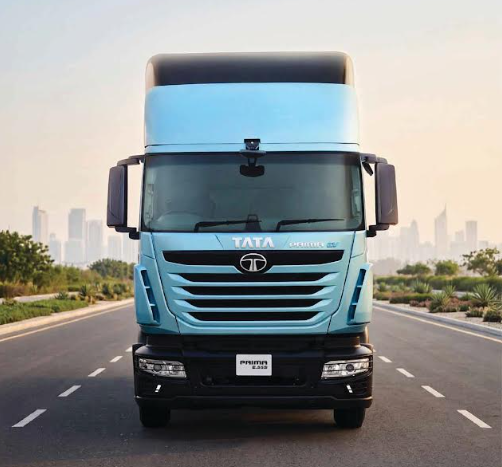
Speaking on the truck demand, he said there is real demand as fleet owners, especially those running heavy trucks, are actively replacing older vehicles to cut fuel costs and maintenance expenses, and that trend continued right through July. “Interestingly, when big fleet owners retire old vehicles, those trucks don’t disappear — they get absorbed into the secondary market instead of being scrapped, meaning the overall vehicle pool keeps growing,” he pointed out.
Touching up on the supply chain constrains, he explained that demand has risen sharply across nearly every vehicle category in India — two-wheelers, three-wheelers, cars, trucks, tractors — putting pressure on suppliers of sheet metal, castings, and forgings. Labour migration away from southern and western India added to the strain earlier in the year. The company has taken steps to fix this and expects the bottleneck to ease by the end of Q2. On the EV side, a similar issue exists with battery cells, which need to be ordered well in advance and are running short — but that, too, is expected to improve by quarter-end.
Key Moves
On the Iveco acquisition — one of Tata Motors’ biggest global moves, Mr. Wagh confirmed that it has now received regulatory approval from Spain, leaving just one more approval pending, from French authorities. The timeline shared earlier still holds with the final clearance by end of this month, with the tender offer launching in early September and the deal expected to close by early November.
Tata Motors also raised its stake in Freight Tiger to about 63.6%, making it a subsidiary, aiming to combine it with FleetEdge to build a digital ecosystem covering trucks, trips, and routes across the logistics chain.
EV Momentum
EV penetration has now touched close to 10% in the small commercial vehicle segment, with electric small commercial vehicles posting their strongest-ever quarter, capturing nearly 47% market share in that category. Rising diesel and CNG prices are accelerating this shift — as fuel costs go up, electric vehicles reach cost parity with diesel trucks earlier in their lifecycle, making them more attractive, sooner. Encouragingly, these vehicles are no longer just a big-city story — they’re now selling in Tier-2 and Tier-3 towns too, as charging infrastructure expands.
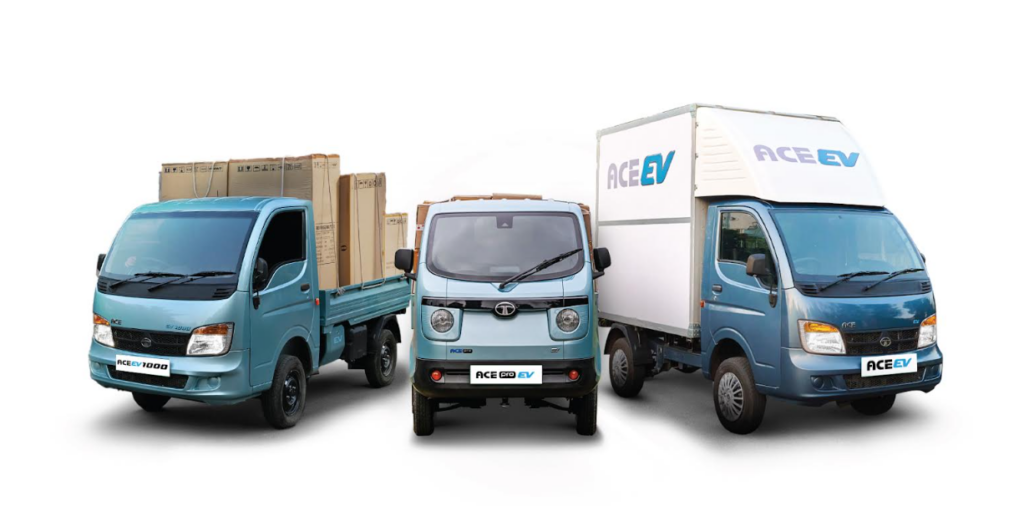
Overall, Tata Motors received over 3,400 EV orders across segments during the quarter, alongside an order book of 850 to 900 electric buses from cities including Chennai, Ahmedabad, Orissa, and Hyderabad, plus private orders, with deliveries stretching through the rest of the year. The company also expanded its SCV lineup with the Ace Gold plus XL, Intra V40, and Intra EV, spanning petrol, CNG, and electric options.
He further pointed out that its entire EV range, from its smallest electric vehicle to its 55-tonne electric tractor, is engineered in India and meets domestic value addition requirements. The company did flag one concern to the government: electric tractors currently enjoy an unusually low 10% import duty, an anomaly it has raised through industry body SIAM, which the Ministry of Heavy Industries has already taken up with the Finance Ministry for correction.
About its hydrogen truck programme, he confirmed that its hydrogen-powered pilot trucks are currently running on three routes in partnership with IOCL, which supplies green hydrogen for the trials. The programme remains in a data-gathering pilot phase as the company evaluates the technology’s readiness for wider rollout, as part of the government’s broader hydrogen mission.