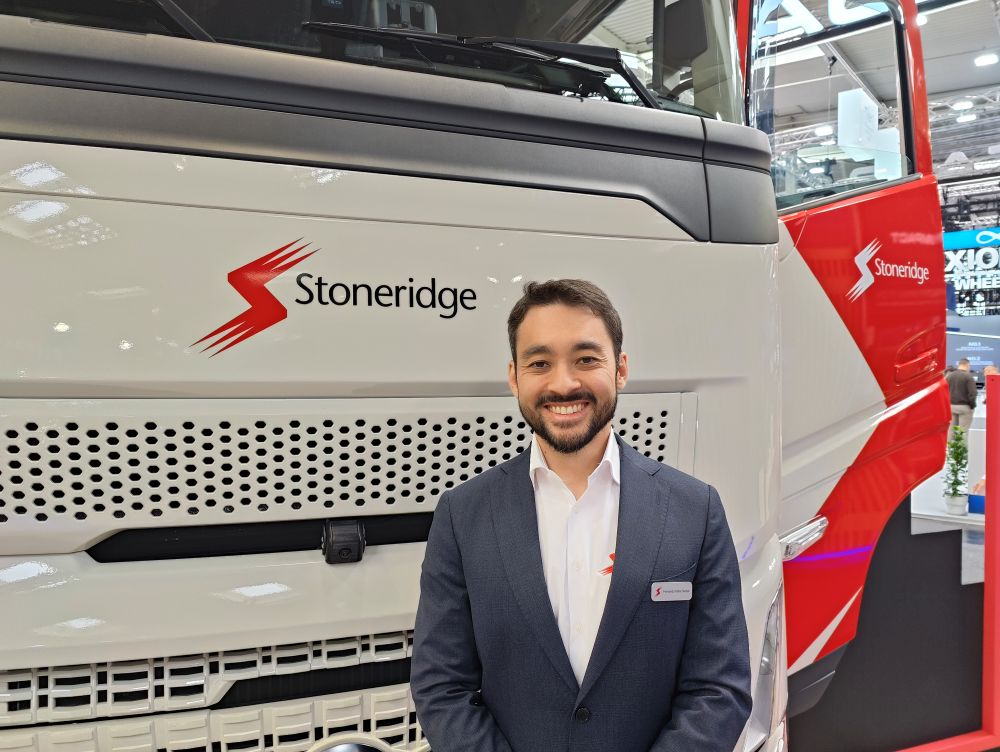
Stoneridge,a leading supplier of safe, intelligent and efficient electronic technologies for commercial vehicles, buses, coaches and off-highway equipment, has made a clear choice. After more than 30 years in commercial vehicles, the company sold its passenger vehicle business this year and is now 100% focused on commercial and off-highway vehicles. At IAA Transportation 2026, the company showed what that focus looks like; a new high-performance computer (HPC) – the new EVO ECU platform that is built for trucks from day one.
The company also exhibited its “Innovation Truck,” which features an advanced integrated vision system alongside a range of smart tractor and trailer technologies. The display showed how these connected systems work together to improve safety, efficiency and performance on the road.
“A car is something you buy because it’s nice to drive,” explained Mr. Fernando Kaba Surjus, Engineering Director, ECU, C&C and Software, Stoneridge. A truck, on the other hand, is mostly a working tool. Technology borrowed from passenger cars often causes problems, he said, because it was never designed for commercial use.
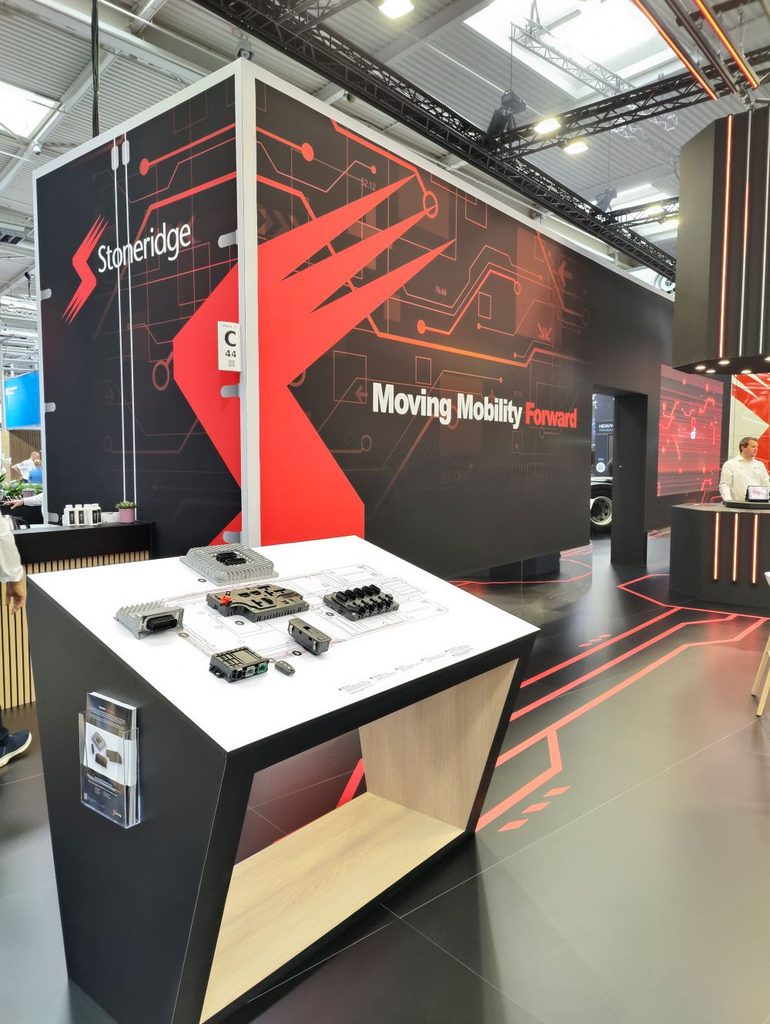
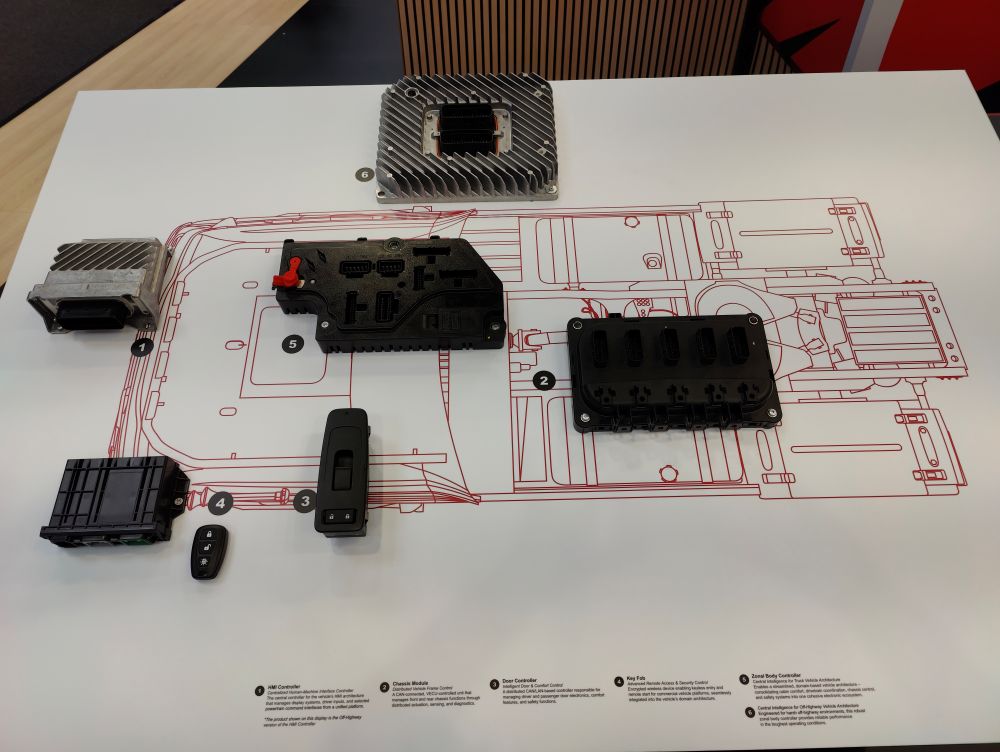
Stoneridge is the market leader in camera mirror systems, which replace a truck’s side mirrors with cameras and screens. Its new HPC brings that system together with surround view, infotainment, the instrument cluster, driver monitoring and ADAS functions, all in one unit. For OEMs, that means one system to install and one validation instead of many.
Such systems are usually expensive, but Stoneridge has kept the design modular. Therefore, truck makers pay only for the features they need. If an OEM already sources a function from another supplier, the company can leave it out and offer a slimmer version from the same product family.
According to Mr. Surjus, the HPC is designed for the way trucks are built. Most trucks use up to two HPCs, plus zonal controllers that handle small functions such as door locks, mirrors, lights and seats. Stoneridge’s unit can work as the second HPC, taking over ADAS and camera functions to ease the load on the main computer. It can also act as the vehicle’s single central computer.
Trailers are covered too. By combining surround view with the long-range cameras of its mirror system, the HPC stitches together an image showing the full length of the trailer, helpful when parking or reversing. In the US, it also offers a connected trailer solution that replaces the usual trailer cable with an Ethernet connection, allowing cameras to be fitted on the trailer itself. The company plans to bring it to other markets, he said.
Two more features stand out. “The first is built-in video recording. Since automotive-grade memory is expensive, the system lets drivers plug in an ordinary USB flash drive or SSD to record footage from all the cameras. The second is a surveillance mode. While the truck is parked, the system keeps watching its surroundings and uses AI to spot people or vehicles coming close. Entering an outer zone wakes the system up, and entering an inner danger zone triggers a warning and records a short video clip. Drivers get an alert in the cab or on a phone app, which helps protect against fuel and cargo theft,” he explained.
Customised Package
Stoneridge offers its systems as a complete package or as individual parts, and it can join a truck programme that is already under way. Speed is improving too. Five or six years ago, developing and validating a system took about three years. Today, the company delivers a customised system in 18 months, he said.
To help OEMs build software-defined vehicles, Stoneridge has created a ready-made foundation hardware platform, which some OEMs have already signed up for. Rather than waiting for each customer request and starting from scratch, it offers a proven platform that customers can use as it is or adjust. This helps with costs and reliability, since truck volumes are much smaller than those of passenger cars. On the software side, the company has partnered with Renesas and Green Hills Software with an aim to let software running on today’s hardware move to the next generation of processors, expected in three to four years, without being rewritten. Mr. Surjus admitted that the industry has made this promise before without delivering, but he said that this time Stoneridge is already testing it on next-generation prototypes.
For fleet owners, the payoff is practical. Replacing mirrors with cameras reduces air drag, and this has cut fuel use by up to 2%, especially on highway trucks. Removing blind spots also means fewer accidents, and the compact camera arms are much less likely to be hit than large mirrors. Fleets that switch, he said, never go back, he mentioned.
Stoneridge’s customers for its camera mirror system include leading global truck manufacturers. Its main focus is Europe and the US, but it is also moving into India. The first trucks with a camera mirror system arrived there about 10 months ago, and the company is working with certification bodies. We have capacity to deliver current volume through our existing plants, and we anticipate continuing to support growth as it comes.
The company is headquartered in Novi, Michigan, with its engineering headquarters in the Netherlands. It also has large engineering teams in Brazil and Bangalore, where the focus is mainly on software and testing, he added.