At IAA Transportation 2026 in Hannover, Orbit Bearings presented a clear message: its next phase of growth will build on strengthening long-standing European OEM relationships, continued focus and sustained investment in developing engineered bearing solutions and in expansion of product- market footprints. For the family-owned Indian manufacturer, the ambition is to help customers strengthen their leadership with bearing solutions that combine global standards of quality and innovation with significant cost competitiveness.
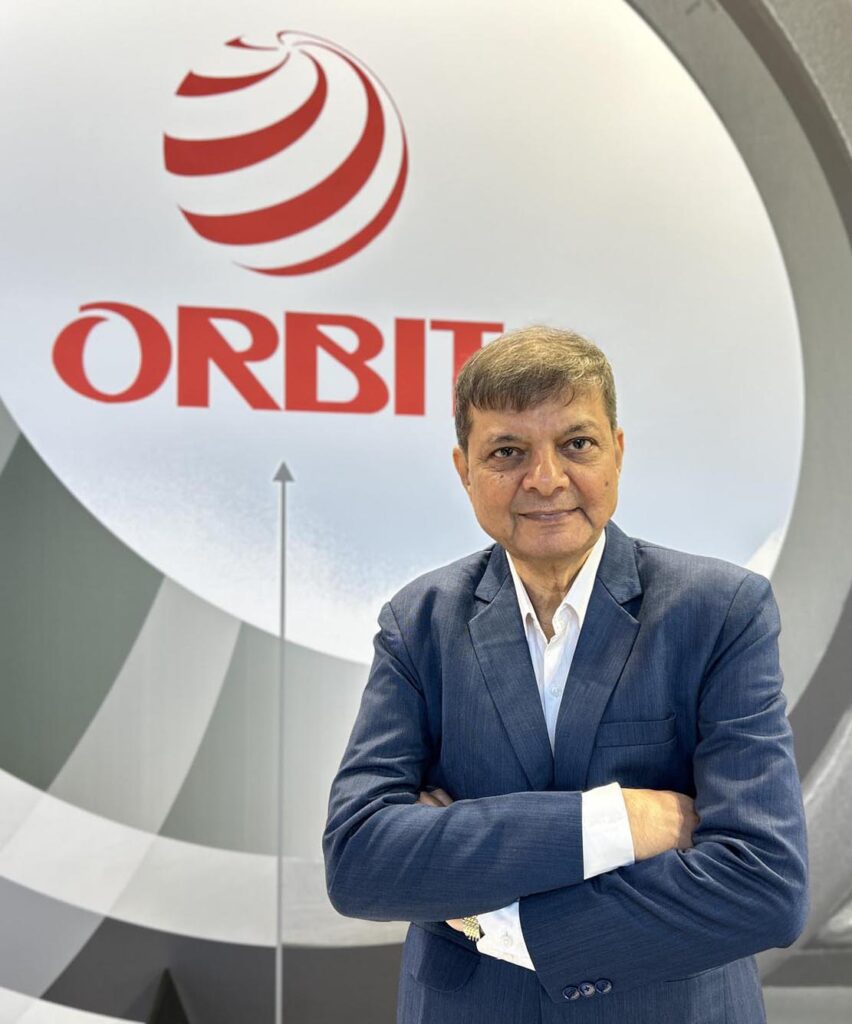
In his conversation with MOTORINDIA, Rajendra Anandpara, Chief Executive Officer and Vineshkumar Patel – CMD of Orbit Bearings India Pvt. Ltd., described a company confident in its achievements and committed to preparing for its customers’ future requirements.
“Our ambition is to help our customers become stronger in their markets,” Anandpara said. “We want them to be confident that, with Orbit, they have a long-term partner who understands their priorities, delivers consistently and invests in the capabilities they will need in the years ahead.”
European partnerships built on proven performance
For Orbit Bearings, IAA has always been an important platform for strengthening relationships with existing customers while opening conversations around future vehicle technologies. Orbit has been participating at the Hannover show since 2006, making 2026 its 20th year at the event. Its focus remains strongly aligned with commercial mobility, particularly as European manufacturers navigate efficiency, emissions and electrification requirements.
“Europe is important to us because commercial mobility is one of our major focus areas. With Europe contributing around half of our business, the region is central to the company’s growth and an important source of engineering collaboration We value the trust that our European customers have placed in us over many years We come here not only to meet existing customers, but also to understand the engineering challenges and technologies that will shape the next generation of vehicles,” said Anandpara.
A defining part of Orbit’s track record in European markets, has been its integrated wheel-end solutions, which have proven maintenance-free service performance of over one million kilometers on European roads for more than 15 years now. For commercial vehicle operators, that durability supports vehicle availability, eliminates maintenance intervention and contributes to lower lifetime operating costs.
“One million kilometres of maintenance-free performance is a meaningful achievement because it addresses what matters to the customer: a vehicle that keeps working reliably,” he said. “It gives us a strong foundation. Our responsibility now is to build on that experience as expectations for efficiency and performance continue to rise.”
Engineering the next generation of efficient wheel ends
The growing emphasis on energy efficiency is bringing wheel-end technology into sharper focus. The EU’s evolving VECTO framework, including the wheel-end friction provisions introduced by Regulation (EU) 2025/258, provides a route for certified wheel-end friction values to be reflected in vehicle fuel-consumption and CO₂ calculations.
For Orbit, this creates a compelling engineering opportunity. Achieving substantial reductions in wheel-end friction requires careful development of the complete assembly, while preserving the durability and reliability demanded by commercial vehicle service.
“For Orbit, VECTO creates a compelling engineering opportunity,” Anandpara said. “Realizing efficiency at the wheel end requires significant engineering innovation. We have to understand how innovations in bearing geometry, pre-load setting, sealing, lubrication and assembly conditions work together, and then demonstrate the improvement through disciplined testing.”
“Our customers need lower friction together with dependable performance over a long service life. That is the engineering challenge we are committed to solving with them.”
Investment in friction measurement to support joint development
Orbit’s investment in a new VECTO Rolling Resistance Measurement Test Rig is a key step in that direction. The rig is intended to strengthen the company’s ability to measure wheel-end friction losses, evaluate design improvements and support development programmes with European OEM customers.
“You need measurement capability to turn an engineering idea into a validated solution,” Anandpara said. “Our investment in this test rig sets the foundation for co-creating VECTO-ready bearing and wheel-end solutions with our customers. It enables a more informed discussion about design choices and the performance we can achieve together.”
Our customers today are not looking only for a bearing. They are looking for measurable advantages in terms of life, efficiency, reduction in friction, reliability and lower total cost of ownership. That is why we see ourselves increasingly as an engineering and development partner,” Anandpara emphasized.
The strategic value of investment in test rig extends beyond an individual test programme. It supports an iterative development process in which customer requirements guide design, measurement provides feedback and successive improvements can be assessed against the application’s performance objectives.
Preparing for electrification
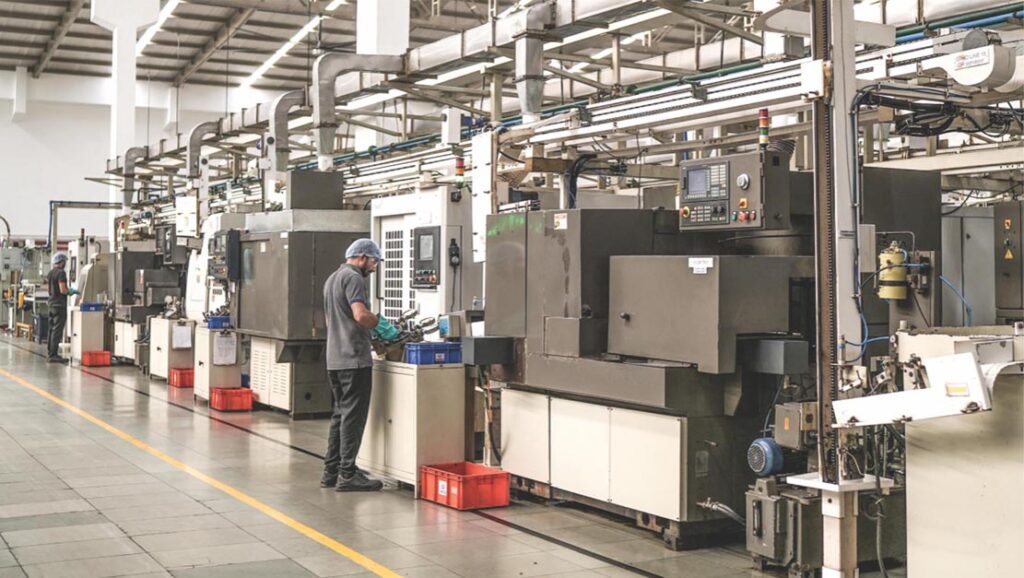
Electrification is also creating new requirements for bearings. Electric transmissions can operate at significantly higher speeds than conventional applications, demanding low friction, high-speed capability and, in some cases, electrical insulation. Orbit has consequently expanded into manufacturing of high-quality ball bearings, complementing its established portfolio and is working on engineering improvements that support performance expectations in transmission-related solutions. “Transmission is an interplay of shafts, gears and bearings. At Orbit, we have developed deep understanding of transmission as a system – and this knowledge immensely helps us responding to application challenges”, said Anandpara.
Global quality and innovation with competitive economics
Orbit’s value proposition connects technical performance with the commercial priorities of its OEM customers. The company aims to offer bearing solutions with quality and innovation comparable with the world’s best, while delivering significant cost competitiveness.
Orbit’s approach to engineering involves different levels of customer collaboration. Existing platforms may require cost optimization and proving compatibility, while newer programs can focus on friction reduction, efficiency and functional integration. More advanced projects involve co-creating concepts that may take four or five years to become commercially viable.
“Our customers compete in demanding markets. They need products that strengthen their reputation, support their technology objectives and make commercial sense,” Anandpara said. “We want Orbit to contribute to all of those requirements. Our goal is to give customers a compelling combination of engineering capability, reliable quality and competitive economics.”
Investing ahead of future requirements
“We are investing ahead of the demand. If a customer comes to us with a demand, we should be ready – in terms of the product design capability, the validation capability, the manufacturing and quality capacity, as also with sales, service and logistic capabilities. So, we take a holistic view of investment – in terms of what we need to invest in products, plants, processes and people”, Anandpara revealed.
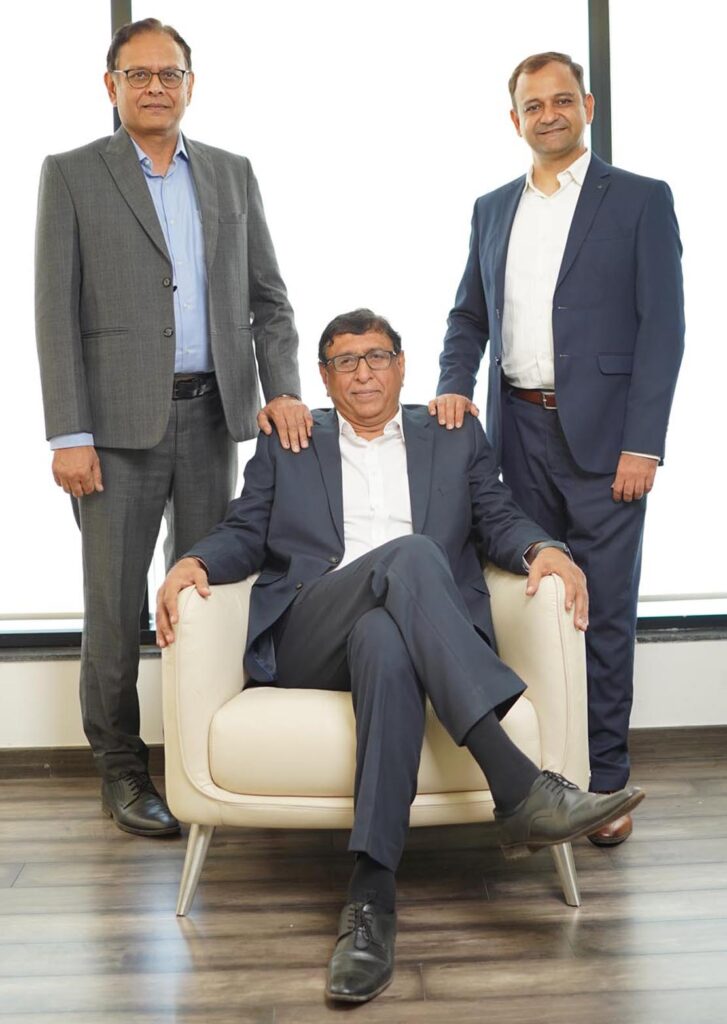
The company’s investment philosophy is forward-looking, said Vineshkumar Patel. Orbit has already invested around ₹400 crore in its expansion of its manufacturing capacities and engineering capabilities. The company is also working towards a greenfield plant at a new site in Gujarat, with an investment ambition of around ₹1,000 crore over five years.
“Our immediate objective is to grow our core markets. We see an opportunity for 2X growth in about three years by leveraging our capabilities, becoming faster, moving closer to customers and ensuring that manufacturing capacity does not become a constraint,” Patel said.
Commercial vehicles and Off Highway sectors – particularly wheel-end and transmission applications have been the core markets for Orbit . With the objective of achieving a balanced growth, Orbit is cautiously expanding its presence in passenger car transmissions, industrial applications, large size bearings and railway-related opportunities.
“We do not want to enter a market simply because it is available. If we enter, we want to learn it properly, build the capabilities required for the market to global standards and then grow from that foundation,” Anandpara noted.
Orbit’s investment roadmap reflects that long-term approach. The company’s investments are clearly targeted to strengthen engineering and manufacturing capabilities to global levels and expand its product and market footprint.
Taking Indian Engineering Closer to customers
Orbit’s global ambitions are also prompting the company to strengthen its presence closer to customers. It already has a presence in Europe and in USA but intends strengthening the same considerably. The objective is not merely to maintain inventory closer to customers, but to create faster technical interaction between Orbit engineers and customer engineering teams.
“Being close to the customer means being available for the engineering conversation,” Anandpara said. “We need to understand their challenges early, respond quickly and work through decisions with their teams. That closeness helps us become a more effective development partner.”
The company’s international approach is built around the belief that Indian suppliers must increasingly deliver global-quality products from India. Anandpara sees the growth of India as a manufacturing hub for global automotive and industrial markets, creating exciting opportunities for component suppliers that can combine design, validation, manufacturing and systems integration capabilities with efficiency and cost competitiveness.
“India is embracing global technologies and that creates opportunities for engineering focused companies like Orbit. India makes global cars, it will also make global trucks. And when you have global trucks, you will also need new generation integrated wheel end assemblies that Orbit has developed for global markets. That is the opportunity we see.” he said.
A focused roadmap for global growth
Orbit’s growth strategy is rooted in the values of a family-owned enterprise. Anandpara emphasised customer centricity, trust and a long-term approach, together with the efficiency and agility needed to respond to changing requirements.
“Family ownership gives us the ability to think in terms of lasting relationships and sustained investment,” he said. “We care deeply about the trust customers place in us. We want to retain the agility to respond quickly while building the systems and capabilities needed to deliver consistently as we grow.”
“We are getting engineering ready, manufacturing ready and people ready. It is a process, but we believe we are taking the right steps towards becoming a global player,” he said.
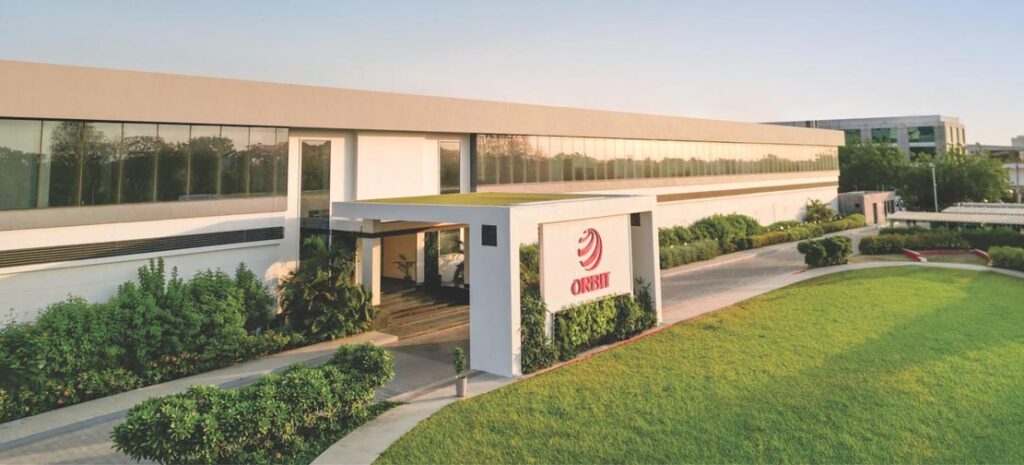
From its Rajkot base, Orbit is consequently trying to build scale with strong engineering focus. Its presence at IAA Transportation 2026 reflected that strategy; the company was not only displaying bearings and wheel-end solutions, but demonstrating its readiness to participate in longer-term technology programs with global OEMs.
“We have grown from a smaller company to approaching the ₹1,000-crore level, but we believe the market opportunity is much larger and we are ambitious about what we can achieve with our customers. Our responsibility is to focus, build the right capabilities and deliver global quality and innovation, while always keeping customer at the centerstage of all our plans and actions. That is a clear long-term direction Orbit has and we are committing resources to it,” Anandpara concluded.