The commercial vehicle industry is undergoing a fundamental transformation driven by zero-emission technologies, automation, digitalisation and rapidly evolving market requirements. For Knorr-Bremse, the response is not simply to develop individual technologies, but to act as a solution provider capable of helping customers navigate this complexity.

Speaking exclusively to MOTORINDIA at IAA Transportation 2026, Mr. Bernd Spies, Member of the Executive Board of Knorr-Bremse AG, responsible for the Commercial Vehicle Systems division, outlines the company’s technology priorities, the growing strategic importance of India and his vision for the future of commercial mobility.
Supporting customers through multiple technology shifts
According to Spies, the commercial vehicle industry is experiencing several major changes simultaneously. Electrification, automated driving and increasing cost pressures are converging, requiring both OEMs and suppliers to rethink how technologies are developed and integrated.
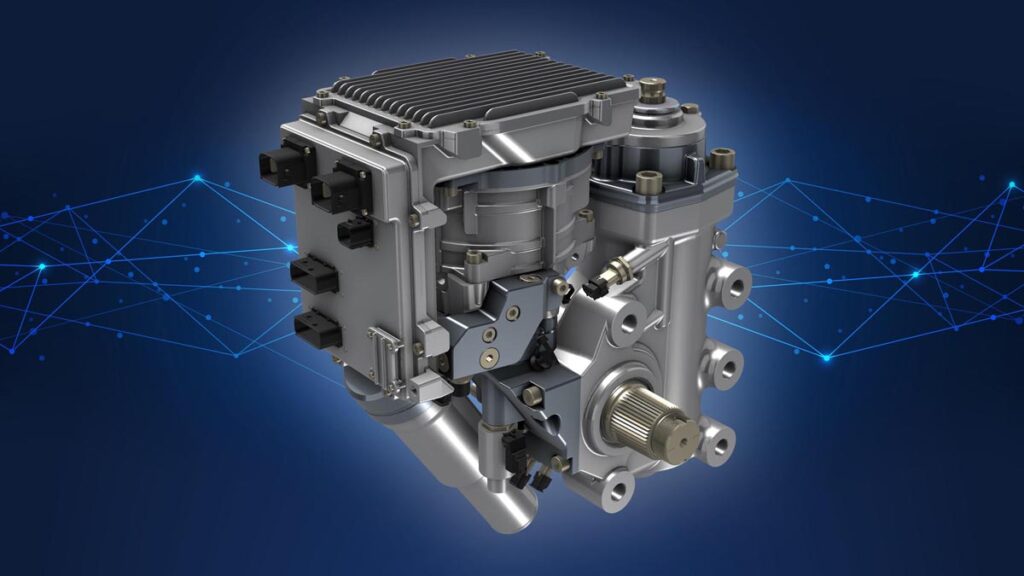
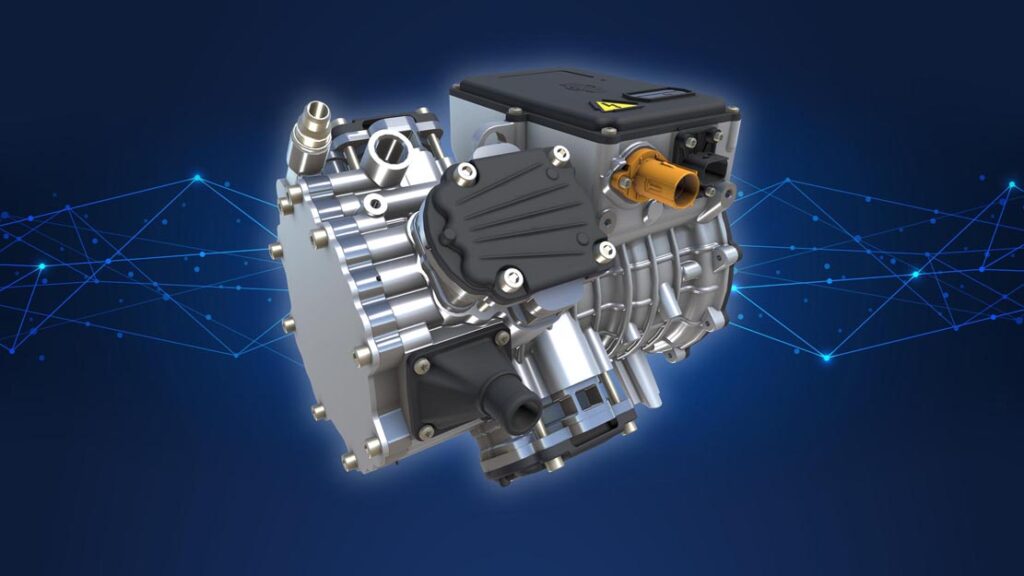
“I see our role as a solution provider, facilitator and organiser of these challenges for our customers,” he says. Rather than approaching each transformation in isolation, Knorr-Bremse is working with customers across multiple technology areas, offering solutions ranging from an oil-free eCompressor to drive electrification to a redundant braking system required for automated driving.
Digitalisation is another important part of this transformation, particularly in the aftermarket, where Spies sees significant potential to improve processes and connectivity between fleets, workshops and distributors.
At IAA Transportation 2026, the company’s technology focus was centred around two overarching themes – zero emissions and automation. For Spies, the first goes beyond the traditional focus on carbon dioxide. “The key trend that we need to cope with is the trend to zero emissions,” he explains. “For us, it actually goes beyond CO2 reduction. It also goes into lowering oil and particle emissions, as well as noise reduction.”
This broader definition of zero emissions is driving Knorr-Bremse to develop multiple technologies in parallel. At the same time, automation is becoming increasingly relevant, particularly for commercial vehicles where the business case can emerge earlier than in passenger cars.
Making commercial vehicles ready for automation
Spies believes automation will develop at different speeds across regions, but sees commercial vehicles as an important early application. “We believe it’s coming, and to the truck industry first before it really comes to the passenger car industry,” he says.
For Knorr-Bremse, this translates into a strong focus on redundancy – ensuring that critical vehicle functions remain available even in the event of a system failure. The company is therefore developing technologies such as a redundant braking system and a redundant steering system, with the objective of making commercial vehicles ready for Level 4 automated driving.
“Over the last five to ten years, we have understood that markets develop very differently,” he says. “There is no high-tech market and other markets to follow. For different technologies, it is very different from market to market.”
Artificial intelligence is adding another dimension to this transformation, accelerating the use of data and influencing how products themselves are developed.
India moves from market to global technology hub
Within this increasingly diverse global landscape, India is gaining strategic importance for Knorr-Bremse. Spies describes the country as an increasingly important market not only because of its growth potential, but also because of its emerging role in engineering, production and technology development.
“India becomes more and more important,” he says. He points to the rapid development of the Indian market, along with new mandates and regulatory requirements, as drivers for technology adoption. At the same time, Knorr-Bremse is increasingly using India as a development and manufacturing hub serving markets beyond the country itself.
The company has invested in a new campus in India that brings together its Truck and Rail divisions, combining production, engineering and business service capabilities. It has also established a new setup focused on artificial intelligence, leveraging local engineering talent.
“We use India more and more as a hub for development for the whole world and as a hub for production,” Spies explains. “We have first products that we deliver into the complete world, and there is more to come.”
He believes Knorr-Bremse has also retained the organisational agility necessary to respond to India’s rapidly changing market. “We are not the big conglomerate where things typically go slow,” he says. “We still have preserved the capability of reacting fast to the market needs.”
The company is increasing its management focus on India while supporting its local organisation with technology and know-how. Ultimately, Spies says, the test will be whether customers recognise that responsiveness.
A predictable roadmap is critical for suppliers
While Spies remains positive about India’s prospects, he identifies one important requirement for the market. “What I would like is a reliable development in the market,” he says. “If we require certain technology, then it should really come.”
For technology suppliers, the issue is not simply regulatory direction but consistency in implementation. Developing sophisticated technologies requires substantial investment, and suppliers need sufficient visibility to justify those investments and achieve the volumes necessary to amortise them. “We make technology ready for the market, but then we need quantity. We need deliveries and we need quantity. Otherwise, we have invested and nothing has happened,” he says.
The same logic extends to the global supplier industry, where Spies expects different forms of cooperation and consolidation to continue. Increasing development costs and the limited markets over which investments can be amortised could encourage M&A activity or partnerships.
“The investment into new technologies is getting more and more complicated and expensive, and the available market to amortise these investments is limited,” he says. “Therefore, in certain areas, it makes absolute sense to collaborate or to even form one larger company.”
Battery-electric future, with application-specific alternatives
Despite the different pace of electrification globally, Spies sees battery-electric vehicles as the future. “There will be limited applications of hydrogen use,” he says. “I see this only as an interim solution for propulsion, but not as the permanent long-term solution.”
“What excites me the most is that we can shape this future. It’s not predefined in a way,” he says. He envisages a commercial vehicle landscape that could look and sound radically different two decades from now, with electrification and automation fundamentally changing road transport. “Being part of that, that excites me.”
For suppliers such as Knorr-Bremse, however, shaping that future will require not only technological capability but also a stable environment in which those technologies can be developed and deployed.
That message perhaps captures the broader challenge facing the commercial vehicle industry: the technology roadmap is accelerating, but the confidence to invest in it must keep pace.