A 1,000+ Eicher fleet – a relationship that has grown with APML
From a modest beginning in household relocation to building a strong presence in India’s logistics and transportation space, Agarwal Packers and Movers Ltd. (APML) has spent nearly four decades building its business around trust, customer focus and continuous innovation. Today, that philosophy is finding a new expression through its growing partnership with Eicher, as the two companies work towards developing smarter, safer and more purpose-built transportation solutions. In an exclusive conversation with MOTORINDIA, Mr. Ramesh Agarwal, Chairman & Managing Director, APML, shares his perspective on the company’s journey, its evolving fleet strategy, the Eicher partnership and his vision for the future of logistics.
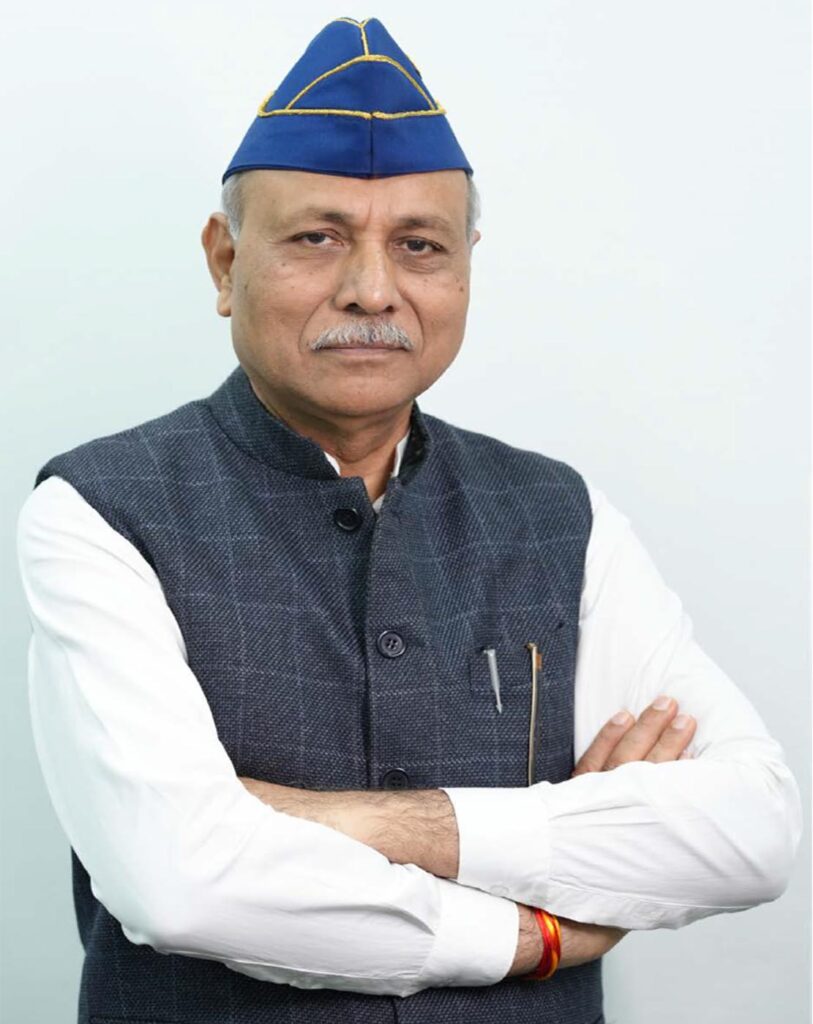
The story of APML began with an idea in 1987 that was put into practice quite expertly and efficiently. Starting as Agarwal Household Carriers, the company eventually adopted the more universal Packers and Movers identity and steadily built its business around the relocation of household goods. Mr. Agarwal recalls that the company’s early scale was modest – it moved around 48 households in an entire year. Today, the organisation is capable of undertaking a similar number of movements in an hour, reflecting the scale of the transformation over nearly four decades.
For Mr. Agarwal, however, the real measure of APML’s journey is not the number of consignments moved but the trust placed in the company by its customers. This philosophy became particularly important in an industry that was historically perceived as fragmented and largely unorganised. APML sought to differentiate itself by putting the customer at the centre of its operations and treating feedback as an opportunity to improve.
“We started with the philosophy of ‘grahak devo bhava’ – the customer is like God. When a customer comes to us, even if he comes to complain or question us, we treat that as something valuable because he has come to tell us where we need to improve. Whatever the customer says, we accept it and our team works on it. That is how many of our innovations have actually come about,” Mr. Agarwal explains.
That approach has taken APML beyond conventional transportation. One of the issues the company began studying was the damage that can occur to goods through road-induced vibration and repeated shocks. Mr. Agarwal points out that such damage may not always be immediately visible, but can affect products in much the same way that repeated vibration can eventually affect components in a machine.
APML therefore began examining how the vehicle itself could be adapted to protect cargo better. This led to the development of its ‘smart vehicle’ concept that included suspension optimisation, improvements to cargo-securing arrangements and other supporting systems aimed at enhancing load stability and protection, designed specifically for the transportation of household goods and sensitive consignments. Beyond providing safety belts on both sides to secure individual items and prevent them from shifting during transit, the concept focuses on minimising the impact of road-induced shocks and vibrations through appropriate vehicle-level modifications. According to Mr. Agarwal, what the company describes as warranty damage, previously ranging from 18–32 percent, has been reduced to around 2.2 percent through this initiative.
The objective now is more ambitious – zero damage. And this is where the relationship with Eicher has become particularly significant.
A Partnership That Goes Beyond Vehicles
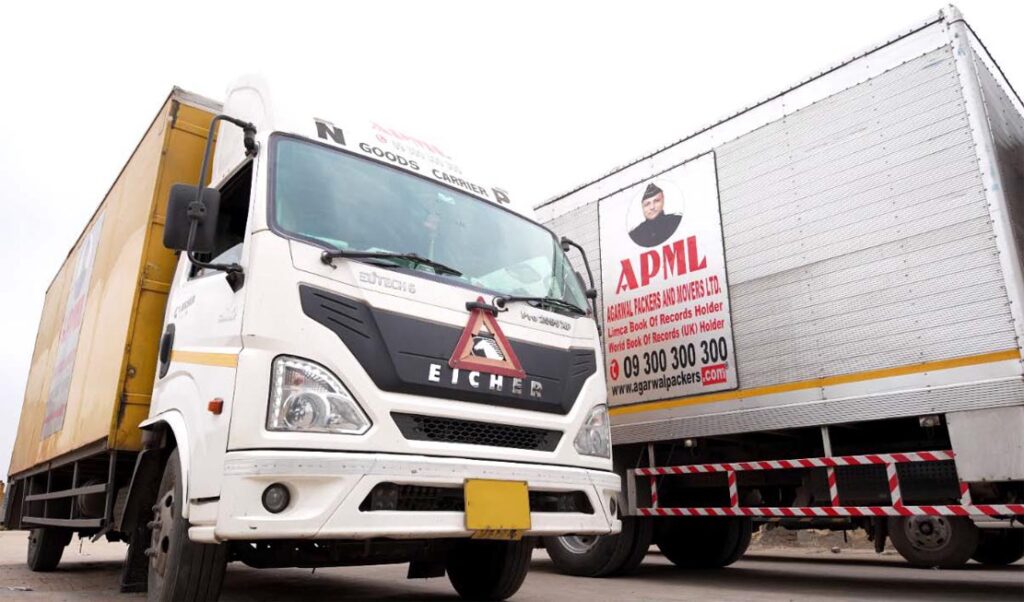
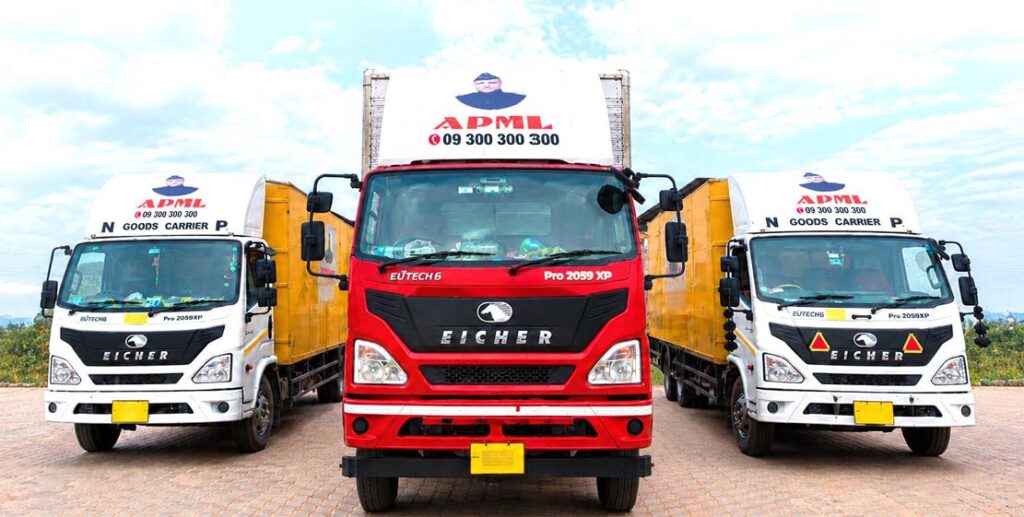
APML’s association with Eicher began through an interaction around a welfare initiative and gradually evolved into a strong business relationship. Mr. Agarwal recalls his first visit to the Eicher manufacturing hub, where he had the opportunity to gain a closer understanding of the company’s capabilities. It was Eicher’s technology, engineering expertise and focus on innovation that helped build his confidence, with the relationship strengthening year after year through continued engagement and collaboration. To date, APML has purchased more than 5,000 trucks from Eicher, out of which over 1,000 are currently in operation, reflecting the depth of a partnership that continues to evolve with the changing demands of specialised logistics.
A key strength of the partnership has been Eicher’s willingness to understand how its vehicles perform in real-world applications and respond to the requirements emerging from the field. APML’s vehicles operate in a demanding environment, carrying household possessions as well as sensitive and high-value consignments such as healthcare and sports equipment. Meeting these requirements calls for more than dependable vehicle performance – it requires engineering solutions that address cargo protection, ride quality and operational reliability, alongside technology-enabled features and modernised cabin designs that enhance driver comfort, particularly on long-distance journeys. By combining Eicher’s engineering and vehicle development capabilities with APML’s operational insights, the two companies have created a platform for continuous feedback, product refinement and application-specific solutions.
One example is the long-haul operation of APML’s LCVs, where driver comfort became an important consideration. APML highlighted the need for drivers to have adequate space and comfort to rest during long-distance journeys, and Eicher responded by redesigning the cabin to provide greater comfort for drivers during long-haul operations. “Whenever we find that something needs to change, we share it with Eicher. For example, our LCVs also do long-haul operations and the driver needs to sleep comfortably. They looked at the requirement and changed the design accordingly. This is what I value in the relationship – Eicher understood our requirement and delivered the desired solution, backed by robust technology and frugal engineering,” Mr. Agarwal says.
This responsiveness has become a defining feature of the partnership. Eicher personnel have also spent time at APML’s fleet operations to understand how the vehicles are deployed, monitored and supported, giving the OEM a closer view of the demands placed on its products. The relationship therefore works in both directions – APML brings operational experience and customer insights, while Eicher brings its market understanding, vehicle development and engineering capabilities to address those requirements. The result is a more collaborative approach to defining vehicle specifications and identifying opportunities for improvement.
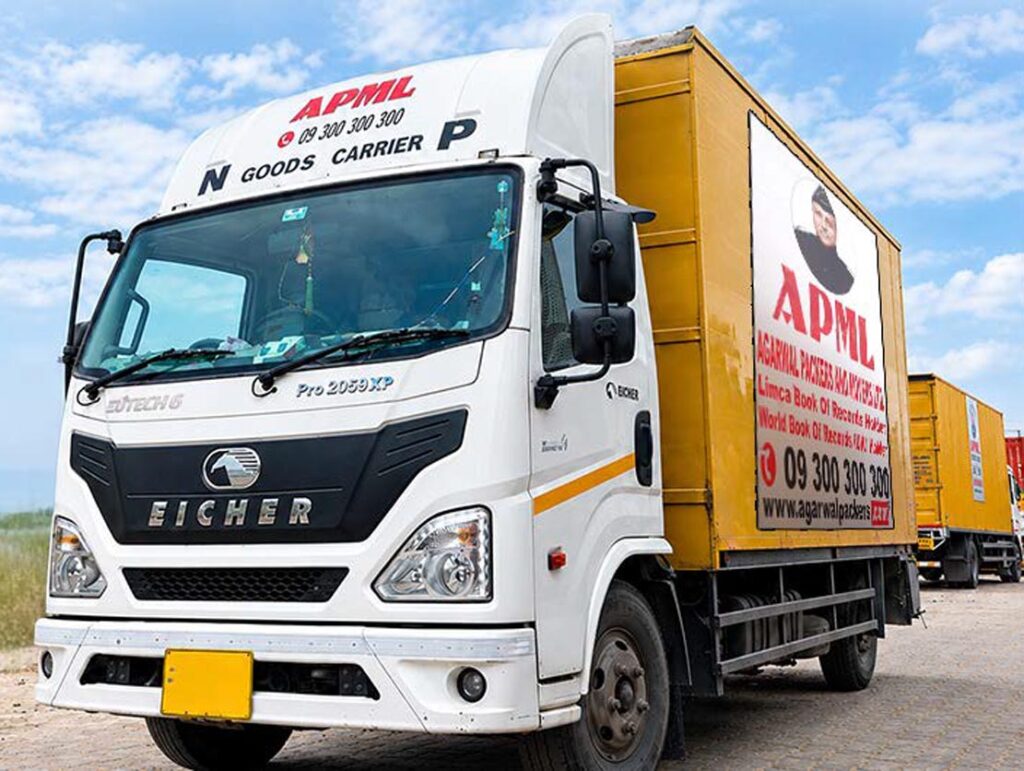
The scale of APML’s existing Eicher fleet reflects the strength of the relationship between the two companies. With more than 1,000 Eicher vehicles already in operation, Eicher has become an important part of APML’s specialised logistics operations, particularly in applications where cargo protection, vehicle reliability and driver comfort are critical. The growing engagement also provides both companies with an opportunity to deepen their understanding of the requirements of specialised transportation and explore solutions for its evolving needs.
For Eicher, the partnership also provides a direct window into a highly specialised and evolving area of commercial vehicle usage. APML’s experience in transporting sensitive and high-value products offers practical insights into how commercial vehicles can be developed and configured for applications where conventional freight requirements are not enough. The larger opportunity is to demonstrate that road transportation can offer a level of protection and confidence traditionally associated with more expensive modes such as air freight.
“There are customers who prefer to send their high-value products by air because they feel that the goods will be protected from bumping and vibration. But air freight is very expensive. Our thinking is to bring that same level of protection to road transportation, so that the customer gets the confidence of using the road without worrying about what will happen to the product during the journey,” Mr. Agarwal says.
Technology, Uptime and a Shared Focus on Reliability
The partnership also extends beyond the vehicle itself to the larger question of uptime and operational reliability. APML’s Road Traffic Control centre in Mumbai provides centralised visibility of its fleet, while its operating processes are designed to ensure that a breakdown is addressed quickly and does not translate into a loss of customer confidence. For Eicher, this creates another important dimension to the relationship – understanding how its vehicles perform within a technology-enabled fleet environment and how OEM support can contribute to overall uptime.
With APML’s own truck fleet growing rapidly, vehicle performance, driver experience and service responsiveness are closely linked to the company’s operating model. The growing Eicher fleet will therefore form part of a larger ecosystem in which vehicle capability, fleet management, technology and after-sales support work together to deliver consistent service.
The expansion is expected to continue, with APML planning to add a sizeable number of vehicles and around 500 employees each year, alongside further investment in its physical infrastructure and branch network. For Eicher, this represents a significant long-term opportunity to deepen its engagement with a major logistics operator and gain further insights into specialised commercial vehicle applications.
A Shared Vision for the Future
APML is also entering a new phase as the next generation takes on greater responsibility within the business. Mr. Navneet Agarwal, Whole-Time Director, oversees IT, finance, accounts and strategy, while Mr. Saransh Agarwal, Whole-Time Director and Head – Trucking Cube Division, leads operations and fleet-related activities. Their growing involvement brings a stronger technology orientation to APML’s operations and is likely to shape the company’s approach to fleet, mobility and logistics in the years ahead.
The broader outlook for logistics remains positive, with Mr. Agarwal expecting transportation demand to grow alongside India’s economy. He sees technology, professionalism and customer-centricity becoming increasingly important, while taking a pragmatic view on the transition towards alternative powertrains. Electric vehicles are likely to find increasing relevance in city operations, while diesel will continue to play an important role in applications where charging infrastructure, battery economics and long-haul requirements remain considerations.
At the heart of this outlook is the belief that the next generation of logistics solutions will be shaped through closer collaboration between customers, fleet operators and vehicle manufacturers. That is where the APML–Eicher relationship has the potential to evolve further – with APML bringing its understanding of customer and operational requirements, and VECV’s vision of driving modernization through their product, engineering and vehicle development capabilities. “Our future is all about the customer. Whatever requirement the customer brings to us, we have to think about how we can fulfil it. We will take that requirement to Eicher and see what can be done,” Mr. Agarwal says.
From the first order to more than 1,000 Eicher vehicles today, the relationship has grown in both scale and depth. What began as a vehicle association has evolved into a collaborative engagement, bringing together APML’s understanding of specialised logistics and Eicher’s commercial vehicle expertise. As transportation requirements become increasingly application-specific, the partnership provides a strong foundation for both companies to learn from each other and create greater value for customers.