Germany and India are witnessing unprecedented bilateral cooperation, with trade between the two countries touching €50 billion, according to Michael Hasper, Consul General of the Federal Republic of Germany, Chennai.
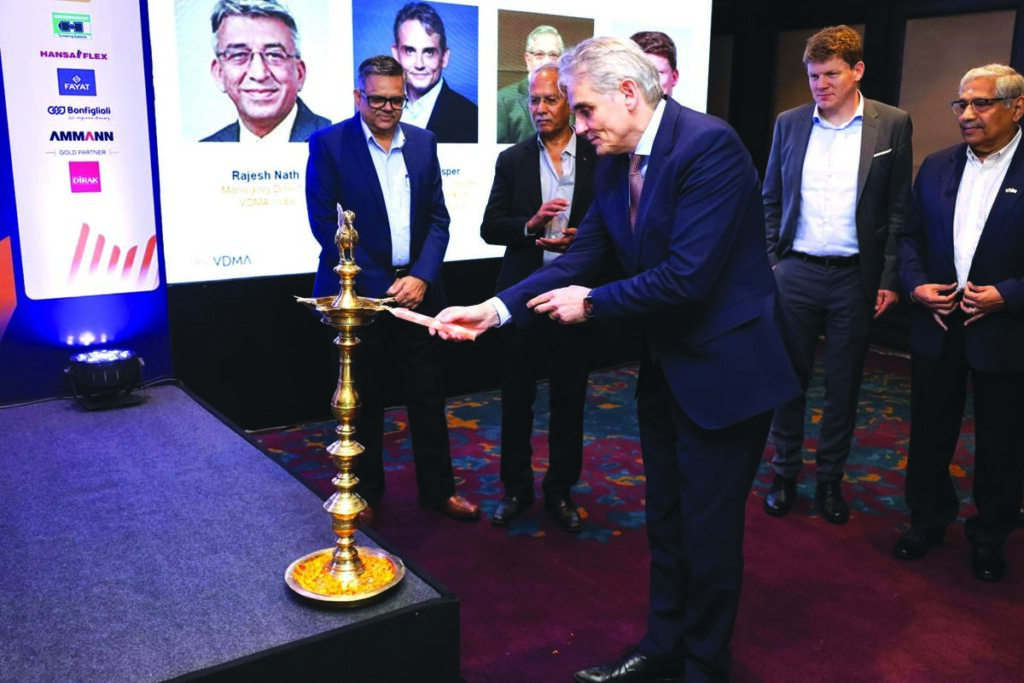
Delivering the inaugural address at the VDMA Construction Summit 2026 in Chennai, Hasper said the long-awaited Free Trade Agreement (FTA) between the European Union and India is expected to be finalised by 2027. Once implemented, bilateral trade between the two regions is projected to double by 2032. The agreement is also expected to help the European Union save around €4 billion through reduced trade costs across various product categories.
Highlighting India’s rapid infrastructure development, Hasper noted that the country is making unprecedented investments in roads, ports and other critical infrastructure. As infrastructure development plays a vital role in economic growth, German companies are keen to collaborate with Indian partners by supplying high-quality construction equipment and advanced technologies.
The summit, themed ‘Building India’s Future: Construction Machinery at the Centre of Infrastructure Transformation’, was attended by senior executives from leading German and Indian companies.
Rajesh Nath, Managing Director, VDMA India, said the country is currently undergoing one of the most significant phases of infrastructure transformation in its modern history.
“We come together at a time when India’s infrastructure and construction ecosystem is witnessing one of the most defining phases of transformation in its modern history. Across the country, highways are expanding, airports are rising, railway networks are modernising, logistics corridors are taking shape, industrial hubs are expanding, and energy infrastructure is evolving at an unprecedented pace. Behind this transformation stands an industry that often works silently but powerfully in the background – the construction machinery and equipment sector,” he said.
According to Nath, India is increasingly positioning itself as a global hub for manufacturing, industrial development, logistics, urbanisation and investment, creating significant opportunities for the construction ecosystem.
He pointed out that the Government of India increasingly views infrastructure not merely as expenditure but as an investment in productivity, competitiveness and long-term economic growth. Government capital expenditure on infrastructure has crossed ₹11 lakh crore, with sustained investments across roads, railways, airports, ports, logistics, renewable energy, housing, water management, industrial corridors and urban infrastructure.
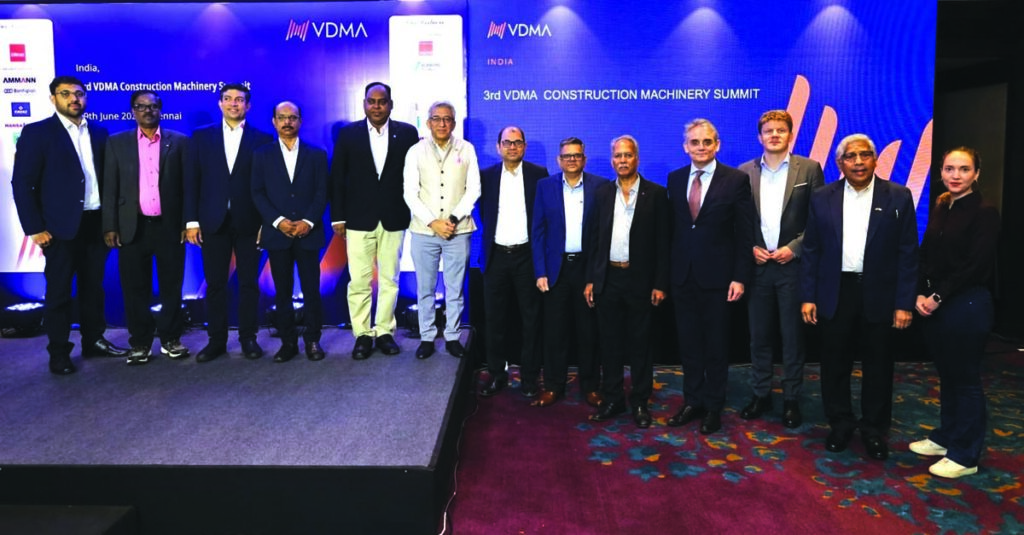
As India advances towards becoming a major global economic power, Nath noted that the country will require infrastructure investments running into trillions of dollars by 2030 to support urbanisation, industrialisation, manufacturing growth, logistics efficiency and rising domestic demand. Initiatives such as the National Infrastructure Pipeline, industrial corridors, metro rail expansion, Dedicated Freight Corridors, Smart Cities Mission and multimodal logistics networks collectively represent one of the world’s largest infrastructure development programmes.
“The construction machinery sector has emerged as one of the strongest pillars supporting India’s development story. Today, India is the world’s third-largest construction equipment market, valued at around USD 10 billion, and is projected to grow to nearly USD 14.8 billion by 2030, reflecting the industry’s strong long-term fundamentals,” he said.
Nath also highlighted the rapid technological evolution of the construction equipment industry, with increasing emphasis on intelligent machines offering higher productivity, fuel efficiency, predictive maintenance, enhanced operator safety and improved lifecycle performance.
He stressed that collaboration would play a critical role in the sector’s future growth.
“This is where partnerships fostered through VDMA become increasingly relevant. German and European engineering has long been recognised for precision, durability, technological excellence and innovation. Through industrial collaboration, advanced engineering capabilities, digital technologies and knowledge exchange, Indo-European partnerships continue to make a meaningful contribution towards strengthening India’s industrial and infrastructure ambitions,” he added.
The day-long summit also featured presentations by industry experts on the current landscape, challenges and emerging opportunities in the construction equipment sector.