All vehicle segments record their best-ever July as EVs and alternative fuels gather pace.
India’s automobile retail industry created history in July 2026. For the first time since Federation of Automobile Dealers Associations (FADA) began tracking retail sales in 2014, every major vehicle category recorded its best-ever July performance. Total vehicle registrations touched 25.91 lakh units, up 25.89% over last year, making July the 12th-highest retail month in the past 151 months—despite being a monsoon month, which is usually a slow period for vehicle sales.
The achievement was not driven by one segment alone. Two-wheelers crossed the 18-lakh mark for the first time in July, while passenger vehicles, commercial vehicles, three-wheelers, tractors and wheeled construction equipment also set new July records. Rural India emerged as the biggest growth engine, outperforming urban markets across all six categories.
Yet, beneath these impressive numbers lies an even bigger story—the changing face of India’s automobile market. Passenger vehicles are quietly approaching a major milestone. Petrol-powered models now account for 41.68% of registrations, while CNG, hybrid and electric vehicles together have climbed to 40.59%. A year ago, the gap between the two stood at more than 13 percentage points. Today, it has narrowed to just 1.09 points, suggesting that alternative fuels could soon overtake petrol for the first time, FADA Vice President Mr. Sai Giridhar said.
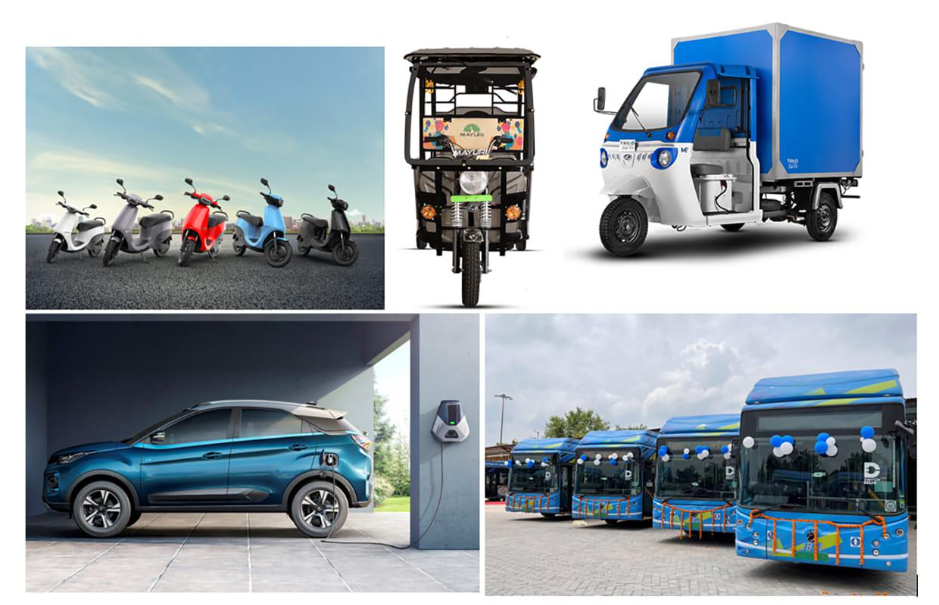
Electric mobility also continues its rapid rise. Total EV registrations reached a record 3.28 lakh units in July, taking overall EV penetration to about 12.7%, up from 9.6% a year earlier. Electric two-wheelers captured a record 11.24% market share, while electric commercial vehicles also posted their highest-ever volumes.
The strong performance was supported by GST 2.0-led affordability, easier vehicle financing, new product launches and improving rural incomes following a better monsoon. Festival buying also began earlier than usual, although heavy rains, flooding and the Aadi and Shravan periods slowed month-on-month growth.
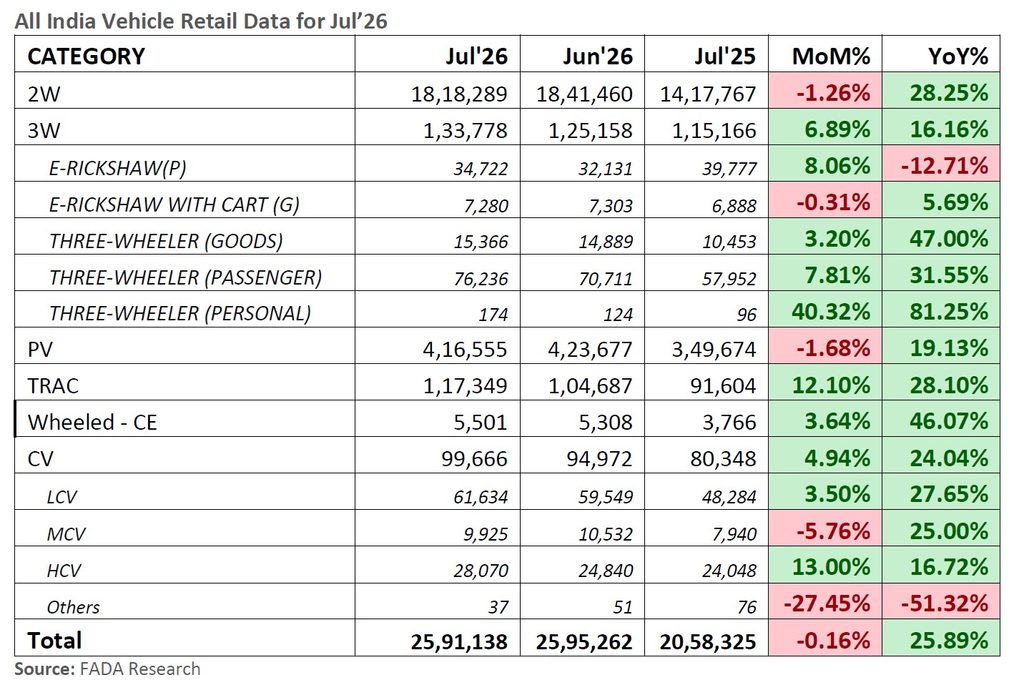
Commercial vehicles benefited from higher freight movement, infrastructure activity, mining and e-commerce logistics, while tractors gained from improved Kharif sowing. Passenger vehicle sales were helped by new launches and attractive manufacturer schemes, although many buyers continue to evaluate fuel choices amid the transition to E20-compatible vehicles, he said.
One concern remains, he pointed out, adding that passenger vehicle inventory has climbed to 33-35 days, well above FADA’s recommended 21-day level. Dealers have urged manufacturers to better align factory dispatches with actual retail demand to avoid excess stock ahead of the festive season.
Looking ahead, dealers remain highly optimistic. More than 74% expect August sales to improve, supported by Independence Day launches, Onam, Raksha Bandhan, healthy rural cash flows and a favourable base. Confidence over the next three months is even stronger, with nearly 88% expecting growth.
July’s record-breaking performance therefore represents more than just strong sales. It highlights an industry benefiting from improving consumer confidence, a strengthening rural economy and a rapid shift towards cleaner mobility. If the current momentum continues, the coming festive season could mark another record chapter for India’s automobile market, Mr. Giridhar added.