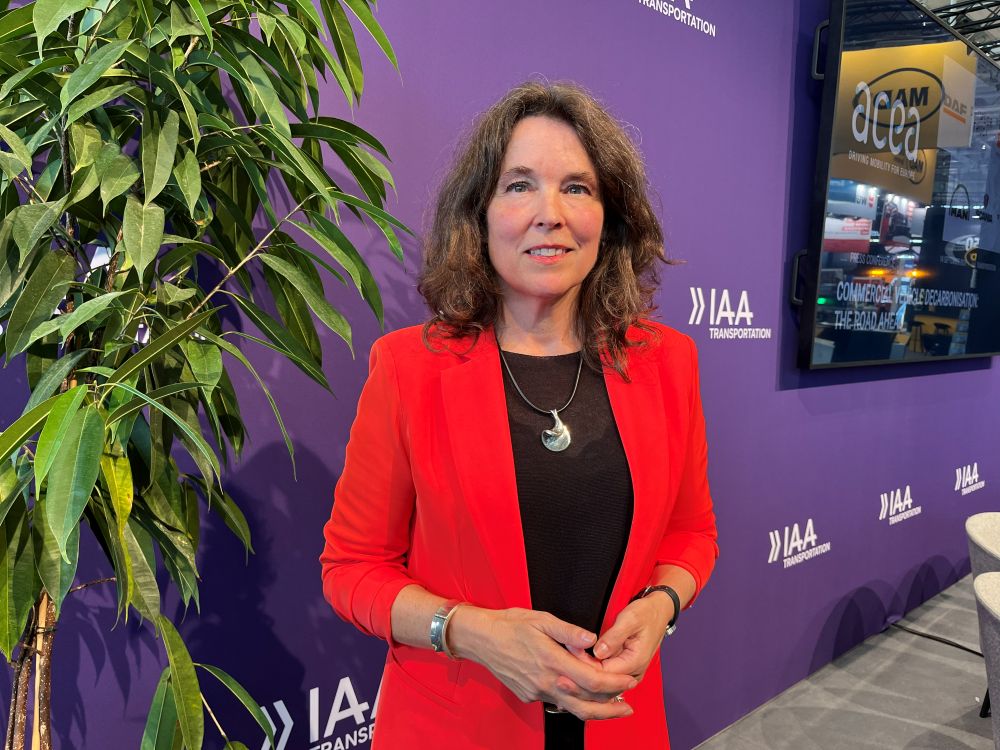
The European Automobile Manufacturers’ Association (ACEA), which represents Europe’s 17 major car, truck, van and bus makers, wants more time for heavy-duty vehicles to meet CO2 targets. Speaking to this publication, Ms. Sigrid de Vries, Director General of the European Automobile Manufacturers’ Association (ACEA), said the industry is ready for zero-emission trucks, but the conditions its customers need are not. She backed a proposal to push the target deadline back by three years, from 2030 to 2033.
The problem, she explained, is not the vehicles. Manufacturers have invested heavily, developed new models and are ready to put them on the road. But their customers, the fleet operators, still don’t have a business case for running them. Energy prices, charging infrastructure, grid connections and cost parity with diesel are all lagging behind. “It’s at least three years behind,” she said, which is why the timeline for the targets should be adjusted.
At the moment, she said, the burden of meeting the targets fall only on vehicle manufacturers. If they miss them, they face heavy penalties, which is hurting their business even though they have done their part.
Rising fuel prices linked to the crisis in West Asia have narrowed the cost gap between electric and diesel trucks, drawing more interest towards electric. Ms. de Vries agreed that this tells a positive story. The transition has started and it is working. But it is not moving fast enough to meet the regulations, and missing them would mean what she called “crippling penalties” for manufacturers.
That is why ACEA’s members are asking policymakers for a “reality check,” so that the rules better match what is happening on the ground. “We want to deliver the transformation,” she said, but without being penalised for conditions outside the industry’s control.
On tariffs, Ms. de Vries acknowledged that ACEA’s members don’t always agree. She stressed that the industry’s supply chains are deeply connected around the world, so tariffs may look like an easy fix but could have wider effects that need careful study. “There is no easy solution to be found here,” she said, adding that competition must happen on a level playing field.
Explaining ACEA’s role, she said the association focuses on policy and regulation, acting as a translator between industry engineers and policymakers. With the industry in the middle of a major green transition and facing tough competitiveness challenges, ACEA’s work centres on shaping the right industrial and green policies to support it.