For Hindalco Industries, scale has long been its defining strength. But today, the narrative is evolving; the company is steadily positioning its aluminium downstream business as a high-value, engineering-led partner to the mobility industry. At the centre of this shift is Kopal Agrawal, CEO – Aluminium Downstream Business, Hindalco, who is driving a transformation that moves Hindalco beyond being a metal supplier to a co-creator of performance-critical automotive solutions.

“Scale is our foundation; but engineering is now our differentiation. We have evolved from being a metal converter to becoming an engineered mobility solutions partner for OEMs and Tier-1s,” said Ms. Agrawal.
This transition is both strategic and deliberate. Hindalco is combining its deep expertise in metallurgy with application engineering to create solutions that address the increasingly complex demands of modern mobility; particularly in the areas of electrification, lightweighting and safety.
“We are co-developing solutions with customers; from alloy chemistry to final component engineering. These are applications where aluminium behaviour, joining and design expertise matter as much as metallurgy itself,” she added.
The result is a downstream business that is no longer transactional, but deeply embedded in the design and development ecosystems of automotive OEMs and suppliers.
Focused Investments Backing Engineering Capabilities
Hindalco’s transformation is underpinned by targeted investments aimed at building automotive relevance rather than generic capacity. Facilities at Kuppam and Chakan represent key milestones in this journey, with the latter emerging as a critical hub for EV-focused manufacturing.
At Chakan, the company has deployed advanced manufacturing technologies such as friction stir welding, laser welding and hybrid joining; all essential for producing complex aluminium structures like EV battery enclosures and crash-resistant components. “Our investments are focused on automotive relevance and scalability; not just capacity. We are building the ability to industrialise complex aluminium components reliably,” noted Ms. Agrawal.
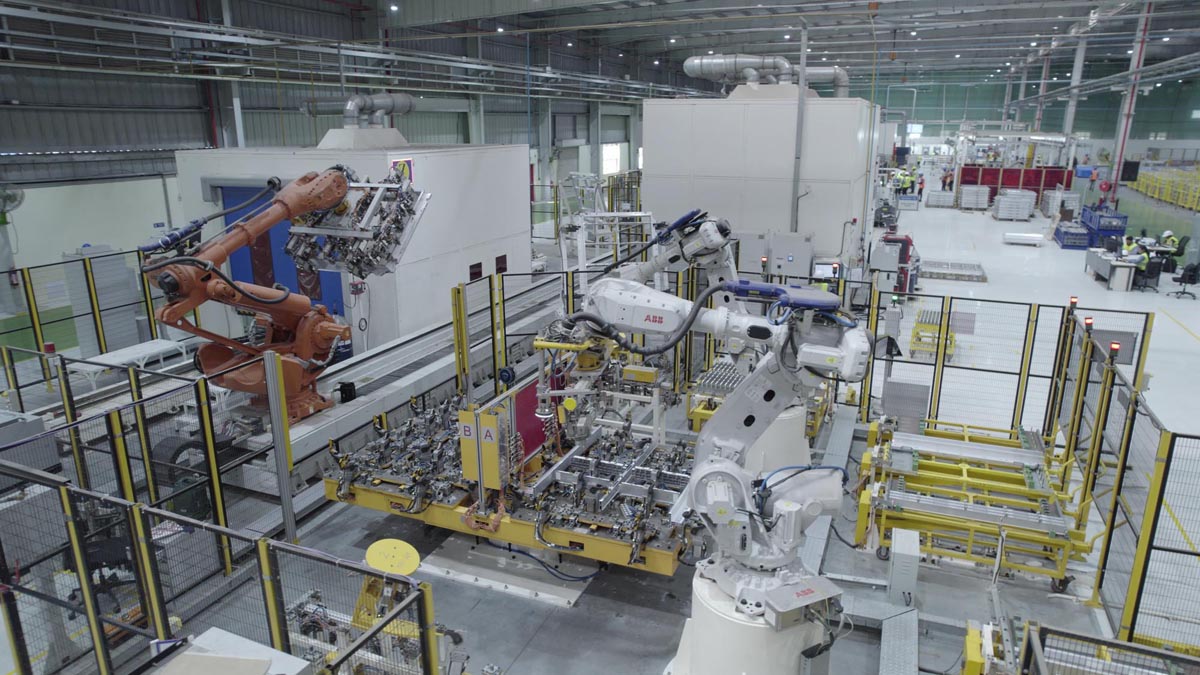
Beyond manufacturing, Hindalco has significantly strengthened its prototyping, simulation and validation capabilities. This allows faster development cycles and ensures that components are not just designed, but tested and validated for real-world performance before entering production.
The company’s R&D ecosystem, supported by scientists and application engineers, is working across the value chain; from alloy development to system-level validation.
From Products to Platforms; Expanding Automotive Portfolio
As of 2026, Hindalco’s downstream business is already supplying a wide portfolio of engineered aluminium products across mobility segments. These are not experimental or pilot-stage developments, but qualified, serially manufactured components integrated into OEM programs.
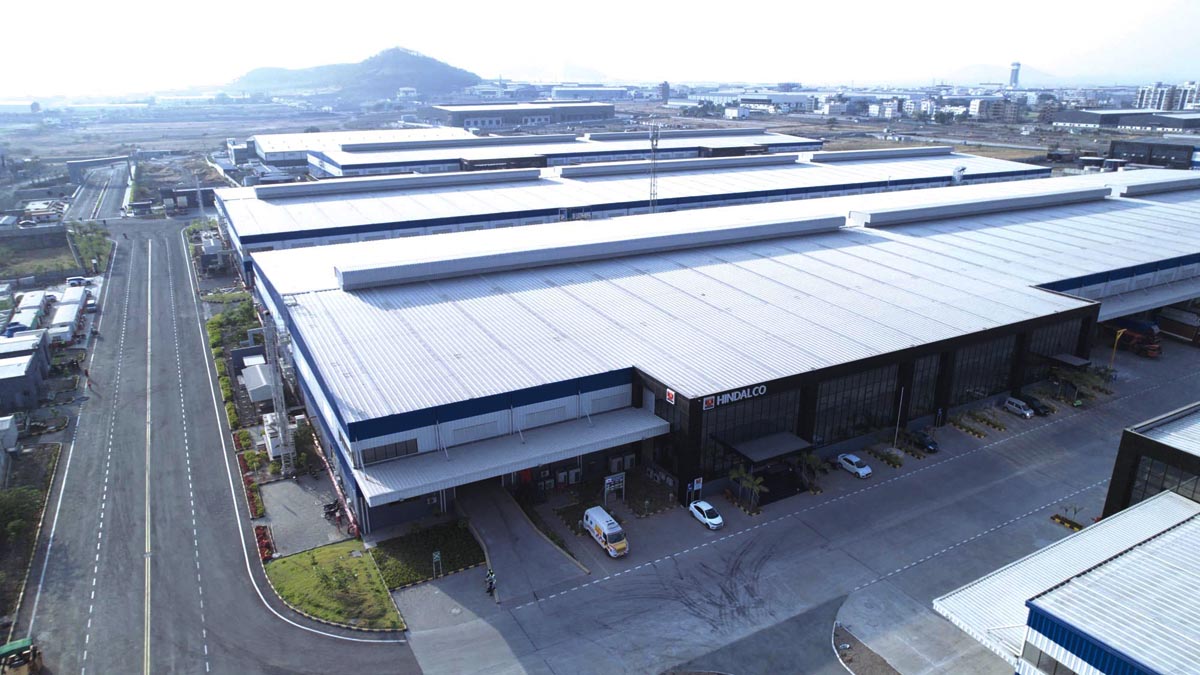
“We are already supplying a wide range of engineered aluminium products; from EV battery enclosures and cooling plates to crash boxes, ABS blocks and two-wheeler front forks. These are production-ready solutions,” explained Ms. Agrawal.
Key offerings include EV battery enclosures designed for high crash and side-impact resistance, battery cooling plates for thermal management, structural extrusions, precision-machined ABS components and electrical aluminium products such as busbars for EV platforms.
This breadth reflects Hindalco’s ability to address multiple layers of the mobility ecosystem; from structural integrity to thermal efficiency and electrical performance. “These are safety- and performance-critical applications; and our role is to ensure that every component is engineered, validated and delivered with consistency at scale,” she said.
Integrated Value Chain Driving Competitive Advantage
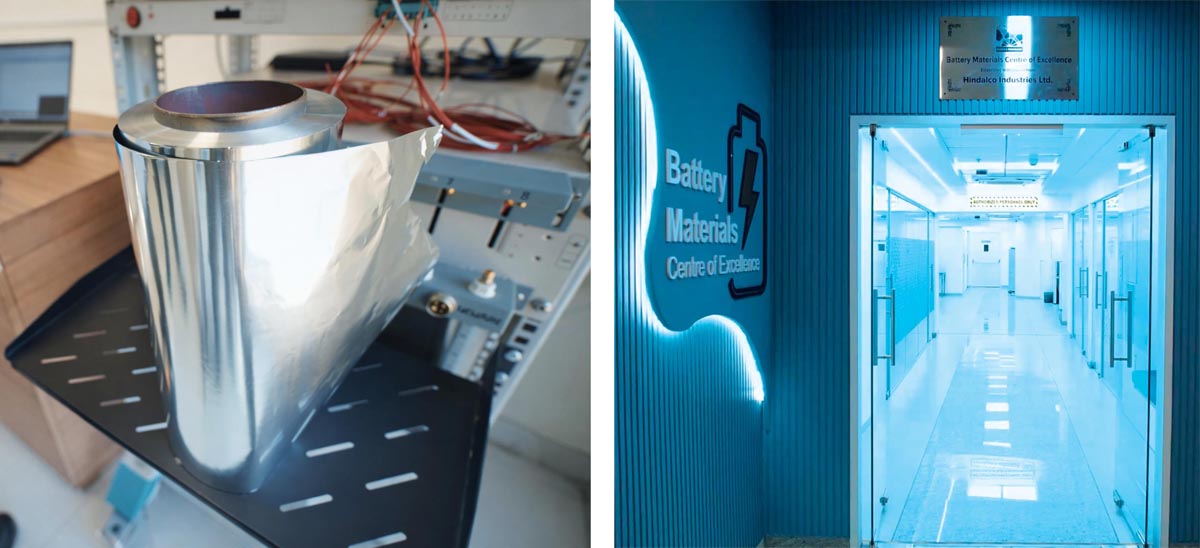
A significant differentiator for Hindalco lies in its fully integrated aluminium value chain. From upstream production of billets and rolled products to downstream fabrication and machining, the company maintains end-to-end control.
This integration enables precise control over alloy composition, processing and final component characteristics; a critical factor in automotive applications where performance cannot be compromised. “Our integrated value chain allows us to control quality from alloy composition to finished component; which is essential for automotive programs where reliability is non-negotiable,” said Ms. Agrawal.
The company’s capabilities extend into simulation-driven design, advanced joining technologies, prototyping and component-level testing. This holistic approach reduces development risks for OEMs while accelerating time-to-market.
“We validate not just at the material level, but at the component and system level; whether it is crash performance, thermal behaviour or fatigue life. That is what makes us a true engineering partner,” she added.
Redefining Design; Overcoming Legacy Barriers
One of the key challenges in aluminium adoption is not the material itself, but legacy design approaches rooted in steel-based architectures. Transitioning to aluminium requires rethinking design, manufacturing processes and lifecycle economics. “The challenge is rarely aluminium; it is legacy design thinking. Moving from steel to aluminium requires re-engineering structures and evaluating total lifecycle value, not just upfront cost,” noted Ms. Agrawal.
Hindalco addresses this by engaging with OEMs early in the design phase; supporting them with simulation, prototyping, joining trials and manufacturability optimisation. This collaborative approach helps unlock aluminium’s full potential in terms of weight reduction, safety and efficiency. “Once customers see the benefits; improved safety, better range and recyclability; adoption accelerates quickly. Our role is to enable that transition with the right engineering support,” she explained.
The increasing push for emission reduction, fuel efficiency and EV range optimisation is further accelerating aluminium adoption across vehicle segments.
Lightweighting, Sustainability and the Road Ahead
Aluminium’s inherent properties; particularly its strength-to-weight ratio and recyclability; make it central to the future of mobility. Hindalco is leveraging these attributes to address both performance and sustainability goals.
“Aluminium is not just a material; it is an enabler of safer, cleaner and more efficient mobility. Its recyclability and lightweighting benefits align perfectly with global sustainability priorities,” said Ms. Agrawal.

In commercial vehicles, railways and buses, lightweighting can significantly improve payload efficiency, reduce energy consumption and lower emissions. Hindalco is actively working on such applications, including lightweight structures designed for durability under demanding conditions.
At the same time, the company is mindful of cost considerations. While aluminium may have a higher upfront cost compared to traditional materials, its lifecycle benefits often outweigh the initial investment. “The economic value comes from efficiency; higher payload, better fuel economy and lower emissions. When viewed across the lifecycle, aluminium offers a compelling value proposition,” she added.
Looking ahead, Hindalco’s focus remains firmly on deepening its engineering capabilities and strengthening its partnerships across the automotive ecosystem. With strong domestic demand, increasing localisation opportunities and a growing EV market, India presents a significant growth avenue.
“With our integrated capabilities, advanced facilities and strong application engineering, we are well positioned to support the next generation of automotive platforms. For customers looking at engineered aluminium solutions at scale, we are ready to partner,” concluded Ms. Agrawal.
For Hindalco, the downstream journey is not just about adding value; it is about redefining its place in the mobility ecosystem. By combining scale with engineering precision, the company is shaping a future where aluminium is not just used, but intelligently engineered into every critical aspect of transportation.