By Avijit Lahiri & Rajesh Rajgor
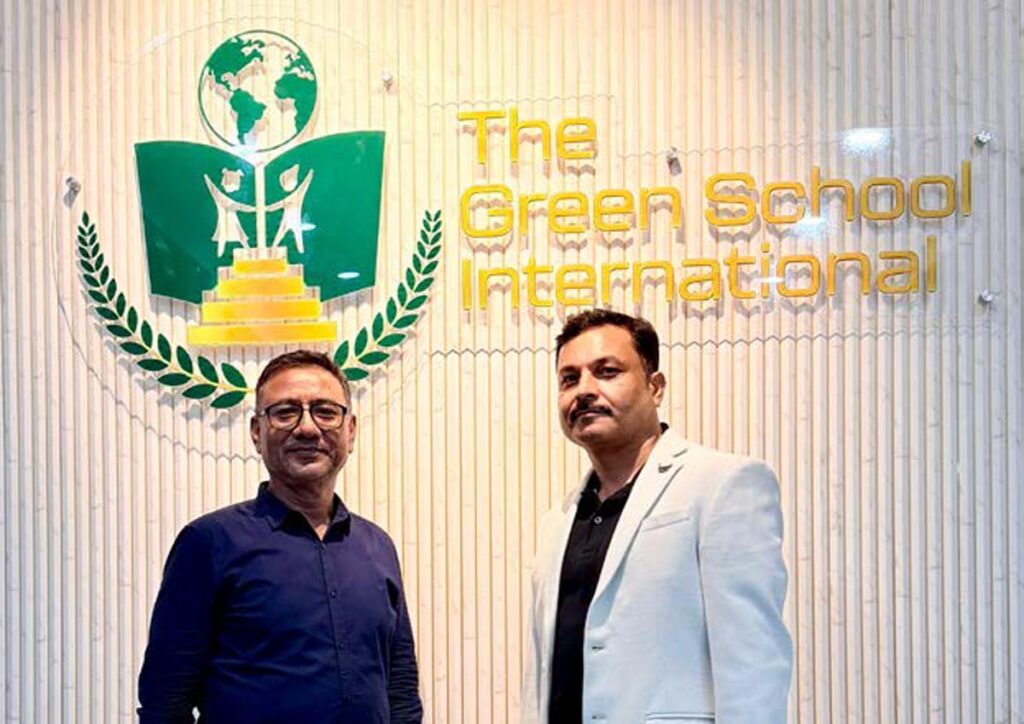
With safety, comfort and reliability at the heart of its transport strategy, The Green School International has built a young 58-bus fleet, with Eicher emerging as a trusted partner in its growing student mobility ecosystem.
Mr. Jagajeet Sinha, Trustee Operations, The Green School International, and Sanjay Jha, Managing Trustee, have built the institution around a simple philosophy; education should create happy, confident and responsible children. That philosophy extends beyond classrooms to sports, sustainability, infrastructure and transportation.
For The Green School International in Guwahati, transportation is an extension of its responsibility towards students and parents. From its inception, the school has invested in a young fleet, trained drivers and attendants, and safety-focused practices to ensure children travel comfortably every day.
The school’s approach is centred on “happy schooling”. It believes children need space to play, exercise, interact and explore. This focus on wellbeing has also shaped its transportation strategy, where features such as air conditioning and cleanliness are considered necessities rather than luxuries.
“We are working on the basics. The playground should be the first classroom of a child, and physical activity is a basic requirement, not an extracurricular activity. Our simple mantra is to understand what makes children happy,” says Mr. Sinha.
A Rapidly Growing School With A Clear Philosophy
The Green School International started in 2018 with just 44 students. After the pandemic, the institution resumed its growth and has expanded rapidly. Today, its student strength stands at around 2,500. The management is now focusing on maintaining quality rather than pursuing growth purely through numbers.
Sports are integral to the curriculum, supported by extensive infrastructure. The school believes today’s urban children often lack the open spaces and natural opportunities for physical activity that previous generations enjoyed. Sustainability is another important pillar, with environmental awareness being incorporated into the curriculum.
“The world is struggling with sustainability, and we believe it is our responsibility to prepare children for that future. We want students to understand the resources they use and the responsibility they have towards the environment,” he emphasises.
Putting Safety At The Heart Of Transportation
The school’s commitment to student wellbeing is particularly visible in its transportation system. From the first day, it chose to operate air-conditioned buses. For Sinha, this is not about luxury; it is about keeping children comfortable and protected when buses spend time in traffic and changing weather conditions.
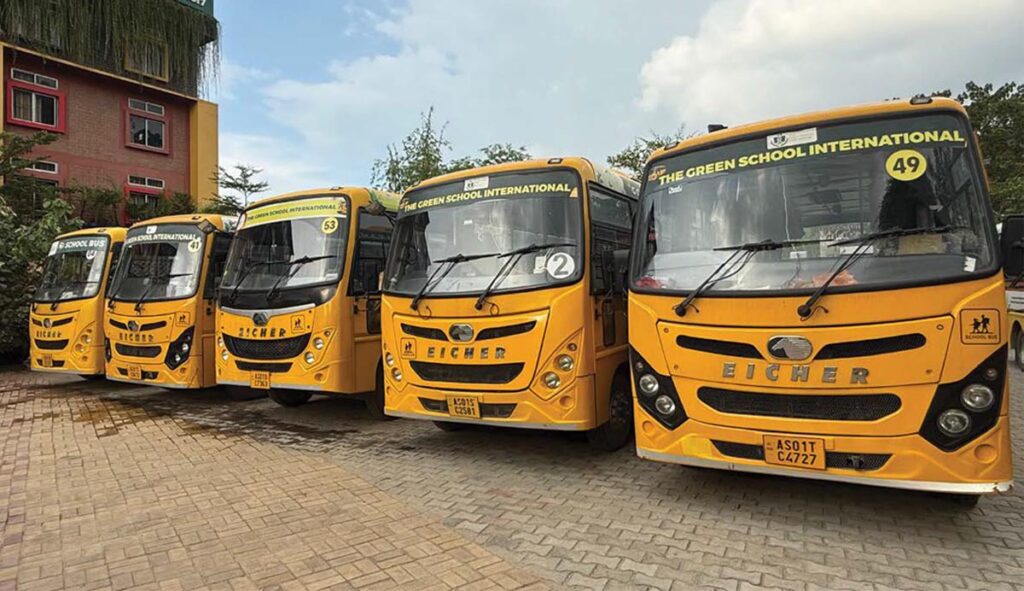
The school now operates around 58 buses, which Sinha describes as one of the youngest school bus fleets in Guwahati. The buses are maintained and kept clean, while prominent school branding makes them identifiable on the road. Transportation is also an important part of the school’s image and relationship with parents.
Drivers and attendants receive training and are expected to maintain high standards of discipline, behaviour and presentation. The school recognises that they are often the first representatives of the institution whom parents interact with every morning.
“When the school bus arrives, the parent sees the driver and attendant first. They are the face of the school. They deserve the same importance and responsibility as anyone else representing the institution,” he shares.
Why Eicher Became Part Of The Fleet
The Green School International operates buses from four manufacturers, allowing the management to compare vehicles through actual operating experience. Its relationship with Eicher began around 2023, initially influenced by the persistence of sales representative Dinesh Nath, who continued engaging with the school for several years.
Sinha, who has extensive sales experience, appreciated the effort and decided to give Eicher an opportunity. The first purchase subsequently developed into an ongoing relationship, with the school adding more Eicher buses to its fleet.
The management tracks vehicle performance and maintenance issues across its fleet. According to Sinha, Eicher buses have emerged as among the least problematic vehicles, strengthening the school’s confidence in the brand.
“We had no prior experience with Eicher when we placed the first order. We gave the bus a chance because of the relationship and the effort made by the sales team. After using it, we found that the vehicles were among the least problematic in our fleet,” Mr. Sinha asserts.
Performance, Service And Driver Support
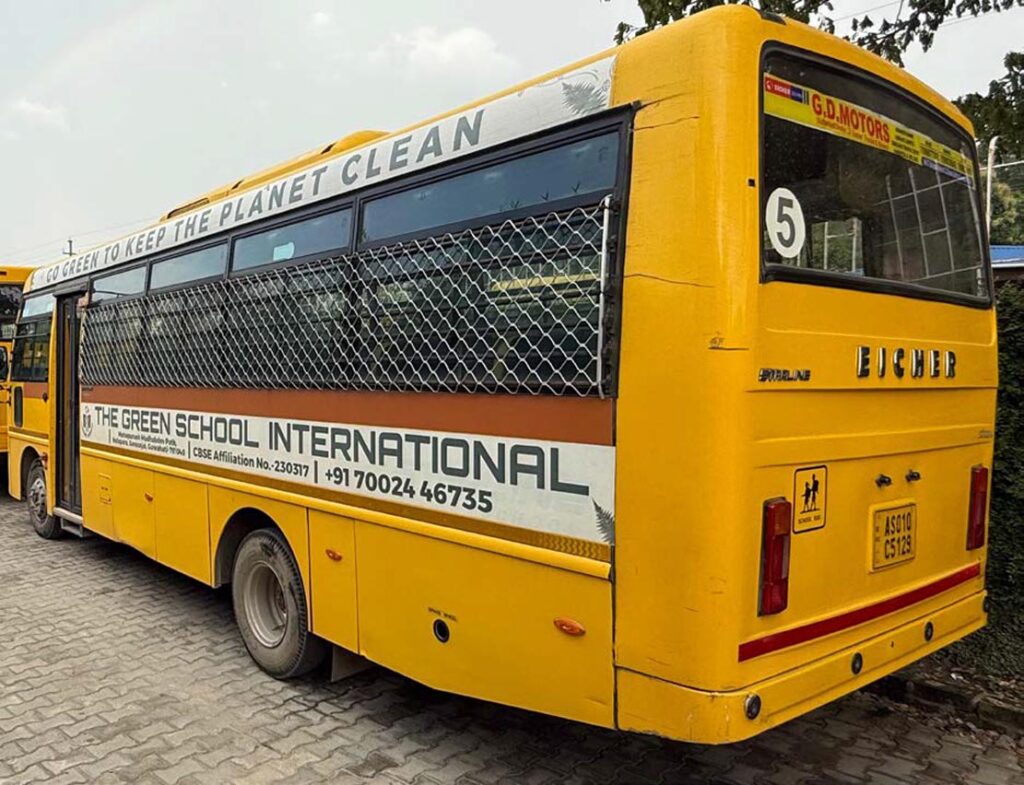
One practical advantage of Eicher buses is their relatively compact footprint. Guwahati’s congested roads make manoeuvrability an important consideration, and the narrower configuration allows the buses to negotiate busy stretches more easily while retaining useful seating capacity.
For the school, reliability, serviceability and ease of operation are particularly important. After-sales support is equally critical because vehicle downtime can disrupt student transportation. The local Eicher dealership and service team have therefore become an important part of the relationship.
Driver familiarisation and training are increasingly important as buses become more technologically advanced. Proper training helps drivers understand vehicle systems, braking, manoeuvring and safe passenger handling, complementing the school’s own driver-management practices.
“If the service is not good, there is no reason for us to continue ordering. The Eicher team has been responsive, and that relationship has been an important part of our decision to keep adding their buses.”
Technology And The Future Of School Mobility
The school expects technology to play an increasing role in student transportation. GPS and fleet-monitoring systems are already part of its ecosystem, while evolving regulations have strengthened requirements around fire safety and other protective systems.
Sinha believes manufacturers can go further by integrating practical technologies directly into school buses. Communication systems and improved monitoring could make fleet management easier while strengthening communication between drivers, attendants and school administrators.
Affordability remains equally important. Schools must balance safety, comfort, technology and operating costs because transportation ultimately forms part of the financial burden borne by parents. Dependable vehicles with manageable operating and maintenance costs can therefore offer considerable value.
For The Green School International, the next phase is less about becoming bigger and more about becoming better. The management is focusing on academic quality, faculty development, infrastructure and maintaining its distinctive approach to happy schooling.
As the institution evolves, transportation will remain central to its commitment to parents and students. For Eicher, the partnership demonstrates how reliable products, responsive service, driver support and practical ownership economics can help schools build safer and more dependable transportation systems.
For The Green School International, that partnership supports a simple objective; ensuring that every child’s journey to and from school is safe, comfortable and dependable.